Gold Museum

|
The Gold
Museum
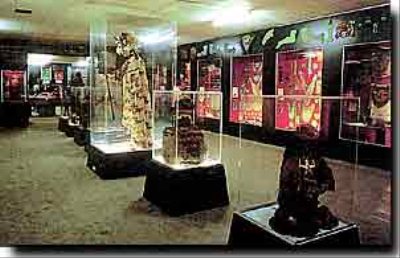
After our psycho minibus driver had thrown us around for a while we landed at the Gold Museum. It is considered one of Lima’s premier attractions. It houses the private collection of Miguel Mujica Gallo, who spent years amassing it, often by purchasing relics from grave robbers. Downstairs is the large collection, laid out in several rooms of gold figures, jewelry, masks, knives and artifacts from the Inca and colonial periods. It also contains mummies, headdresses and other ancient relics. I was saddened to see the items numbered with labels made on an old Dymo. We questioned the guide as to why the gold did not glisten and he answered "Due to the alloys in it " OH YEAH. Pull the other one. The stones, oars, pins and bits were interesting but we were suss about the skulls showing very neat surgery to repair a weapon hole, way too shiny.

Upstairs however, is a truly fascinating arms museum, which houses weapons and armour from many cultures, guns, knives and uniforms, although once again I was disappointed that the Bearskin was fake. Artifacts from Peru’s history, such as items owned by the Pizarro brothers and Simón Bolívar. 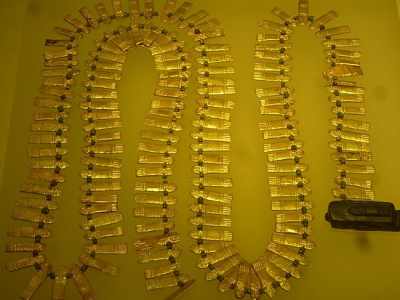  José Gabriel Chueca for The Art Newspaper. In 2001, a huge scandal broke out. It was proven that many of the pieces in the museum were fakes. Experts had been suspicious of many of the pieces for years. The Mujica Gallo family claimed that the fakes had been purchased by mistake and that the museum now only houses genuine pieces. However, there is still a cloud of skepticism that hangs over the exhibits. The most popular museum in Peru, the Gold Museum (Museo del Oro) in Lima, is at the heart of an argument which is stirring archaeologists the world over, but is also stirring the Peruvian government. After countless tests and twenty years of argument, the pre-Columbian gold pieces in the collection have been declared fakes. The Gold Museum was established twenty years ago and prided itself on possessing one of the largest collections of pre-Columbian gold in the world. However, in July, after more than four months of tests carried out by specialists at the Catholic University of Peru, the museum was examined by the Institute for the Defense of Competition and of Intellectual Property, or Indecopi. In fact, since the 1980's Indecopi has been suspicious about the authenticity of the collections in the Gold Museum. The first reports suggested that 85% of the metal pieces on display were fakes. In August, the cultural commission of the government also looked into the scandal. Sanctions, which have not yet been imposed, could consist simply of a threat to prosecute, but there could also be direct legal action. The museum might, for example, be forced to publicise the fact that of "4,349 metal pieces analysed, 4,237 are false and more than 100 have aroused strong suspicions concerning their authenticity".  
For our part it did not stop us visiting, there were few people other than us. In my opinion it just elevated the Gulbenkian Museum even higher.

ALL IN ALL THE SHINY
STUFF WAS DULL, DYMO LABELS A SHAM BUT AN INTERESTING
COLLECTION
GOLD BIT DISAPPOINTING - ARMS AND UNIFORMS
FASCINATING
|