History of Beaufort SC

|
History of Beaufort, South Carolina
The city was named in honour of Henry Somerset, 2nd Duke of Beaufort
The history of Beaufort, South Carolina, is one of the most comprehensive and diverse of any community of its size in the United States. The area had been subject to numerous European explorations and several aborted attempts at colonization before the British successfully founded the city in 1711, the second-oldest in South Carolina (behind Charleston. The city initially grew slowly, subject to numerous attacks from Native Americans before flourishing as a center for shipbuilding and later as the aristocratic center for the Lowcountry plantation economy up through the Civil War. Though decimated by a declining economy and natural disasters, the community rebounded in the later half of the 20th century and is today recognized as one of the most livable small towns in the country. Beaufort has retained much of its historic character through its renowned architecture and historic preservation efforts.
Native American settlement, European Exploration. Prehistory – 1711:
Before the arrival of European explorers, the Lowcountry
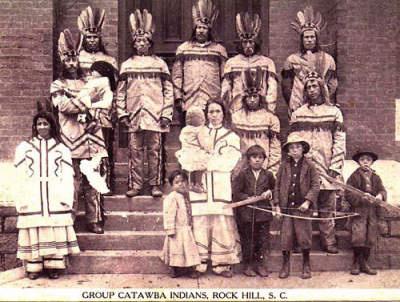
region was inhabited by small Native
American tribes that have since yielded their names to geography,
including the Yemasee,
the Coosawhatchie, the Coosaw, the Datha (Dataw), the Edisto,
the Ashepoo, the Kiowa
(Kiawah), and Combahee. Several of these tribes were rivals and intertribal
alliances and attacks occurred frequently before and during European
colonization. The Spanish
were the first Europeans to explore the Port Royal Sound and were the first to
attempt to establish a colony. Landing on St.
Helena's day (Santa
Elena), the colony of the same name did not survive long, as disease,
starvation, weather, and attacks from tribes dissuaded the settlers and their
efforts. Upon the explorations of Giovanni
di Verrazano, France became the next European power to establish a
presence. Nearby Parris
Island was the location of Charlesfort,
France's first colony in the New World, founded by Jean
Ribault in 1562. Alarmed by its rivals intentions, the Spanish
established St.
Augustine in modern-day Florida in 1565 as a counter to French
aspirations. As with Santa Elena, the French colony disappeared quickly due to
similar circumstances. The Carolana (Carolina) colony was chartered by King
Charles II in 1670 to the eight Lords
Proprietor, who began the first major attempt to settle modern day
South Carolina. Observations of the Port Royal Sound and immediate area had many
on the initial expedition call for the first English settlement and capital of
the colony to be located in Beaufort. However, tribes in the area suggested an
area further up the coast, and the settlers later chose the area what became
Charleston to become their capital and principal city. The Port Royal Sound however was too enticing not to be settled, and continuous efforts were made. Upon the demise of the French efforts, the first Scottish settlement in what is now the United States, known as Stuart Town, was founded at modern-day Spanish Point in 1682, only to be destroyed by Spanish forces from St. Augustine in 1684. Continuous concerns about Spanish incursions into the new colony led to calls to create a town and port that would serve as a buffer against Spain and provide a closer harbor to area planters, who were becoming successful in their efforts to produce cash crops, especially rice.
Colonial period 1711–1783: Beaufort was chartered in 1711 as the second major settlement in South
Carolina and named after Henry
Somerset, 2nd Duke of Beaufort. The settlement grew very slowly, due
to a major attack by the Yemassee in 1717 and the threat of Spanish invasion. It
was not until 1733 and the founding of Georgia
as a buffer colony did Beaufort truly grow in population and prestige. Though
most administrative powers during the early Carolina colony was focused in
Charleston, the city gained a reputation for its excellent harbor and the
establishment of several church congregations, most notable being St. Helena's
Episcopal.
By 1776, the city became well known for its shipbuilding
enterprises, its rice and indigo
trade, and was home to a new circuit
court for the colony. The American Revolution split loyalties in the community, with several families supporting the Tories while others favored independence. Many men fought in battles elsewhere in the state, though little warfare was conducted in and around Beaufort. The young republic was unable to provide adequate naval defense of the City and fell under British occupation in 1780 without much resistance or damage. It was not until hostilities flared in Virginia did British occupation end in 1782, a year before the Treaty of Paris was signed. The Treaty of Beaufort fixing the boundary between South Carolina and Georgia was signed in the city in 1787.
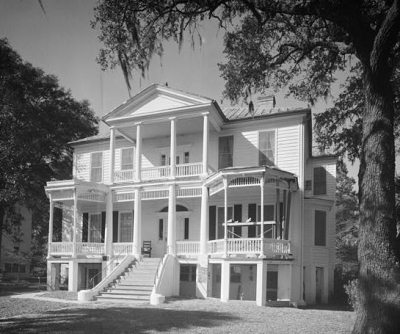
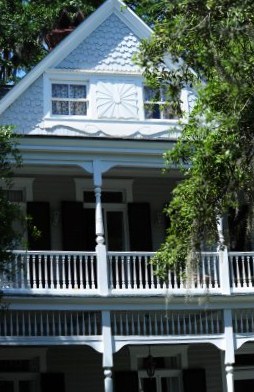
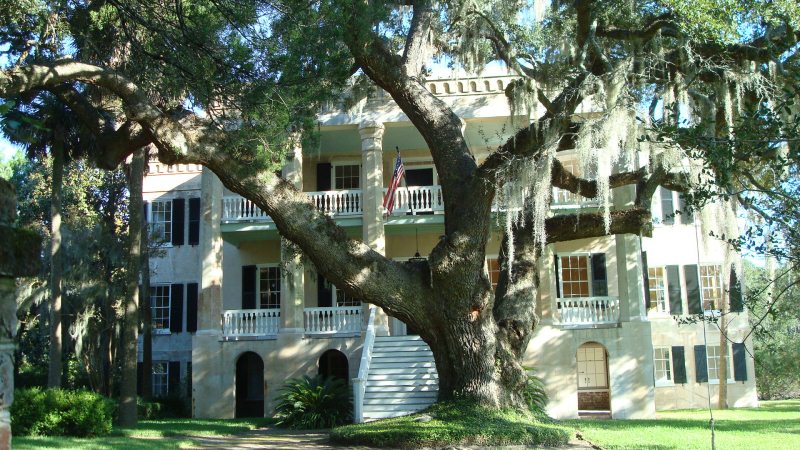
The John A. Cuthbert House is an example of antebellum architecture in
Beaufort. Antebellum period 1783–1861: In the antebellum period, the rise of Sea Island Cotton brought enormous wealth to Beaufort and the surrounding plantations. By some historians' accounts, Beaufort was arguably the wealthiest city in the United States prior to the Civil War and was often considered to be the "Newport" of the South. Although Charleston and Columbia were the leading cities in the state, much economic and political influence was reared by Beaufort. Lowcountry planters in the city and the surrounding islands were among the most ardent supporters of state secession, first during the Nullification Crisis in the 1830's and then in the 1850's. At the eve of secession, Beaufort was arguably at its cultural, economic, and political zenith, with a population of about 4,000, excluding slaves. Like modern-day Beaufort, the city attracted many residents from beyond the state, with many Northerners and Europeans residing in town and operating successful businesses.
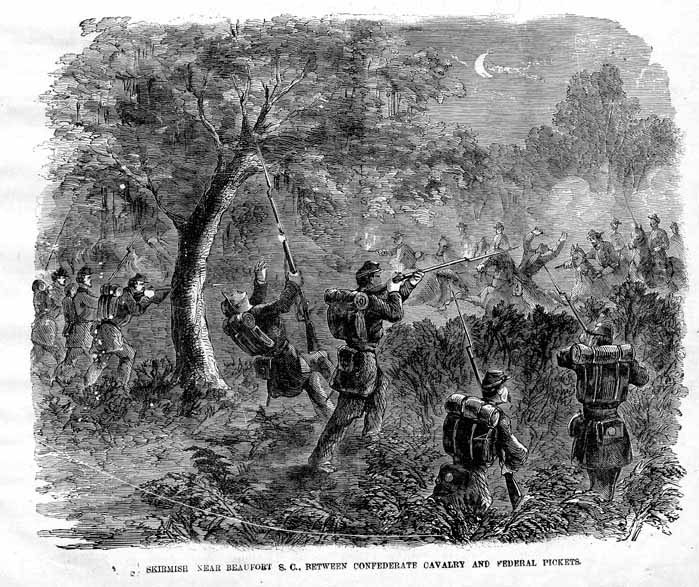
Civil War and Reconstruction 1861–1893: The Civil
War had a dramatic effect on Beaufort, as an amphibious
attack and subsequent occupation of the city made it one of the first
communities in the Deep
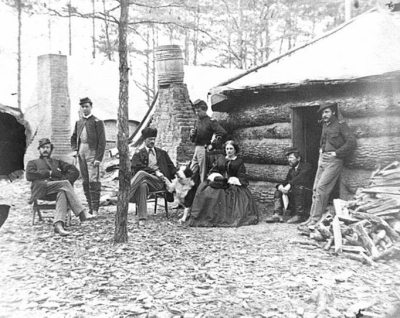
South to be held in Union hands, as early as November 1861. Though
much of the town was spared from physical destruction, there were many incidents
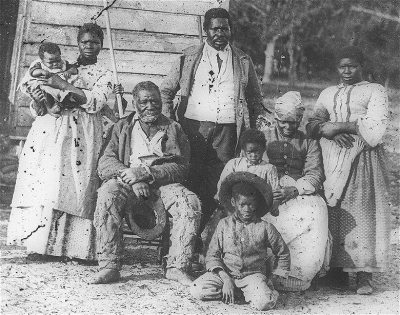
of arson and looting as a result of Union occupation and the early liberation of
the substantial slave population. In a historic effort that pre-dawned American
Reconstruction,
the Port
Royal Experiment provided a test case for the education of freedmen.
In addition to educational advancements, the city made some political ones as
well. Robert
Smalls, a native son and leading figure in post-war Beaufort would
later become one of South Carolina's first elected African-Americans
to the United
States Congress and remained a prominent civic leader in the state
and in Beaufort until his death in 1915. Due in part to the large
African-American population and also Small's leading role, Beaufort remained one
of the last outposts of Republican
Party power in the Solid
South. Some of Beaufort's most prominent families returned to the area but
never regained the enormous wealth that slave-based agriculture provided. Most
of the original antebellum power brokers never returned to the area. As the
influence of cotton declined, the lure of aqua phosphate
mining increased. By 1890, Beaufort had regained some of its wealth and
prosperity from that industry. It had also retained its position as county seat
during that time, having previously lost it to railroad community of
Coosawhatchie. However, a series of events would bring Beaufort into a steady
economic decline for over half-century.
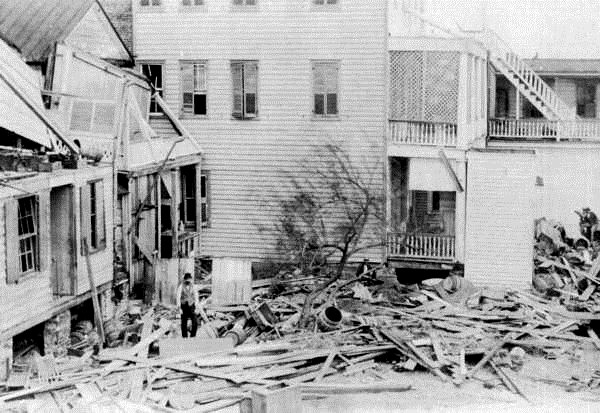
 The 1893 Sea Islands Hurricane caused extensive
structural damage. Aid from the Red
Cross Decline 1893–1945: On the 27th of August 1893, a Category 3 hurricane slammed into the Lowcountry, killing over 2,000 residents in the area and caused immeasurable damage. Although only four individuals died in the city itself, Beaufort was heavily damaged and its phosphate industry was ruined. A fire that damaged much of the downtown area in 1907 continued to inflict economic and psychological harm to the city. A final blow to the area was gradual; the boll weevil decimated most of the cotton crop, which had for over a century been the major commodity of the community. By 1910, Beaufort had lost almost 40% of its population from ten years earlier. Though the city retained its political status as county seat, Beaufort became one of the poorest communities in the state through the 1940's. The growth of lettuce and tomato farming, in addition to shrimping, became the major facets of the economy during this time.
Recovery 1945 - present: Beaufort's economic recovery in the latter half of the 20th century can
be contributed to three major influences: military investment, resort
development, and downtown revitalization. Although Parris Island was
continuously occupied after the Civil War, it retained a limited role in
military affairs until 1917, when it was selected as a permanent home for the U.S.
Marine Corps recruiting
station. The onslaught of World War I, World War II and especially
the Cold
War brought new people and income to the area. A naval air
station was established during World War II and transferred to the
Marine Corps in the 1950's, thus cementing a major military legacy for the
region. A U.S. Naval Hospital located in neighboring Port Royal was also
constructed during the war. New investment in the form of resort and lifestyle development on nearby
Hilton
Head Island and Fripp
Island also had some economic contribution to Beaufort and the
Lowcountry starting in the 1960's. However, significant economic improvement
came upon the completion of a downtown waterfront park in place of abandoned
docks, championed by then-mayor Henry Chambers. The park (now named after
Chambers) spurred the redevelopment and reinvestment of adjacent Bay Street and
downtown Beaufort, propelling land values and garnishing the attention of real
estate investors, national media, and Hollywood, through the form of successful
and well-known films. In recent years, renovations to the park, countless
renovations to private homes and businesses, and several streetscape projects
have continued to improve the overall quality of life in
Beaufort. Unlike most communities of its size in the south, Beaufort escaped much of the turbulence of the Civil Rights era. Jim Crow laws were gradually eased during the 1960’s. Schools began the process of desegregation in 1964 and became fully integrated by 1970. Beaufort also elected its first African-American to city council (since 1910) in 1967. The city has experienced other demographic shifts, thanks in part to the city's military presence, its status as a retirement destination for residents from the northern United States and Canada, and a demand for migrant workers, primarily from Latin American nations and mostly for seasonal agriculture.
ALL IN ALL A RICH
HISTORY
|