Work, Work and more Work

|
Boat work has been all consuming for
the past few weeks as we aim to get as much as possible done before flying
home. The work is a mixture of
fixing faults, general maintenance, getting the boat ready to be left and a few
improvements. On arriving in Tauranga a 'brain dump' of all the jobs to do
produced a list of 103 and we have added a good number since then. So lots
to keep us busy!
The big fault fixing has been on the engine, fixing oil leaks and trying to check why at times the engine is making a lot more smoke than expected. Having found a good Volvo engineer here it wasn’t a difficult decision to let the professionals see what they could find. The leaks were pressure hoses under the engine that needed replacement and they took 3 weeks to come from Europe and a week to schedule the work, so 4 weeks just disappeared. Checking the valve clearances took a day (with our overhead cam engine) and then there was the sea trial to check it all and check the smoke. That was inconclusive, but it could be that we are still running it too lightly and we need to make it work much harder. That’s not always easy when trying to conserve fuel, but we have been trying to run at full throttle for a while after a long passage. But it would seem that we could still do better. So if you see a sailing yacht with no sails up screaming across the horizon at 7 to 8kts under engine, it’s probably us! It is important to find out what's going on to give us confidence in it, so sea trials will resume when we return in September.
The main improvements included the addition of an AIS Transponder. We could always receive AIS, but couldn’t transmit, so we could see all the big ships, but they couldn’t see us. From now on they should be able to. We also moved our main chartplotter from down below to the cockpit, putting a smaller one in its place. That should make navigating entrances and channels much easier and we’ll use radar much more if we don’t have to go down below to switch it on and see it. So hopefully that will make night watches easier and safer. It all sounds simple to do, but it was a major rewiring/re-routing job that took nearly 2 weeks and we had to empty a load of lockers to get at the wires to do it. It's not all quite finished, but we hope it will be next week. A stainless steel frame is being designed to take another solar panel, but that's a long way off and a job for when we return.
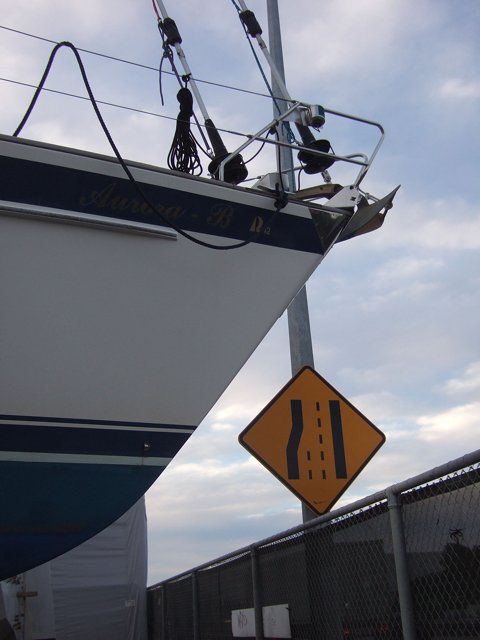
To get the boat ready to be left, all the main working sails have been washed and dried (by us) and along with the others (we have 7 in all) left with the local sailmaker for minor repairs and storage until we return. Although they say the winters here are mild (at most 6 or so light frosts in a bad winter) we have winterized the engine, generator and outboard motor, just in case. And yesterday the boat was lifted ashore and we’re now on hardstanding with the anchor on the bows sticking out almost over the first lane of the dual carriageway that runs past the boatyard. The boat shakes when heavy lorries go past! Apart from the road, the yard is good. A nice tarmac surface, water and electricity points right next to the boat and very friendly and helpful people running it.
With only a week to go, it’s panic stages to get the rest of the work that needs to be done and sort out what we’re taking home. It’s a long way to come back if we forget something! A certain crew member has classified the ton of (probably not) gem stones, collected from the South Island, into bags – some to leave on the boat and some to take home (look out for a low flying overloaded plane over southern England!).
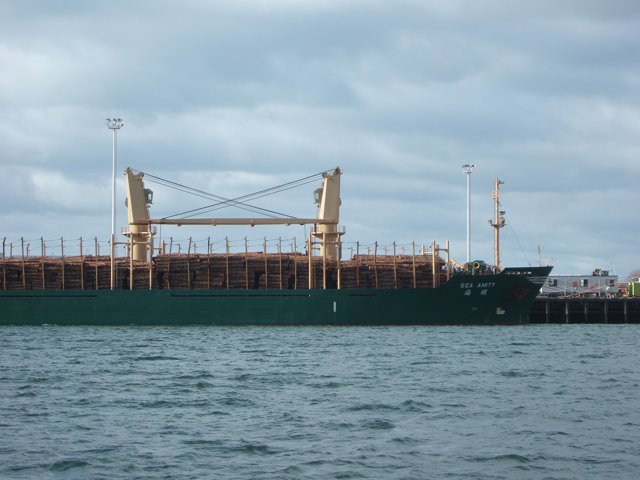
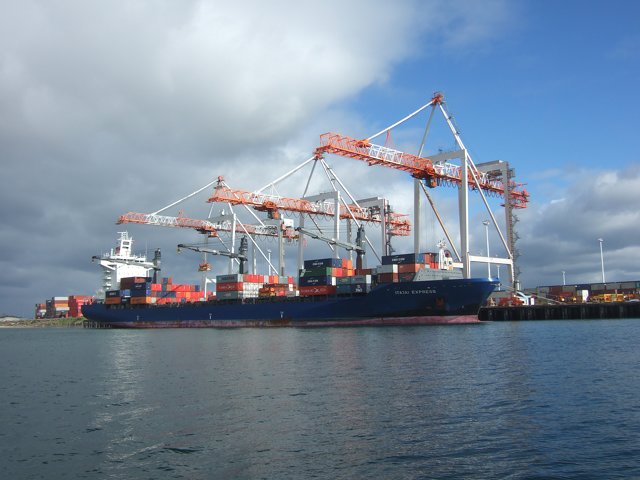 One of the ships
being unloaded - we used it as a wind shield during the sea trials (to stop the
exhaust
smoke from being
blown away too quickly so we could check the colour - blue smoke means
burning
too much
oil).
Timber, a common sight, being loaded up for export.
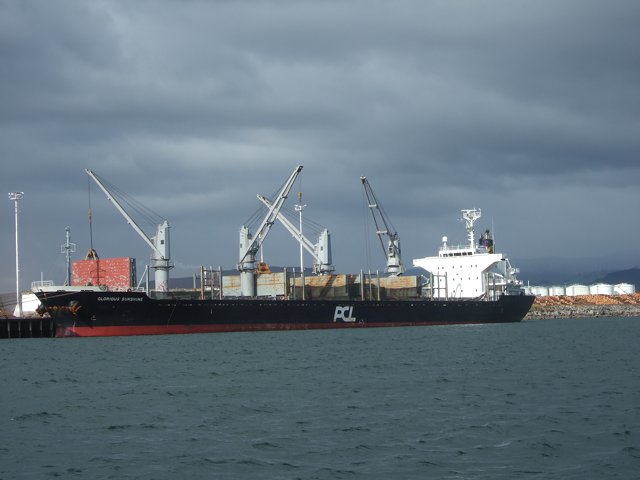
They have big ships here. This one is called 'Glorious Sunshine', but not today - lots of cloud!
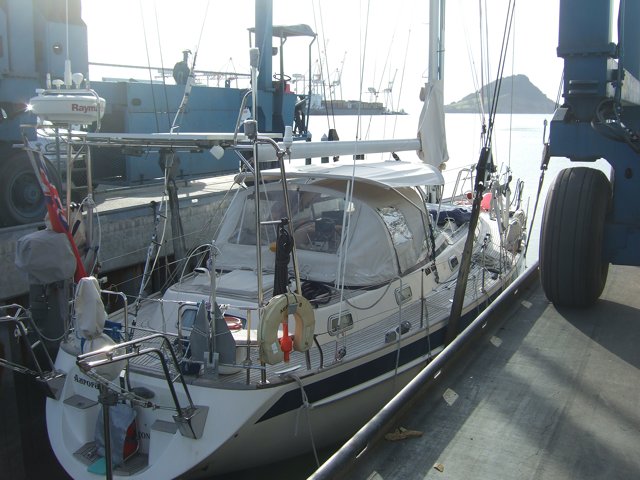
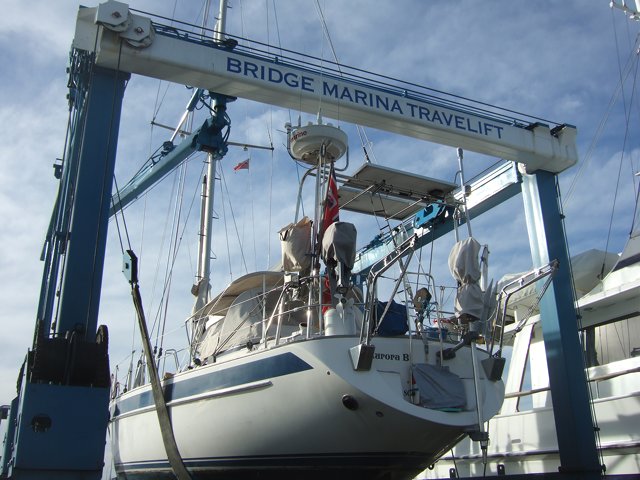
On the way up - in the travelift
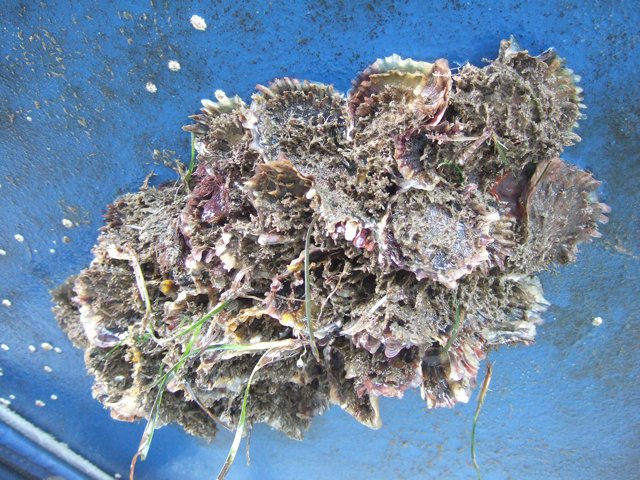
The dynaplate is under this lot! It's all shellfish, with real hard shells. We thought the water through the marina was too fast for anything to grow, but apparently the fast running water carries lots of nutrients and shellfish thrive here. It's well known (but not by us) for its bad fouling.
Being lowered into position in the yard. Note the position of the radar and aerials in relation to the travelift bar ..........................
.............. OOPS! The boat's now on the ground, but the travel lift can't back out without taking off the radar and aerials. Much thought and several failed attempts to get out before plan B was put into operation - build up a number of scaffolding planks for the wheels on this side of the travelift to go up, causing it to lift up and tilt over as it moved out - it worked!
Couldn't be much closer to the dual carriageway!
|