Tobago Cays, Grenadines

Aurora_b
Mike and Liz Downing
Fri 22 May 2009 20:01
|
We had planned to stay in Bequia
a while, but the weather looked good
to go on to the Tobago Cays, about 26 miles further south, so we left
Bequia after 3 days. We sailed to the west of the island of Canouan in a
good breeze and headed for the Cays in the northern entrance through the reefs.
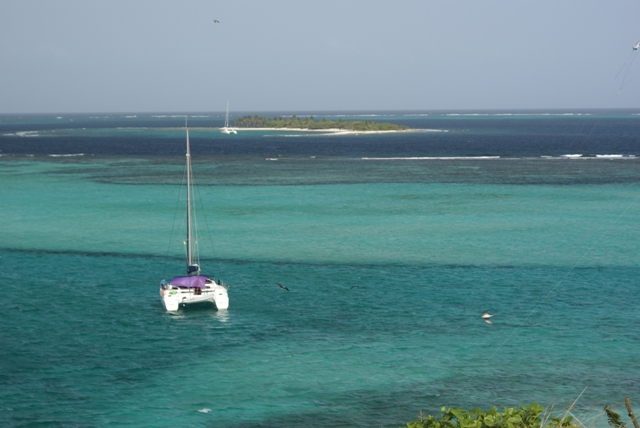 The Tobago Cays are nothing to do with Tobago, which is another 100
miles or so further south. They are a group of 5 very small uninhabited islands
(palm trees and sandy beaches) surrounded by reefs and the whole lot is
surrounded by a huge horseshoe shaped reef about 3 miles or so long, and called,
not surprisingly, Horseshoe Reef. Inside the reef are lagoons of
fantastically beautiful turquoise coloured sea that is only 5 to 20 ft deep with
a bright sandy bottom. It's great for anchoring and swimming, and snorkeling on
the Horseshoe Reef is as good as we have found in the Eastern Caribbean.
There has been quite a lot of hurricane damage to the reef,
but we have seen a wide variety of fish and some in shoals of several 100.
I even swam over the top of a 6ft nurse shark without realising it -
too focused on trying to take a photo of something else. Liz pointed
it out once clear! It was the second one we've seen and we got a picture of its
tail! (Didn't want to get too close even if they are supposed to be
"mostly harmless unless
provoked")
 Since we were here last (in 2002,
when we chartered a boat for 2 weeks and Jonathan brought his windsurfer on the
plane!) they
have introduced a protected area for turtles and it's worked really well.
We have snorkeled every morning since being here and have seen 4 or 5 turtles
each time, being so close watching them feed and swim. They don't seem to mind
and if you just lie still in the water they come even closer and you could
easily touch them. We have never seen so many turtles so close
before.
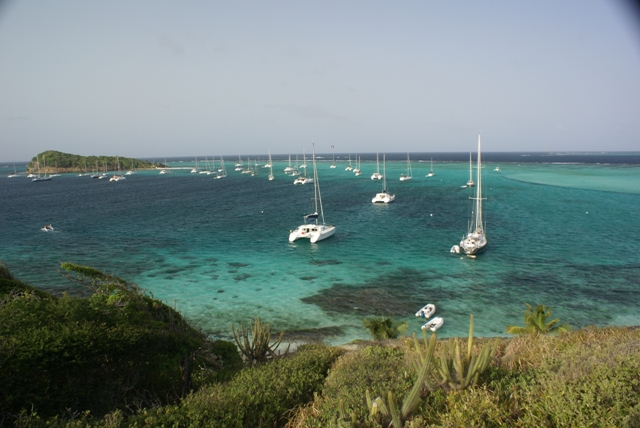
To the east
of Horseshoe Reef there is nothing until you reach Africa, so the outside
of the reef takes the full force of the Atlantic sea. So it's quite spectacular
as the wind has been 15 to 20kts day and night (and generally never drops below
15kts). So you have the beauty of the lagoons and reefs in the foreground and
the vast seascape as the waves break on to the outer reef in the background.
It's great to wake up to it each morning. With no light pollution the stars are
fantastic on a cloudless night, and we can see the Southern Cross for the first
time. That's always a bit special.
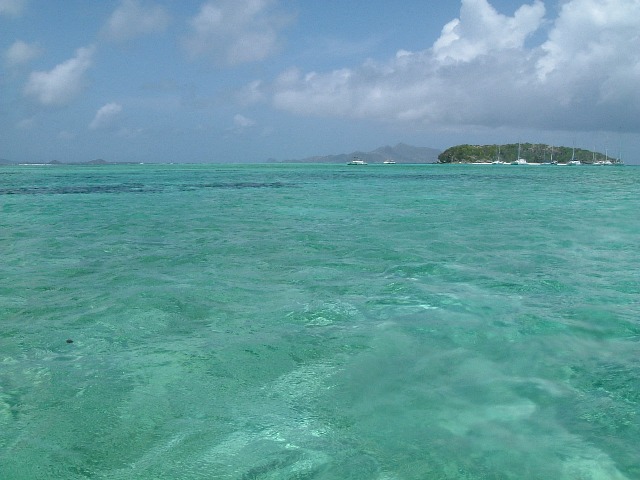 As the islands are all uninhabited you need to stock up well before coming as you need to be self sufficient while you are here. That's not strictly true as the locals come from the islands a few miles away in their local boats (but powered by outboards) to sell bread, fish and tee shirts.
Being probably one of the most spectacular anchorage in the Caribbean means that lots of other yachts are here too. We counted about 30 in all, but there is plenty of room and when snorkeling on the reef we have always had a buoy to ourselves. They have about 10 buoys for dinghies spread out along the 3 miles of the reef and close to the outer edge. You tie your dinghy to these rather than use a dinghy anchor that could damage the reef. We have been anchored here for 7 days and snorkeled on the reef for about 2 hours each day, going to a different site each time. Dinghying across translucent turquoise water to get to the sites is quite special.

.
Checking the anchor is well
set
 |