South against the South West Monsoon. 02:16.16N, 072:56.15E

Meikyo
Phil and Sarah Tadd
Mon 4 May 2026 09:24
|
May to November is the South West monsoon in the Maldives. It’s the wet season and brings stronger winds. It seemed to arrive early this year so we are now sailing into head winds as we work our way south towards our departure point at Gan, and seeking out
anchorages with protection from the south west. Many of the anchorages are only protected by reef, which can be less than perfect when a squall kicks up a big sea.
After our lovely interlude with the manta rays we made a short hop south to Mathiven, still within Ari Atoll, where boats ahead of us had managed to purchase diesel. We had understood that there was a clear divide here between resorts, where the tourists go, and local island where the Maldivians live but distinction is a bit blurred with guest houses appearing on some of the local islands. Mathiven had a big (for a small island) tourist business. After topping up our fuel we walked around the island and had dinner ashore with the crew of Eternaut; Hanno and Rita. 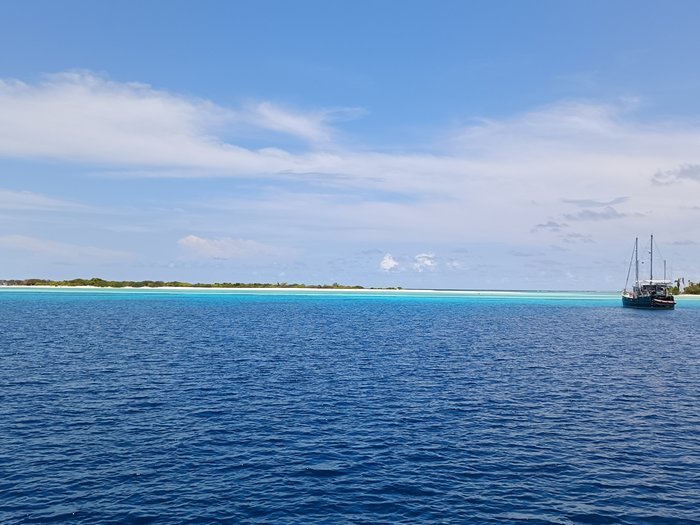
Our anchorage off the sandbar at Mathaveri, with Eternaut in front of us in the shallows
Our next stop was Maagaa, on the east side of Ari Atoll, where a narrow passage through the reef lead to a lagoon and another derelict resort. It was a pretty spot, but the reef gave little protection from the swell, there was little to see under water and when we tried to go ashore for a walk with Allen and Maria from Jamala the caretakers demanded money to allow us to land. We had one night here and moved on to the town of Dhigurah at the south end of the Atoll. 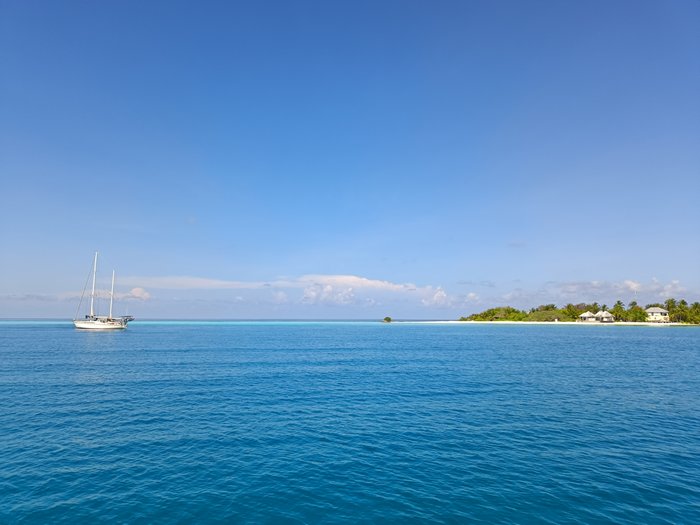
The abandonned resort development at Maagaa.
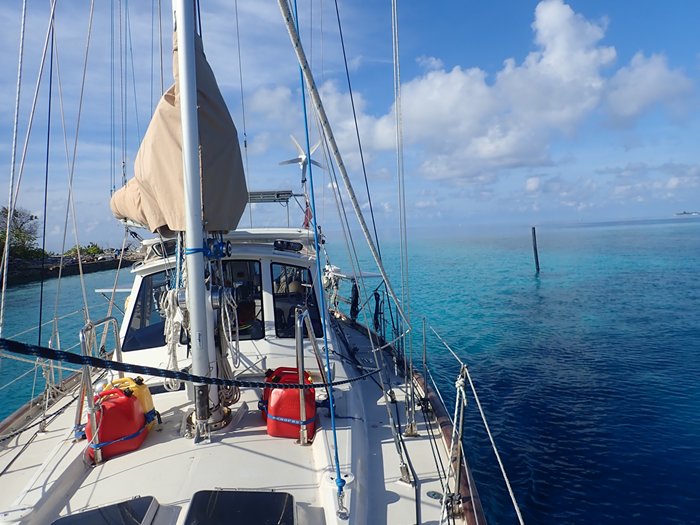
Coming out through the reef at Maagaa. The passage is the light blue water between the island and the post. Dark/brown water is reef
Dighurah was another island that had been developed with guesthouses for tourists and was bustling as a result, but we managed to find a restaurant used by locals to have lunch and topped up our fresh food. The reef to the west of our anchorage was deep and
provided little protection when the wind came in from that direction building up an uncomfortable chop. It also created waves on the beach, and we got a bit wet getting ashore in the dinghy! We moved on again looking for better shelter.
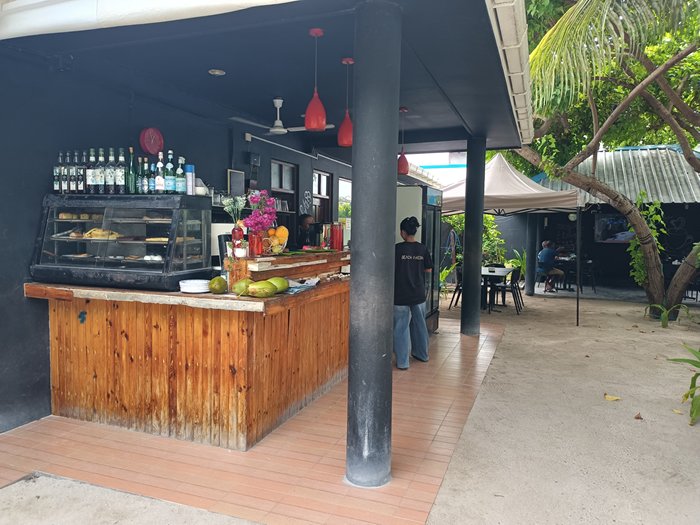
Lunch spot on Digurah
The 30 miles passage to Magoodhoo, in North Nilandhe Atoll was proof that the South West monsoon had arrived. We had regular squalls with winds up to 30 knots and poor visibility. Jamala got into the anchorage before us and just ahead of the next squall. We found ourselves trying to anchor in strong winds, making communication between foredeck and cockpit hard, but eventually we were settled far enough from any coral outcrops and from Jamala. The wind was too far west for the island to protect us and the reef gave little shelter from the sea. Once again we moved on after one night. 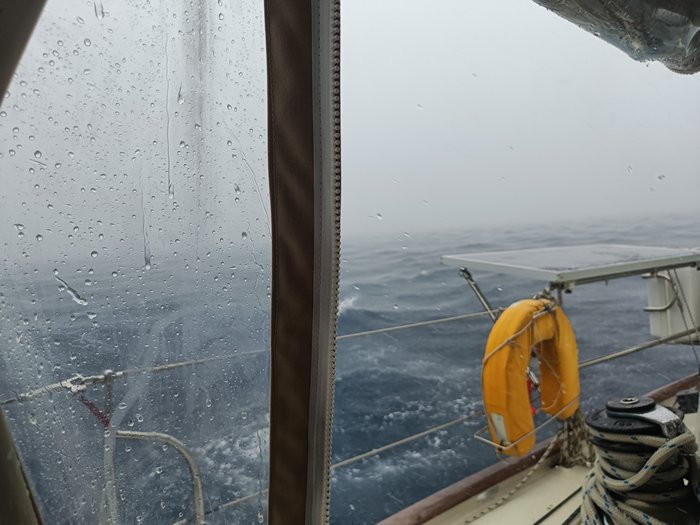
A wet and windy sail
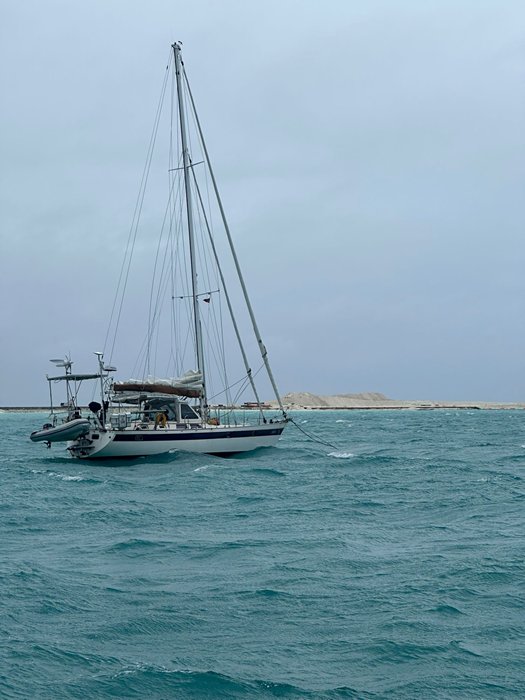
And an uncomfortable anchorage (thanks Maria for the photo). The works in the background are the construction of an airport on reclaimed land
With more moderate westerly winds and no rain we had a pleasant sail to South Nilandhe Atoll where we finally found a reef shallow enough to protect us from the seas. This was a nice spot: clear water, white sand islands on the reef and the constant roar of waves breaking on the sand outside. We were now anticipating a few days of stronger winds, and wanted to top up provisions again, so we left Jamala behind and had a nice sail to Hirilandhoo, in Thaa Atoll. We had little information on this place from our cruising guides beyond that it had good protection from south west, to west and north west, and that the anchorage was not deep (8 meters) and clear of coral. We now know that there is a ship building industry, making the traditional inter island boats (using modern materials) and also smaller run arounds. There is also an active fishing fleet and processing works ashore, with the associated fishy smell. The works are small huts containing big vats in which the fish is boiled down to a paste that is widely used in the islands. 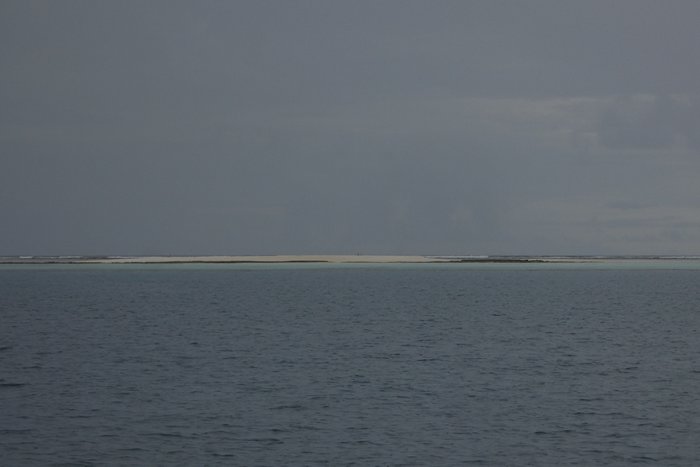
Our reef anchorage. You can see the waves breaking on the reef behind the sandbank
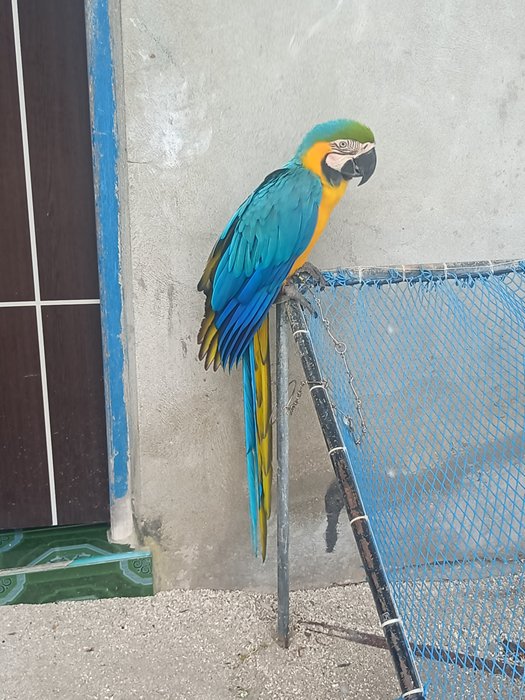
Birds seem to be popular pets in Hirilandhoo. Many houses had cages outside
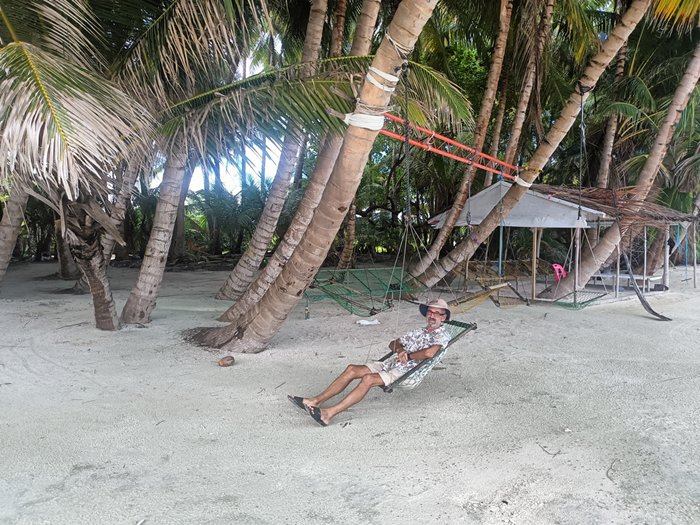
Phil enjoys a rest on the beach
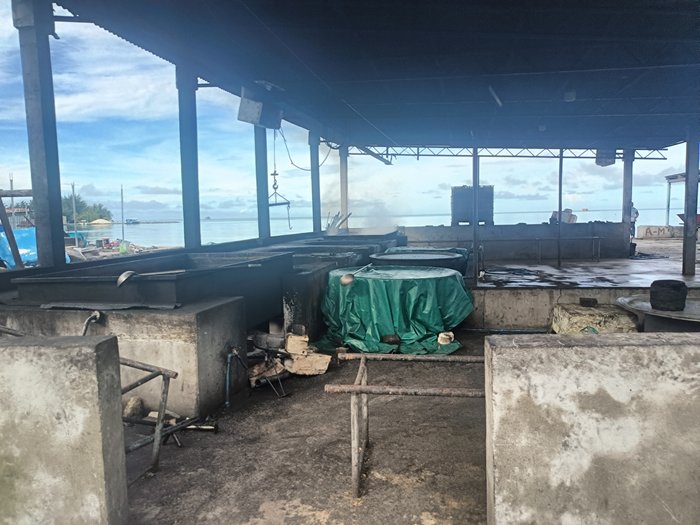
Fish processing shed
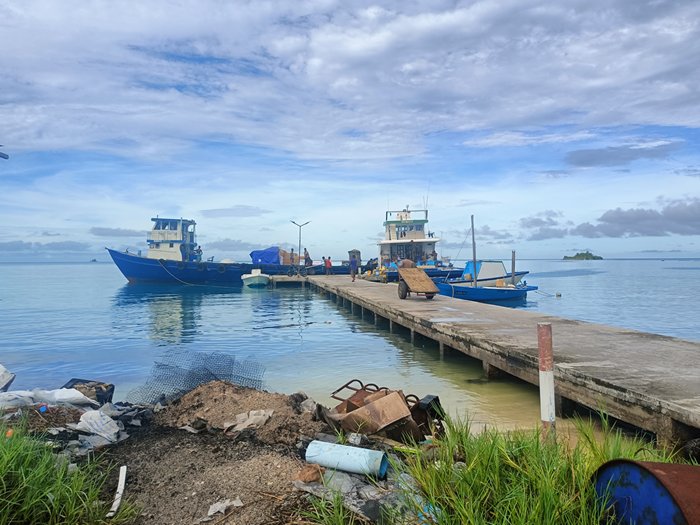
Boxes of fibreglass being unloaded for the boat builders
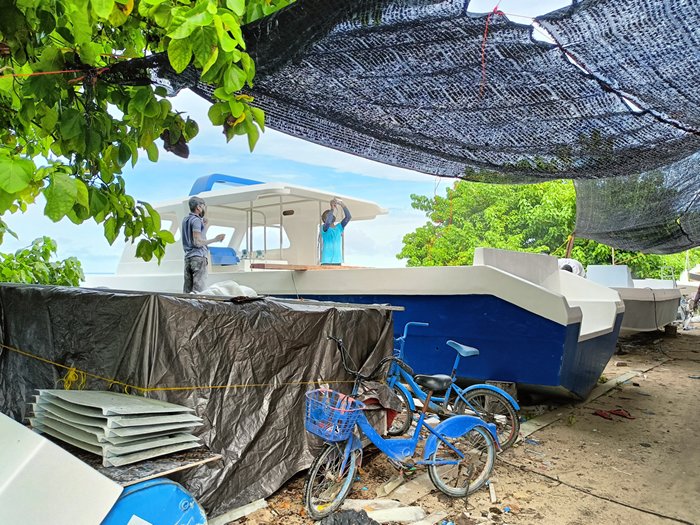
Because they are working in the open the dust from sanding the fibreglass goes everywhere
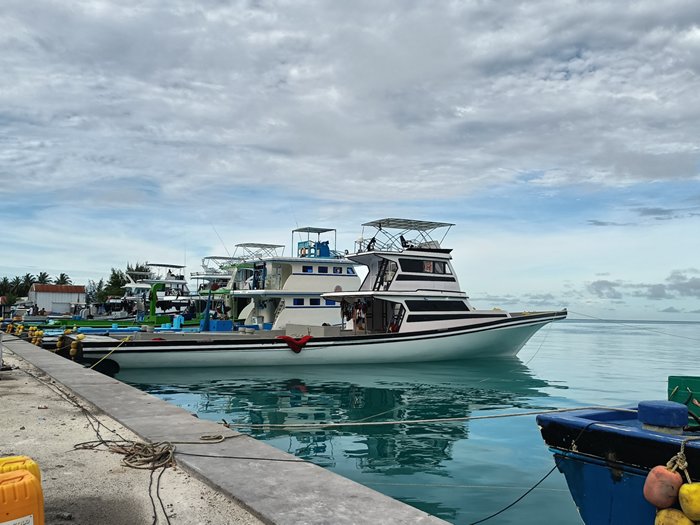 As well as the small boats cargo carriers like these were being built in sheds on the beach
Despite the fish smell (which we only get when the wind is in the wrong direction) we have stayed in our protected spot beginning to prepare for our passage to the Seychelles. Phil was unhappy with how the gauges on our fuel tanks were working so opened up all the inspection hatches to check. A good job as one tank turned out to be about a quarter full. He topped it up from the cans we carry, and we were able to refill them here at the lowest price we have found in the Maldives. The gauges also had some attention and seem to be working better. We have checked and re-stowed our food stores, so we know what we want to top up with and have been round checking the rigging on deck. Before we move on Phil will go up the mast to check that all is well up there. Sarah cleaned the hull while we were in the manta ray anchorage so that should be good for the passage. 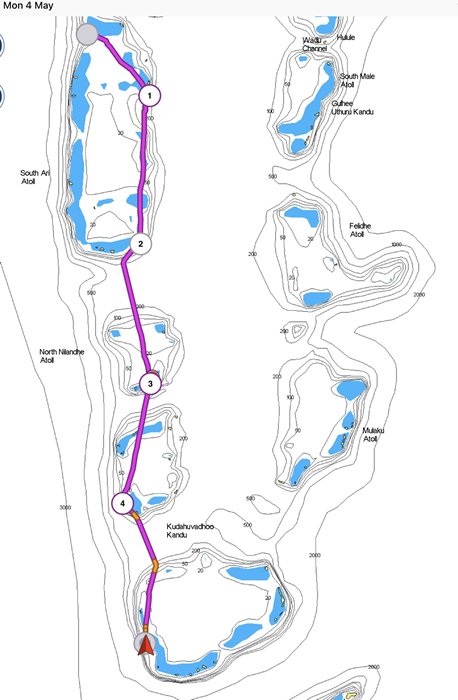
Our route from Mathiveri to 1. Maagaa, 2. Dhigurah 3. Magoodhoo, 4.Bodufushi and Hirilandhoo
The change to wet and windy weather has shown the limits to our electricity generation and we are struggling to make enough power to run our water maker after a couple of cloudy days. We have reverted to using our gas hob to cook and will need to find a way
to collect rainwater from the bimini if we don’t want to keep using the engine to charge. Today we have a steady 25 knot breeze, and the wind generator is providing a bit of a top up.
Boats that arrived in the Maldives ahead of us are now beginning to leave from Gan. Most are heading south for their allotted time in Chagos with just a few aiming for the Seychelles at this stage. We are now part of a small group of tailenders with Jamala,
Allora, Eternaut and Ozone, who are having some repairs done in Male. We hope that by the time we get to Gan in a couple of weeks the Southeast trades will be pushing north to meet us and blow us to the Seychelles.
|