Back up the cut to Charleston

|
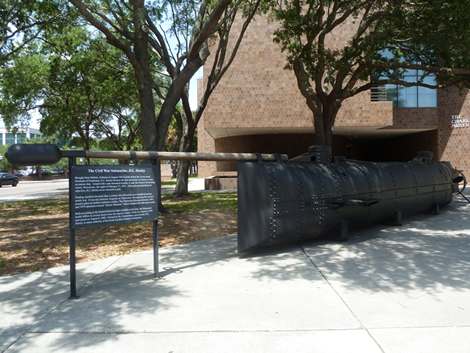
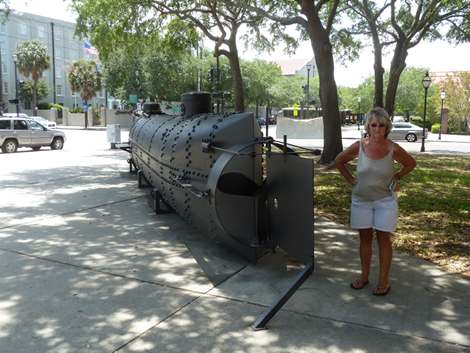
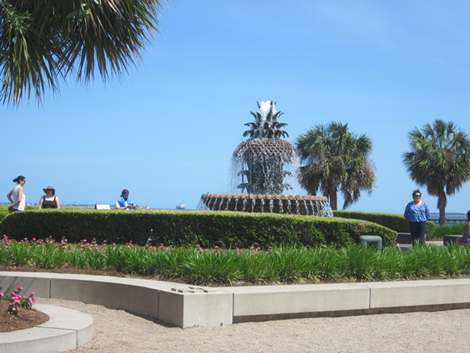
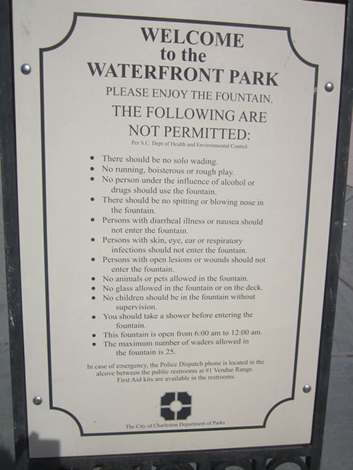
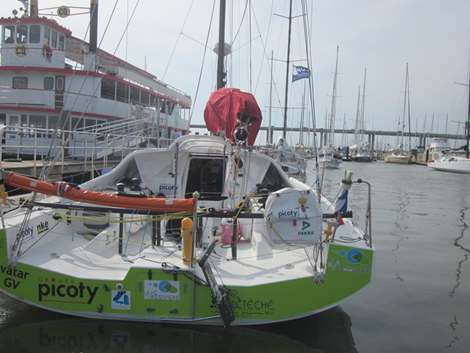
Our position is 32:46.567N 79:57.020W ICW miles to go: 469.3 Ladies Island Bridge does not open between 7am and 9am so we were up early and went through at 6.45 with 4 other yachts and a fast moving catamaran, who was soon racing away from us all. We were very unsure whether we would be able to go fast enough to make the Wappoo Creek bridge, which only opens on the hour and half hour and is closed from 4pm to 6.30pm, meaning the last opening before 7pm would be 3.30pm. Although overall we had a fair amount of tidal help, it ran very hard against us through Elliot Cut (a narrow land cut linking Stono River and Wappoo Creek) and the earlier sections were very shallow in places. We were advised by the boat ahead that he had come close to the bottom between two of the marks so we tried a different track only to run aground between the red and green marks. Full throttle and hard on the helm got us off and pushing the keel through the mud we made it back into deeper water. (Touch wood we have managed without the services of Tow Boat US but we did join just in case) However all the boats that had been with us in the morning just made it in time to get through the Wappoo Creek bridge and moored up to the Charleston City Marina megadock in time for tea. The length of the dock was such that the richer inhabitants had their own golf carts to get about on. Luckily the dockmaster who had helped us tie up gave me a lift to the office to check in, otherwise I might have given up before I got there. After our early start we took it easy for the rest of the day in anticipation of exploring the town the next day. The marina had provided a bag full of information and maps to help us plan our activities. The marina provides an hourly bus service into town but we didn’t get up early enough to catch the 10am bus so walked the mile or so to the visitor centre and the city museum on the grounds that the exercise would be good for us and we could get the bus back. The city museum is at the top of what the town calls “museum mile” as there are many historic homes now open as museums. In the museum we were particularly interested in the exhibits detailing the history of rice production in South Carolina. This was rendered uneconomic by the abolition of slavery after the civil war as the marshy terrain prevented the use of machines to replace the manpower previously used. We also took the opportunity to learn more about the civil war and the development of HL Hunley, apparently the first submarine to be used successfully, although it did not return from this foray after sinking the blockading ship it was attacking. In any case it was a complete death trap for the crew and had killed several before being ordered to only operate half submerged. We continued on down museum mile and took in the old Slave market museum which was sited (unsurprisingly) in a building that had been a slave market after abolition. Slavery was not completely eliminated by abolition as, although no more slaves were brought from Africa, there was still a trade in home bred slaves until after the civil war. This museum had a lot of oral history, recorded earlier in the 20th century, with reminiscences of slaves, some of whom had actually been traded in the market. We also looked for the Dock Theatre, reputed to be the first theatre in America, but it must have been lost in the myriad of historic houses. We did manage to identify a tavern on a site where an inn had been since the 1500s and we wandered in yet another beautiful waterside park; this one had fountains which allowed public access but only subject to a host of rules and warnings about the absence of lifeguards. By then we were tired but decided again not to wait for the free bus but to walk back, stopping only to buy some cakes for tea, and we were soon back at the marina. We stopped on the way back to the boat to look at a fleet of Open 40s which were gathering to race from Charleston to New York, two- handed as part of the Atlantic Cup, setting off on 11 May. They were certainly full on racing machines and didn’t promise anything by the way of comfort for an Atlantic crossing. I suspect the European competitors had been shipped across.
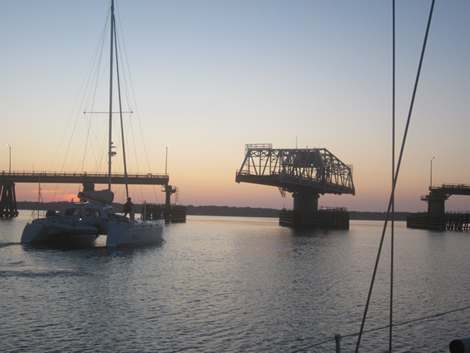
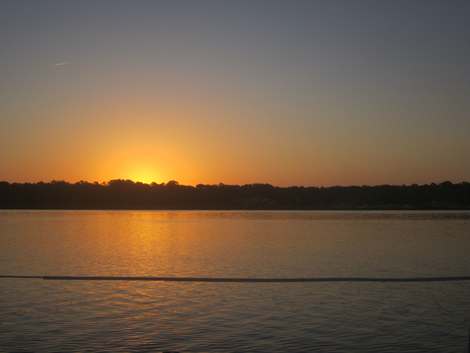
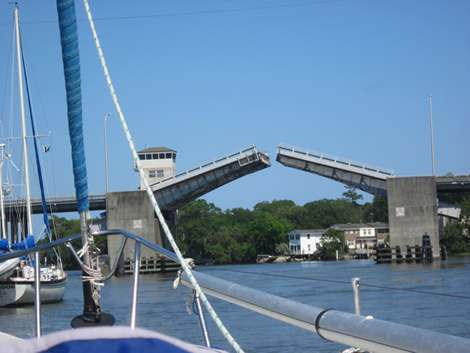
Going through Ladies Island Bridge before sunrise and sunrise not sunset!
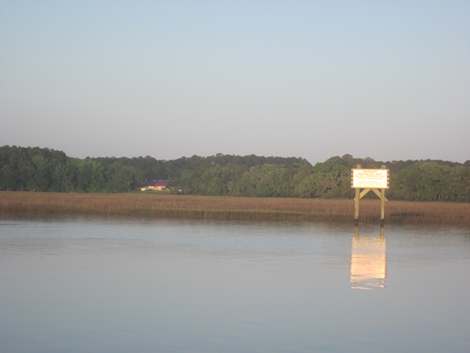
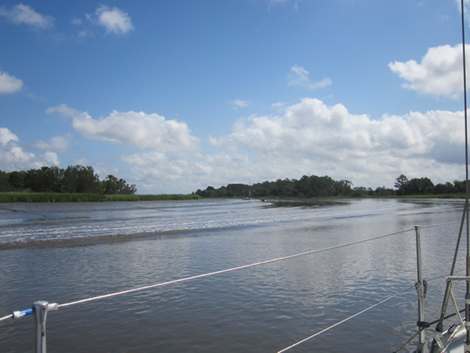
Typical marshy waterway terrain This section of the waterway uses transits (called ranges) for navigation
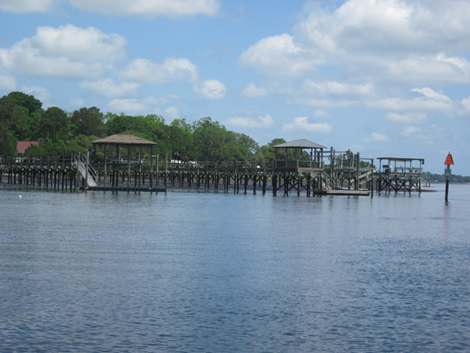
Deep enough where we are, but low water reveals the mud The docks have to be taller and have floating platforms as well to cope with the tidal range
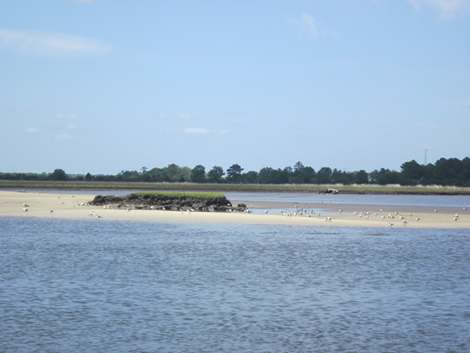
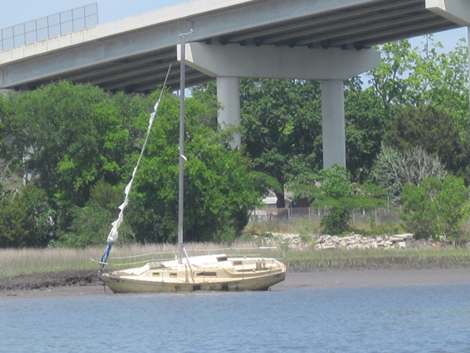
Plenty of birds to watch us pass on this sand bar Not everyone's navigation is as careful as ours
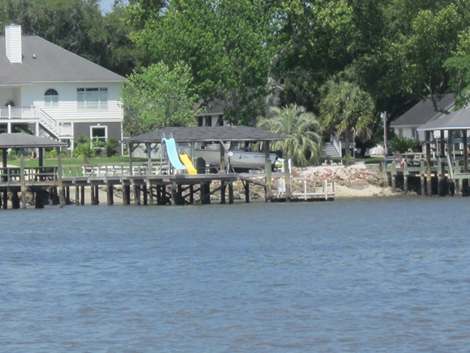
Docks can be used for more than just boats Elliot Cut
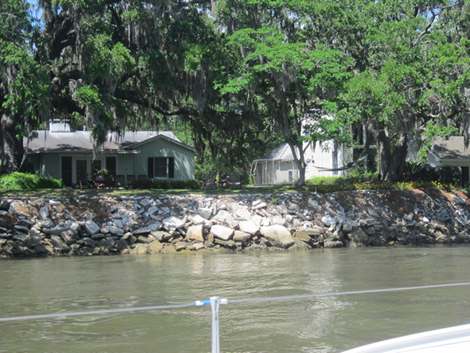
Houses alongside the cut can be small as well as big
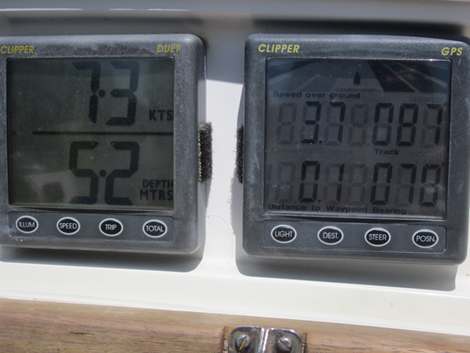
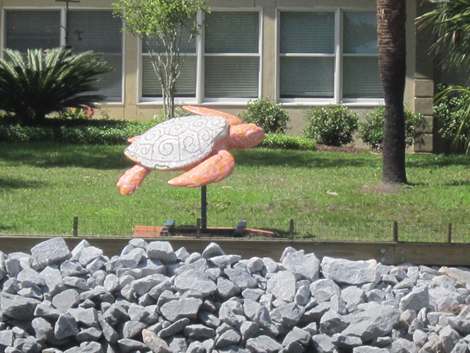
3.6 knots of current against us in Elliot Cut not all turtles were sighted in the water!
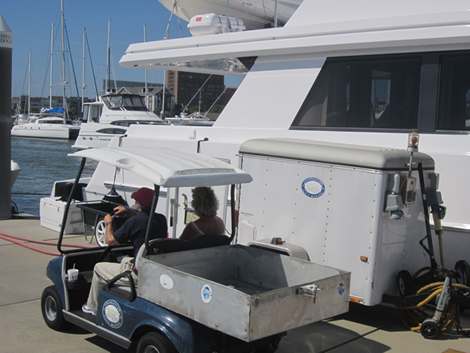
Wappoo Creek Bridge Kay being driven off by golf cart along the megadock
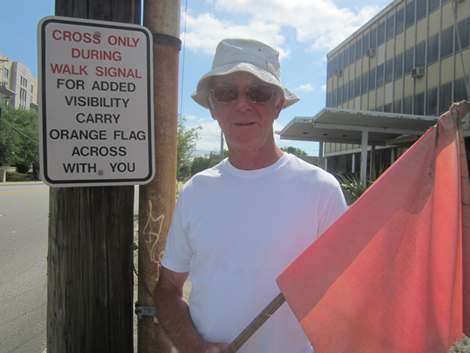
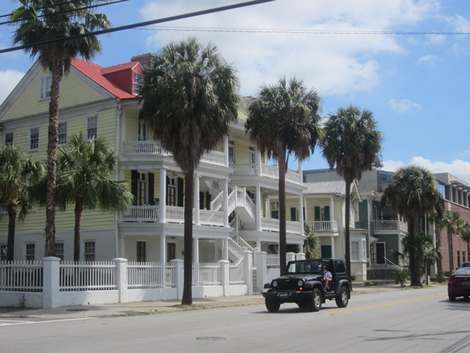
Makes a change from carrying a flag to alert pedestrians about cars Typical Charleston street
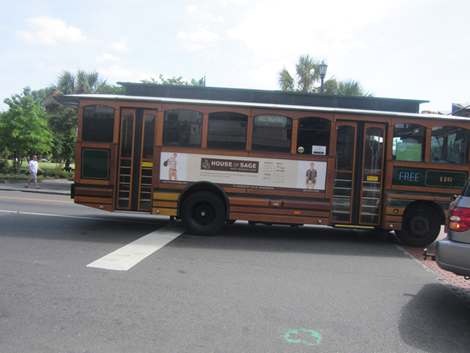
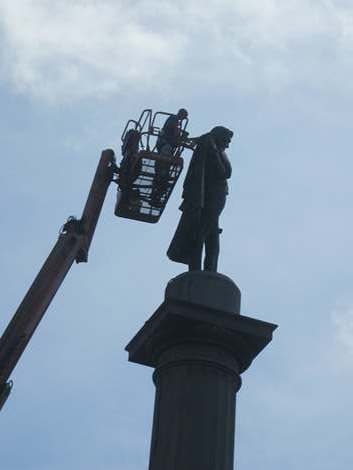
Free trolley bus (appropriately called Dash as it dashes out of the picture) Polishing up James Calhoun (a US vice president)
The Citadel (now offices and previously a state militia training college) Another way we didn't travel sround Charleston (although all the ones we saw were full)
Replica of HL Hunley outside the museum The explosive charge is on the end of the bowsprit Waterfront park fountain and its rules (I was particularly struck by "no solo wading"!)
View of Fort Sumter, where the civil war started USS Yorktown, now moored at Patriots' Point and open to the public
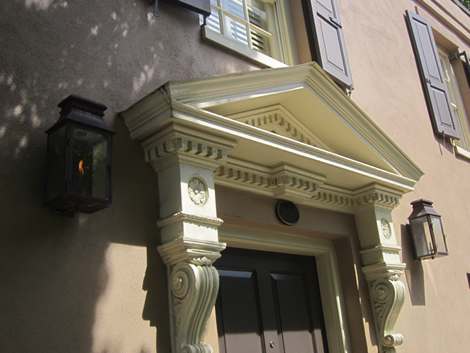
The "old" tavern Lots of buildings had these gas lanterns alight (even though it was daytime)
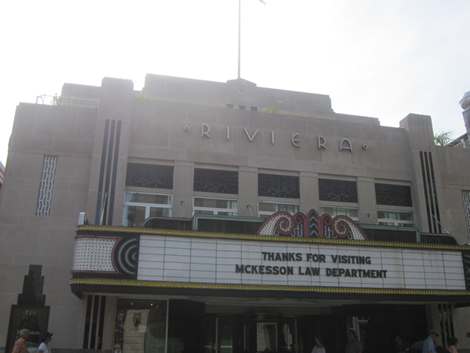
New use for old cinema One of the Open 40s getting ready for the Atlantic Cup race
|