Klang and Port Klang N03 00 235 E101 23 307

|
The boat was fully laden when we left Port Dickson. Like everything else at Admiral Marina the fuel dock was excellent with lots of space so easy to moor up, we filled our main tank and jerry cans with diesel. Our water tanks were filled and provisioning complete, the fishing line might provide something extra but despite the prolific fish counters in Malaysia, we hardly ever catch anything here. We sailed for a wonderful 2 hours then as usual had to start motoring when the wind died. We were aiming for Port Klang, the biggest cargo port in Malaysia and very busy. There is a marina not quite en route and far from the town or anything else so we decided to go up river and take a mooring at the Royal Selangor Yacht Club on one of their mid-river pontoons. Later, when we met up with fellow yachters who had gone into the marina, we were glad of our choice as when they were trying to get out the 5 knot current that lashes through caused mayhem. All the yachts had problems but one yacht was whipped around when leaving its mooring, it ripped out 3 finger pontoons and the crew only just managed to get on board. Sail Malaysia is now trying to help them in their negotiations with the marina. Chugging through the Port Klang docks area Chris counted at least 65 giant cranes and ships were constantly arriving or leaving. There were container ships, tankers, barges, coasters, re-fuelling vessels and colourful tugs (some pink) hovering for miles up the estuary. As the docks petered out the river narrowed and we soon had a place on a mid-river pontoon. This proved very successful as it included a water taxi ashore to a really palatial and well-staffed yacht club just 20 minutes’ walk from the town. The only drawback here is the rubbish which comes down from Kuala Lumpur swamping the whole river. Men in dinghies go out with nets stretched across the flow catching tons of the stuff, taking it to the river bank and bagging it. Why poor old Port Klang has to pay for the management of Kuala Lumpur’s rubbish in this way just beggars belief. After a calm night mid river we took the water taxi ashore and checked in at the yacht club and met a friendly girl from the Netherlands doing voluntary work there for the imminent Selangor Regatta. A walk into Port Klang town brought us to the railway station where we took a train, much like the London Underground trains, to get to Klang.
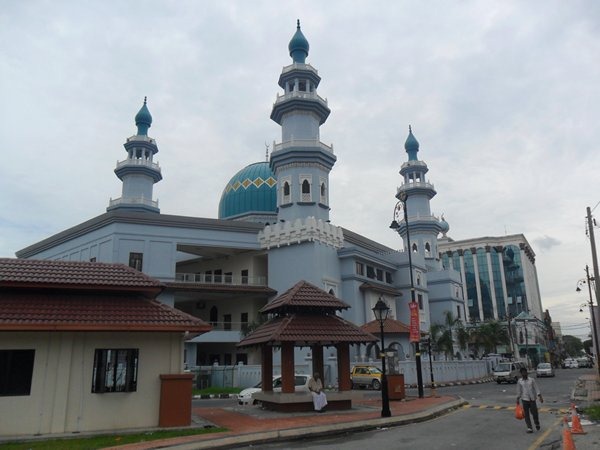
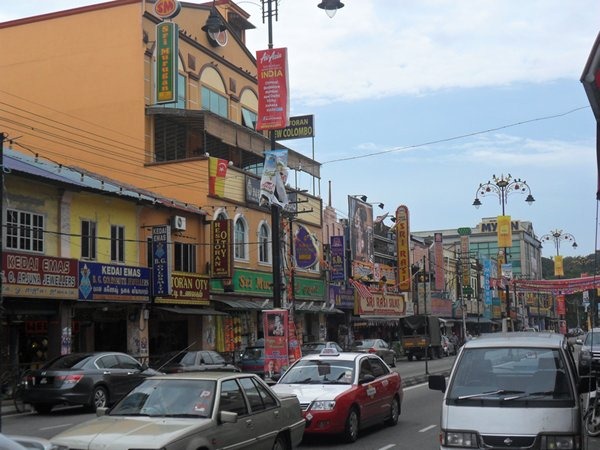
The town of Klang was once the royal capital of Selangor and is where the British had their first residency in 1874. Now this small town is more famous for its food, especially in little India where restaurants abound. We toured the streets and found pavement fortune tellers who use parrots to pick out cards which are said to foretell the future. The parrots seemed to be enjoying themselves so we left them to it and hunted out a likely restaurant. We had an interesting meal with a Lazy Susan of sauces and pickles, such an array but we tried them all. Interesting and not too hot.
Little India, Klang
To find out more about the area we visited Galeri Diraja Sultan Abdul Aziz, the royal gallery of the sultanate of Selangor dating back to 1766.This was fascinating and demonstrated the paternal nature of the sultanate and the royal enthusiasm for education of the people, for sport and family life. The crown jewels (or copies) glittered with precious stones mined in Indonesia; the whole place was full of sparkling regalia, jewels, medals, chains of office and clothes pressed with patterns of gold leaf. More fascinating were the personal artefacts of the sultans such as a bicycle woven all over with pandanus leaves and used for visiting villages, the family photographs and those of the sultans out and about in Selangor. We had enough of royalty by this time so didn’t trek uphill to see the old palace, we took the train then walked back through the puddles from the morning’s rain for another night amid a river of rubbish – one problem the sultans haven’t solved.
|