People of the Forest

|
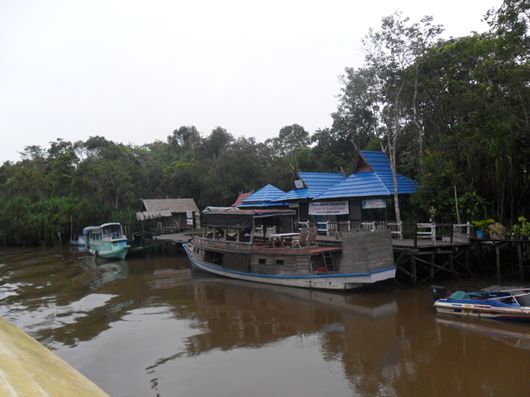
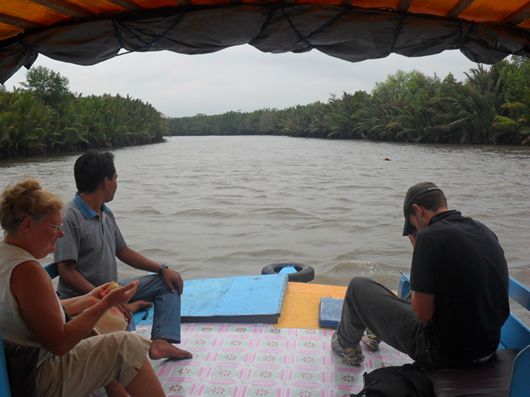
We had decided to visit Kumai because of the chance to visit the Tanjung Puting National Park to get up close and personal with Orangutan. To this end we hired a Klotok, a local river boat.
The three of us were accompanied by Robbie, a qualified park guide and multi-linguist, the captain, his son and a cook. Robbie was an absolutley charming man and during our 2 days he was teaching Peter Indonesian songs.
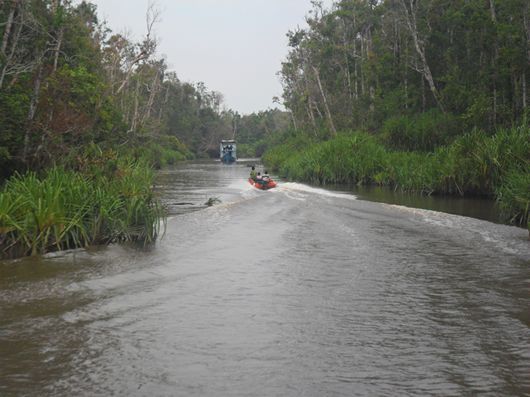
Parts of the river one could have been on the Norfolk Broads...except for the temperature....the vegetation....and the wildlife! We saw otter, which was unexpected, fabulous kingfishers four or five times the size of their British cousins, hornbills with heads that look immensely heavy but are quite light, and small crocodile less than two metres with narrow heads just right for fishing. As well as fishing in the black river water, the crocodiles lie patiently just off the river bank for the monkeys that don't quite manage the leap across the river which they attempt from time to time using springy branches to propel themselves.
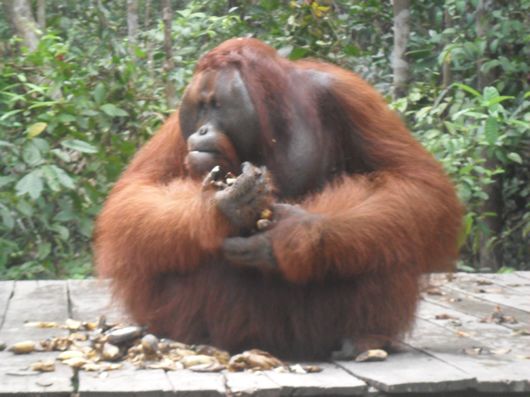
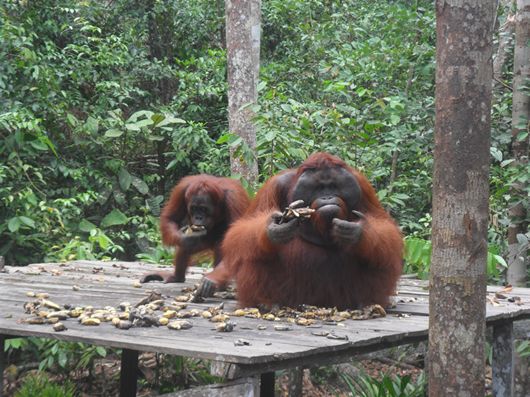
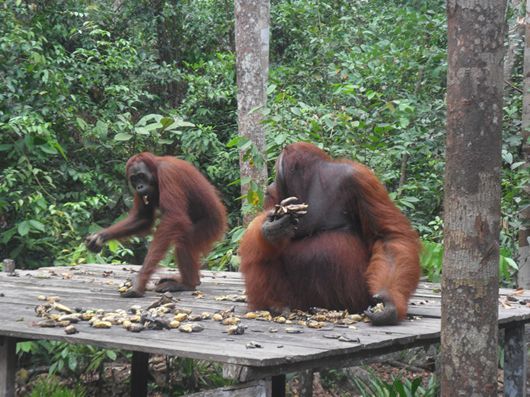
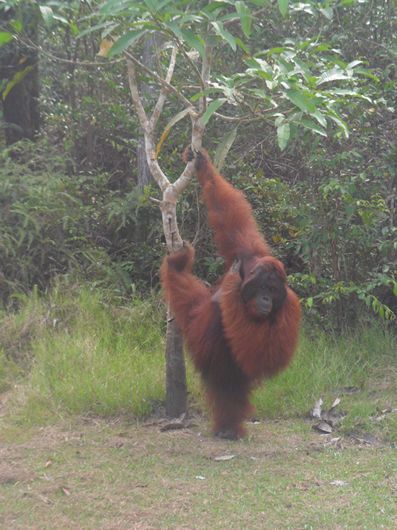
We were ferried up river about 30 miles to Camp Leakey, which until 1995 was used as a site to rehabilitate orangutan that had been released from captivity. The site is no longer used for this purpose, as there is a fear that this could be a route for disease to be introduced to the wild population. Hence there now exists a small population of orangutan who are very tame and a larger population who are accustomed to man. Each day bananas are left at 3 feeding stations to attract in the animals for observation by the rangers and the tourists. The animals are not dependant on the food and we were told that some individuals only appear occasionally such as this fine chap Dayouk, who was visiting a feeding table for the first time in 3 months...and defintiely making it his own.
He put on his " I am not amused face" when a younger animal came to pinch a few bananas. The record for getting the most bananas in the mouth in one go was by a young female who managed 15.
Over the 2 days we were in the park we visited the 3 feeding tables in different locations and observed a number of different animals. All the older females had babies, the population seems to be thriving.
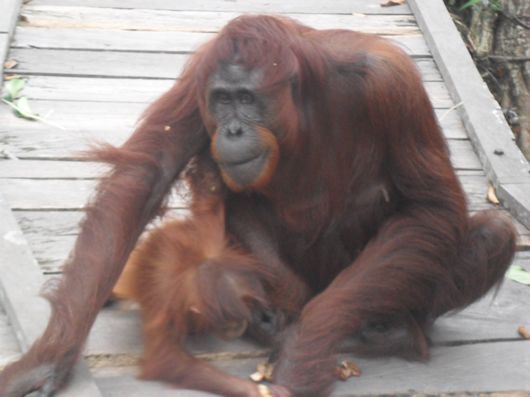
This rather well coiffured female had no intention of moving as we waited to pass, none of the animals move, humans just have to skirt round them and hope the ankle isn't grabbed.
They are very passive creatures but 8 times stronger than man so caution is always needed when in close proximity, especially with the males.
This young chap was very friendly but Lorraine had her fingers well squeezed when she held his proferred hand.
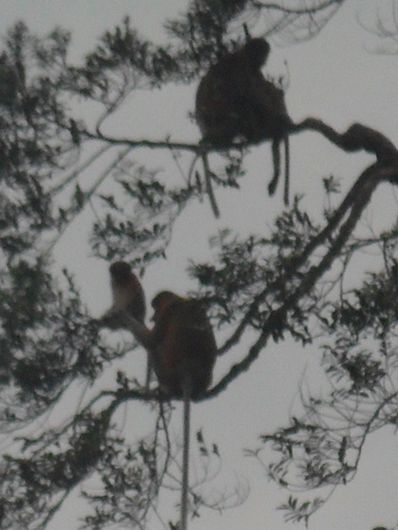
The reserve appears to be well run and we understand there are regular patrols to watch for illegal logging and poaching. As most people know, the orangutan are under severe threat mainly from habitat destruction.However, this reserve seemed to us to offer a good compromise between wildlife and the need to generate an income from the forest. Other tree climbers in the forest included troups of macaques and these odd looking proboscis monkeys which are plentiful in the upper canopy.
There is a healthy tourist trade with something like 5,000 people visiting the orangutan last year. Whilst at the forest stops we met people who had flown in from UK, Holland, Spain, Italy, USA and Germany. This keeps about 40 of the river boats occupied and their crews of 4 per boat. A big improvement would be to have electric craft both to reduce pollution but most of all to allow one to hear the forest. The Indonesians do not seem to know what a silencer is and consequently until our overnight stop the forest sounds were drowned out.
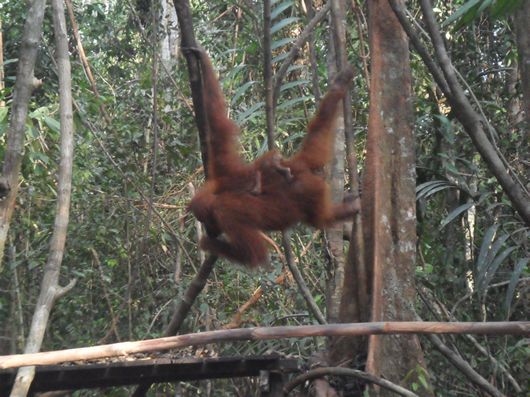
Mum and tiny baby.
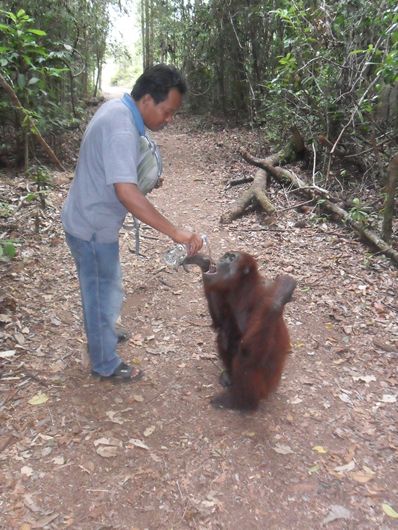
Youngster has a drink.
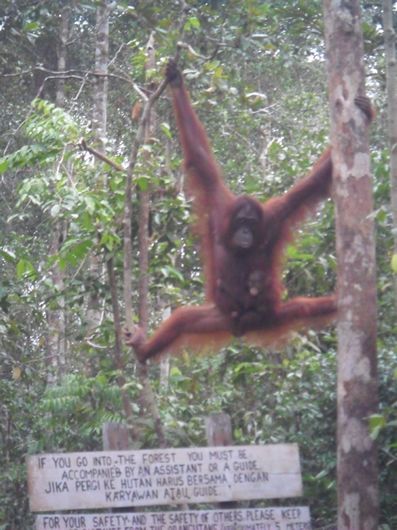
Apart from the orangutan everything in the jungle seems to move at top speed or sinks into bush or water to be completely hidden once spotted so taking photographs is not easy with the low light levels, hence the lack of variety in our offerings for this blog. However, the orangutans certainly like to pose, especially trying to make themselves look big.
Orangutans are only found in Borneo and Sumatra, the populations are fragile. We were unsure about this visit because of possible negative impact on the animals and their situation. We are glad we made it, without the support and impact of visitors influencing attitudes toward the environment, demonstrating the importance of these animals and other wildlife as a basis for generating income for the local population there could be a more rapid and perhaps fatal decline. The question is, can this lead to better things for wildlife in a country which has to sustain such a huge human population? Given the complexities, we feel very privileged to have been here. |