Villages of West Timor

|
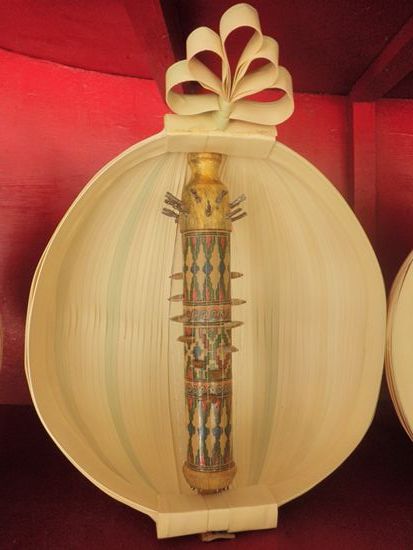
Countryside and Villages of West Timor To see more of the country a second trip was organised with another boat crew, this time in an air conditioned 4 wheel drive that proved its worth on rough tracks and cart roads. This took us far out into the countryside, our main guide this time was Rode accompanied by Eddi, a young male guide. En route we stopped at a sasando workshop, a wonderful start to the morning. The sasando is a traditional instrument with harp-like qualities made largely from palm leaves and bamboo. We were serenaded by the master musician and his adult son in a variety of musical styles from local tunes to such classics as barely recognisable (and rather good ) versions of Old Lang Syne and Danny Boy. 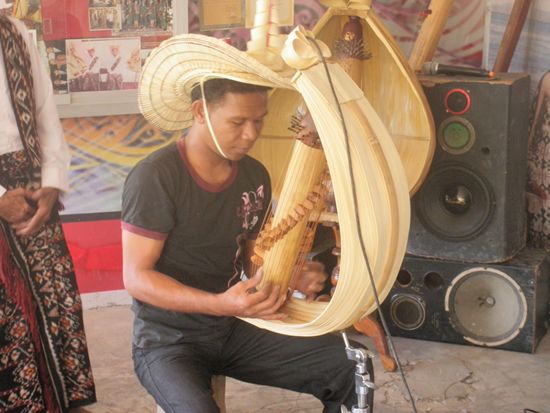 Note the comedy hat! This is a traditional hat from the island of Rote where the instrument had its origins.
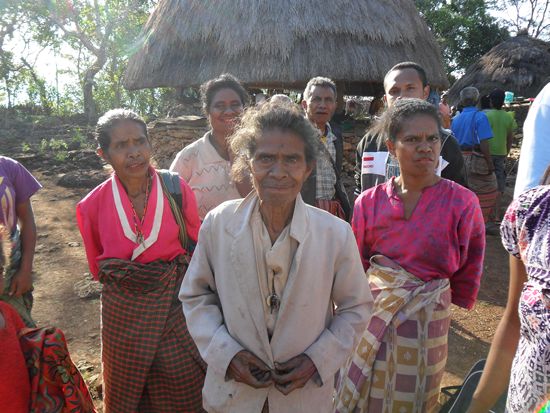
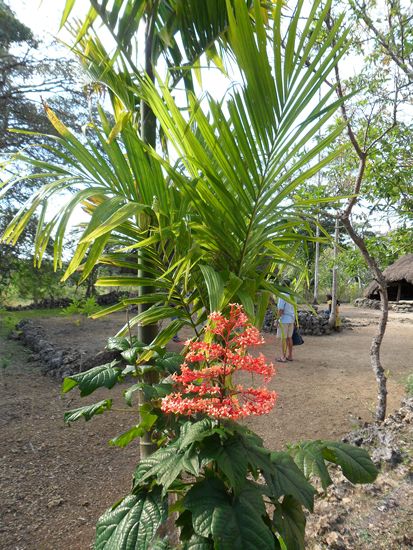
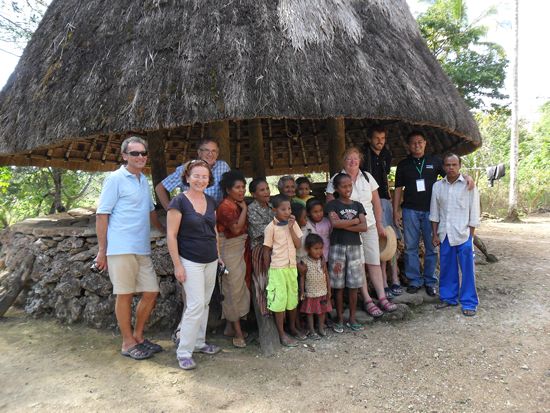
 Continuing on into the countryside we visited 2 beautiful villages where the people still live in a traditional way with few modern concessions. The smallest village was tranquil and lightly perfumed by a local plant which we could not identify.
 The traditional houses are built without walls but with
thatch that comes almost to the ground some beautifully decorated with woven
leaves and simple carving. The place for welcoming visitors is given particular
attention, the stone floor is spread with mats when visitors arrive, this is
where we were greeted.
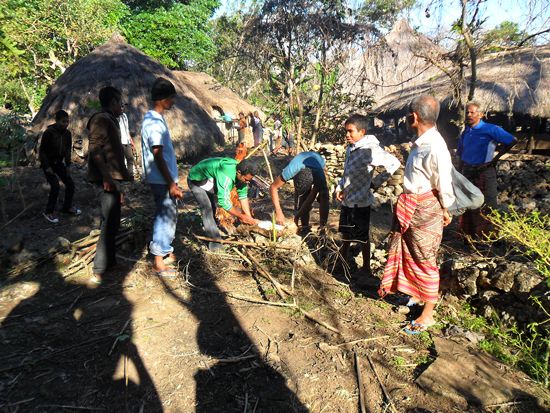
 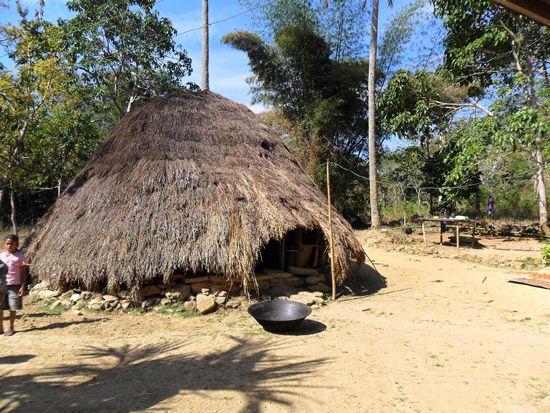 This kitchen had a 3 stone hearth in the middle but no hole for the smoke so that everything was blackened by soot. It reminded us very much of the recreated Iron Age settlement at Grimes Graves in Norfolk...the houses were nearly identical ...right down to a pig pen out the back. The village was kept beautifully unlike the town dwellings which are often sitting in a sea of litter..mostly plastics. The people hardly seem to notice it but I suppose they are too busy trying to make ends meet to worry too much about their environment. At Nomi, the second village, villagers were preparing for a feast and here are singeing the hair from a recently slaughtered pig. This particular village, now peaceful, is known for its history of head hunting.
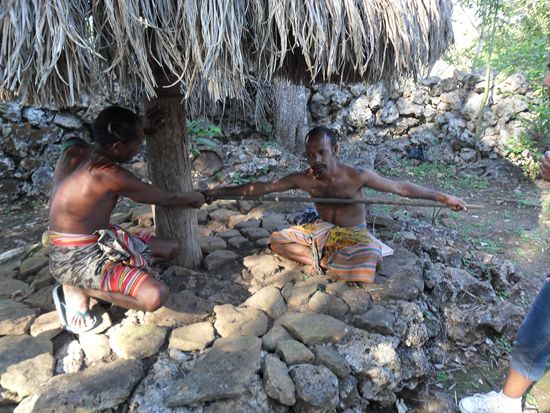
Village men demonstrating how they would use various tools for locating and dealing with the enemy.
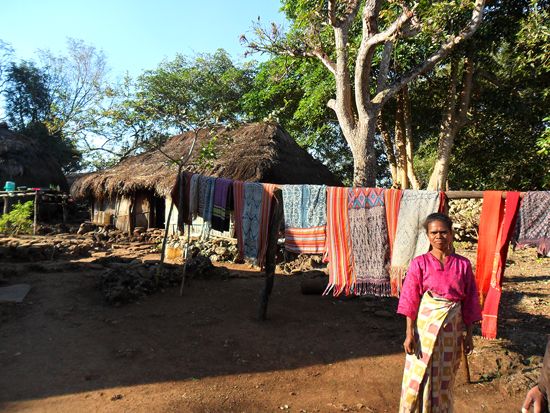
 Village women weavers who make the Ikat cloths that are used for wraps like sarongs, drapes and scarves all in traditional designs.
 Peter entertaining the village children with footie skills. Children here are in awe of his height and sometimes follow him like the pied piper. 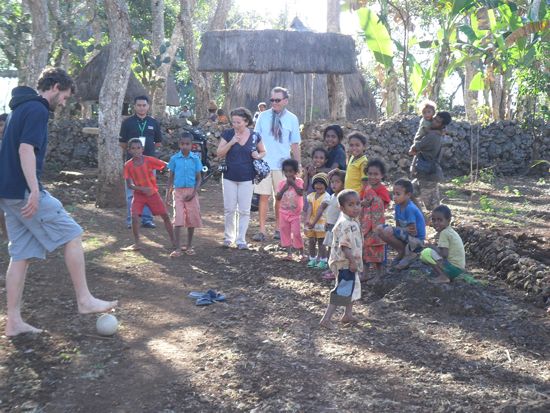 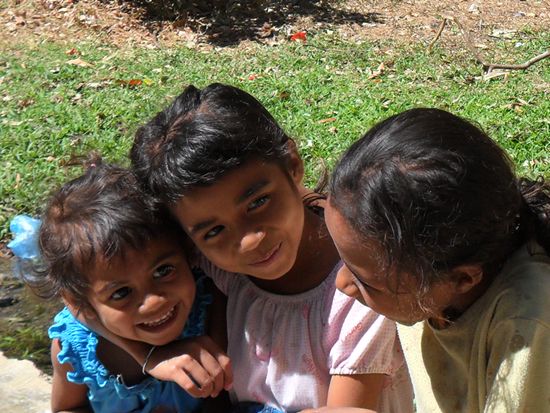 Village treasures.
|