Vanua Levu

|
As we reported in
our last blog the formalities were a bit protracted here in Fiji, but the people
who conducted them were just charming. Here are Maria, the customs officer and
Joel, the immigration official.

In the background you can make out the Agriculture
Officer drifting upstream as the boatman tries to mend the outboard!
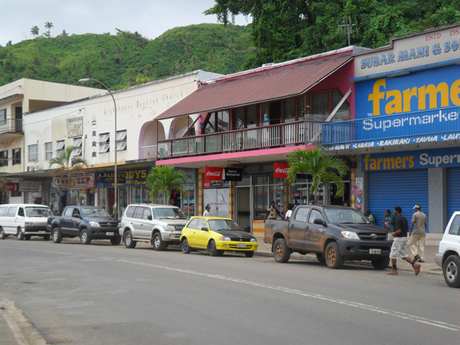
Savusavu is a small one street town but with just about everythng on hand that we could need. The yacht club is rather smart, converted from an old copra shed to house a good restaurant, a pizza place, a bijou dress and jewellery shop, an estate agent that also runs car hire, a gallery, internet cafe (internet not often working) and even a small chandlery.
This is downtown Savusavu.
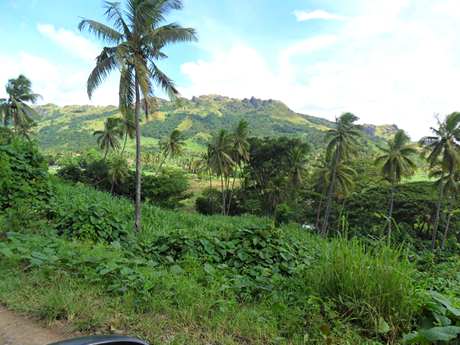
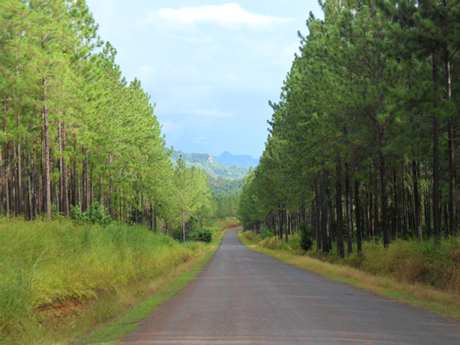
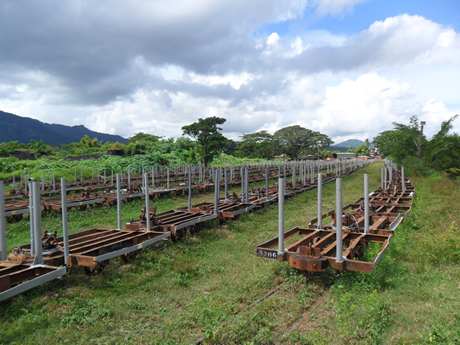
Once we had finished all the paperwork and done some shopping we hired a car for the day and drove right across the island to the main town of Labasa (pronounced Lambasa). The journey across the island was interestingly varied, with coconut plantations and subsistence farms on the wetter south side, pine forests higher up and sugar cane fields on the drier north coast.
Typical landscape on the south side.
Higher up you could be in Scotland - the indigenous hardwoods have been replaced by conifer forests which are used for building, fencing etc same as UK.
Sugar cane wagons awaiting the harvest.
Fiji has a large Indian population that is concentrated in the larger towns and in sugar producing areas, they now work in and manage the sugar industry here. They were brought across as indentured labour by the British in the late 19th century. Unsurprisingly the locals were not very interested in working in the cane fields, their needs being met by their fishing, horticulture and animal husbandry; food here just falls from the trees, sprouts from the ground or is plucked from the sea. Good old British exploiting someone else's land again to satisfy the sugar market and interfering with the natural balance of the country! On the whole, as a visitor to these islands with little time to experience the nitty gritty of street politics, there seems to be little in the way of racial tension between the groups. The indigenous Fijians are easy going and gentle people, however, they are very worried about the erosion of their culture which they see as being driven out of the two major islands and relying on the numerous smaller islands where they can follow their more traditional way of life. Those who are up on current affairs will know that there have been military coups in the past, so clearly not everything is as rosy as it seems, certainly not in political circles anyway. The problem is that the Indians are, as elsewhere, hard working and keen to get on. Consequently they are the entrepreneurs and business men of the island and also therefore the wealthier. Most Fijians remain peasant farmers and fishermen although it would seem there is positive discrimination in the civil service as all the officials we met were Fijian. It was a Saturday morning when we went to Labasa and the place was alive with people.
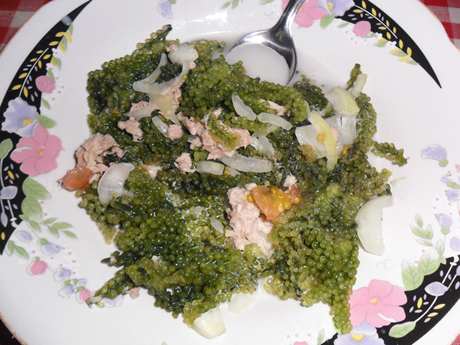
We had a good lunch in a local cafe . This meal is called mitt nama. The green bubbly vegetable is a sea weed,similar to samphire that grows at the water's edge and it was mixed with coconut milk, onion, chopped tomatoes and fishy bits. Served with big chunks of cassava instead of bread it was delicious and cost about £1.60 each!
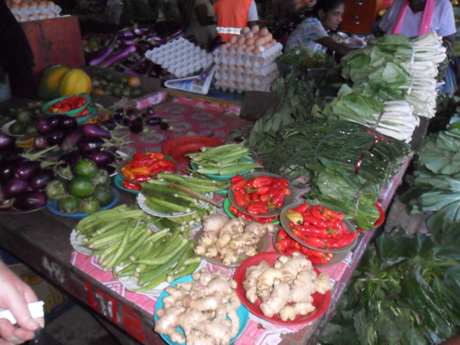
The market was in full swing and we bought some fruit and vegetables from the many stalls.
We also bought some of these twiggy looking roots. They are yaqona, which is the raw material for making Kava and are by far the most expensive produce in the markets. Kava is a mildly relaxing drink that the locals use whenever possible. However, it also has symbolic importance and yachties are expected to present bundles of the root to the the head man of any village that they anchor near. This is accepted during a short ceremony called 'Sevusevu' when the yaqona is formally blessed and one is then allowed to become a temporary resident of the village, with the same rights as the locals e.g. to fish or to swim in their waters.
|