Whales!

|
While in Tonga we went on a whale watching trip...but with a difference. We were able to swim with the whales. The whales come here for the southern winter, between June and the end of October, to breed and give birth to their calves. In November they return to Antarctica to eat their fill in the rich waters there so we were just in time to see them. We were taken out in a RIB and we searched far and wide before finding a slightly antisocial male.
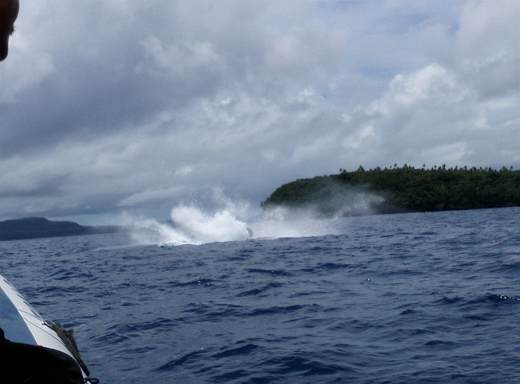
And then we came on a much more sociable female who was doing a number of antics including fin slapping and she breeched no less than 4 times. To see 40 tonnes of flesh hurl itself into the air is impressive but the excitement of the moment makes it difficult to photograph!
There are a number of theories as to why they breech and fin slap. The most likely explanation in this case was that there was a male nearby that she was trying to attract. Another explanation is that it helps to dislodge dead skin and parasites, and yet another that they just think it is fun.
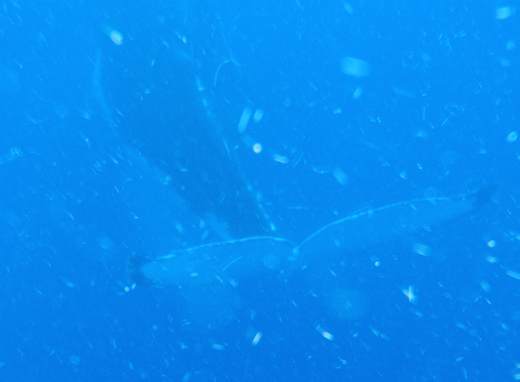
After a while she calmed down a bit and allowed us into the water. She was having little naps head down in the water whilst a nearby male sang to her. On the second occasion she came to the surface tail first she let her tail rear up high out of the water about 3 metres from us before swimming off
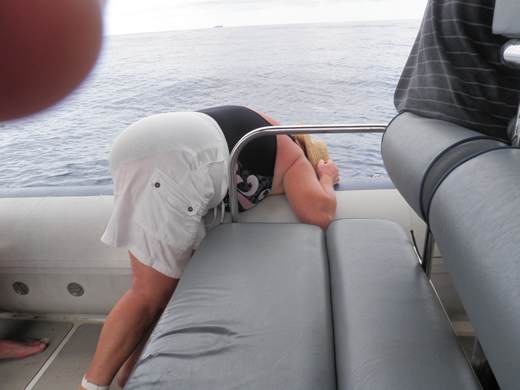
This was a totally magical experience that we hope we might repeat one day. It is slightly controversial to swim with the whales as some people say that it disturbs them and stops them acting naturally. However, from our limited experience the whales were aware of our presence and not at all phased by it. If they did not want us around they simply swam off. It is pretty difficult to track an animal that can hold its breath for 20 minutes, although our guides had an almost uncanny ability to find them. There are very strict guidelines that the whale watching crews have to follow amd they seem to abide by them. Lorraine tries to hear the song through the hull of the boat.
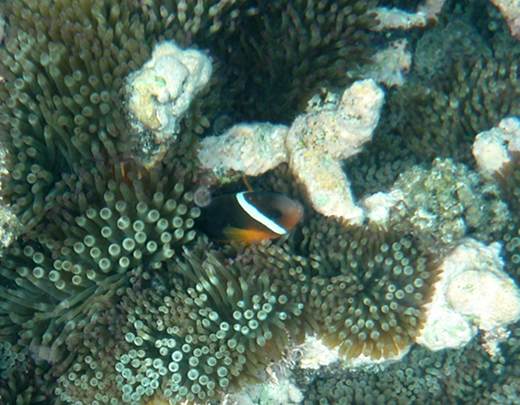
The reefs here are interesting and different to those further east. Oddly in the places we have snorkelled so far there are less fish but the range and health of the corals seems better. I discovered these attractive "dusky anemonefish" defending the anemones that they live in commensalism with. Commensalism not symbiosis because although the fish are never found without anemones the anemones do not need the fish apparently. Another odd fact is that the fish are all males to start with and a dominant female stops them becoming female... until she dies and then another male becomes female to take over the role.
There were other interesting fish, many of which are quite territorial and like to try to scare you off.
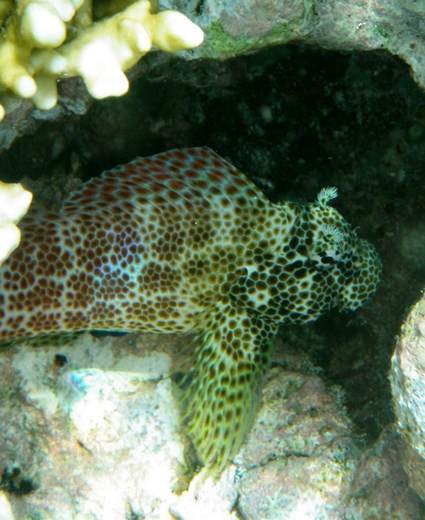
Others are more retiring
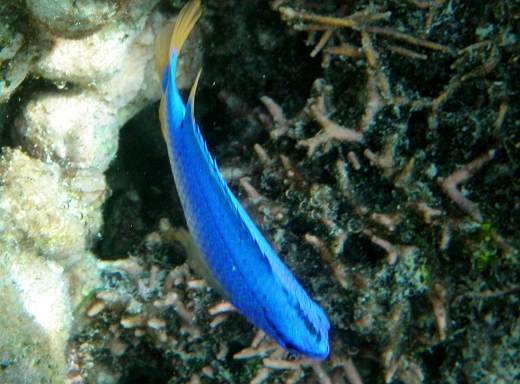
and others just ignore you.
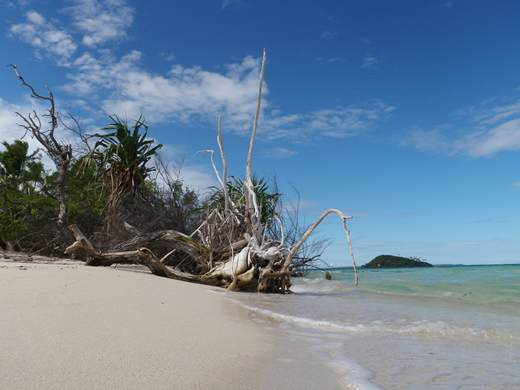
And this is surrounded by beautiful beaches............
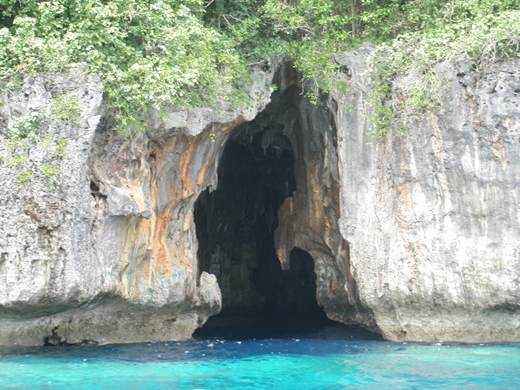
caves...............
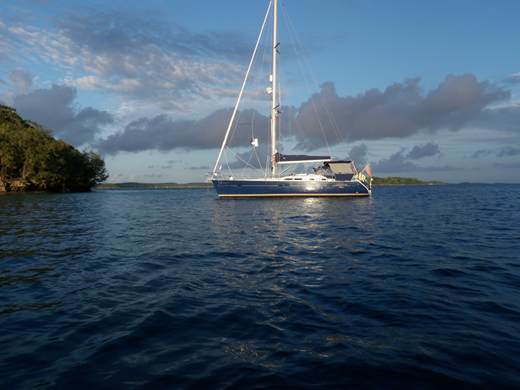
and anchorages...........
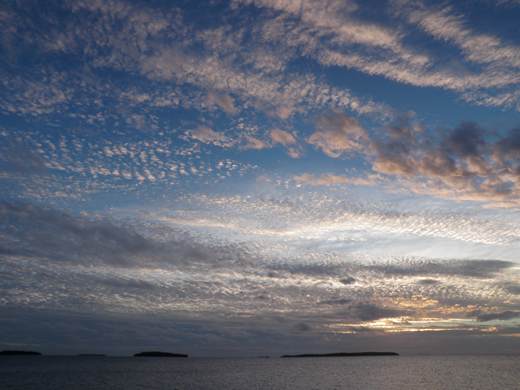
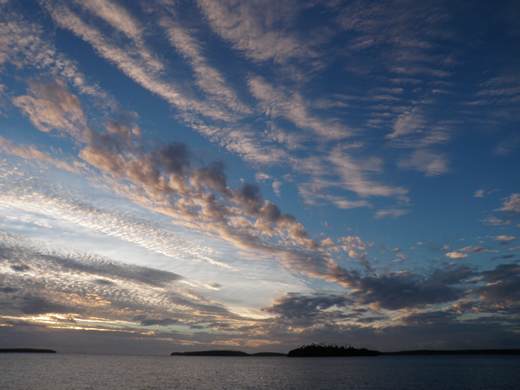
and when its not raining, by magnificent skies.....
|