Tearavero, Kauehi S 15 50 W 145 07

|
We visited 3 islands in the Tuamotus, all very different to one another. We chose Kauehi as our first Tuamotu as it has an easy entrance. We also chose it because a New Zealand boat that left the Marquesas at the same time was also going there so we could use them as a pilot. As it happens the entrance was exciting but benign and the lagoon calm.
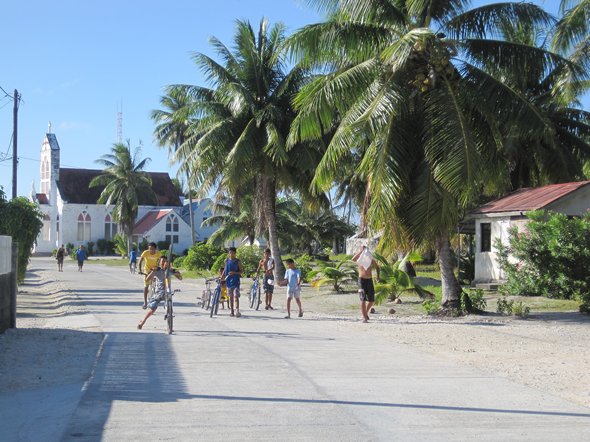
The village was a delight with the friendly locals giving us a cheery wave when we landed.
The local church was right at the quay.
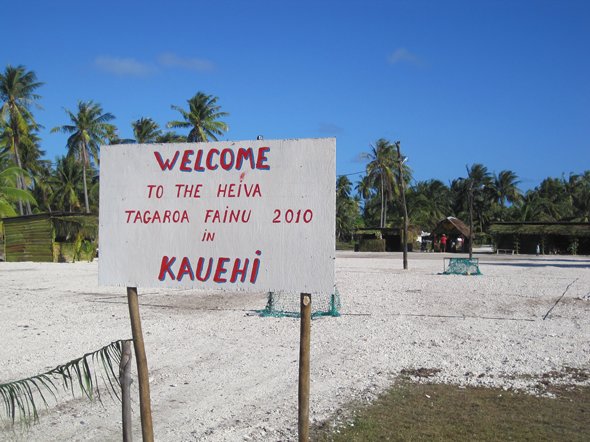
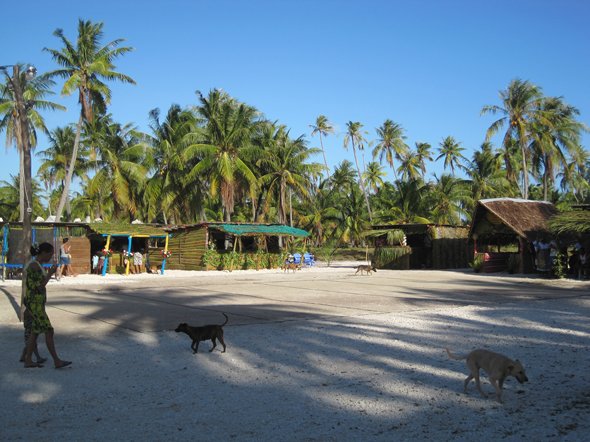
The people were getting ready for Heiva a local celebration that runs into the July 14th celebrations, so we decided to stay for the big event. These pictures were taken just before the formal opening by the Mayor with prayers and blessings.
As it turns out it was a very low key affair along the lines of a village fete, but all the more interesting for clearly not being for the few tourists.
Virtually the only tourists they get here are the yachties so they are keen to show off their island. The stalls consisted of what you would expect with some selling local handicrafts but others with light hearted competitons like chuck the ball at the tin cans. There were a couple of food stalls, one with a rather nervous looking pig tethered close by.
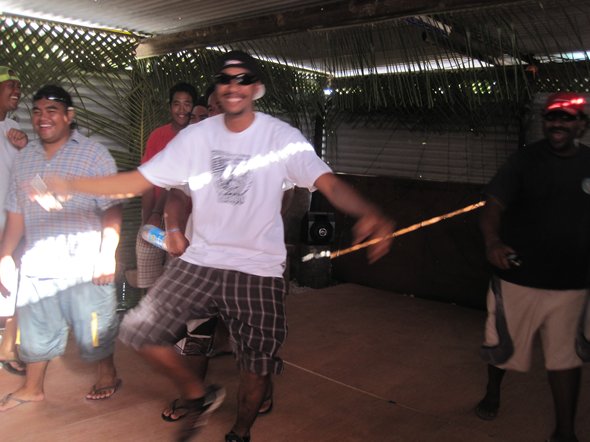
Another was a dance tent with some happy looking locals practicing their moves.
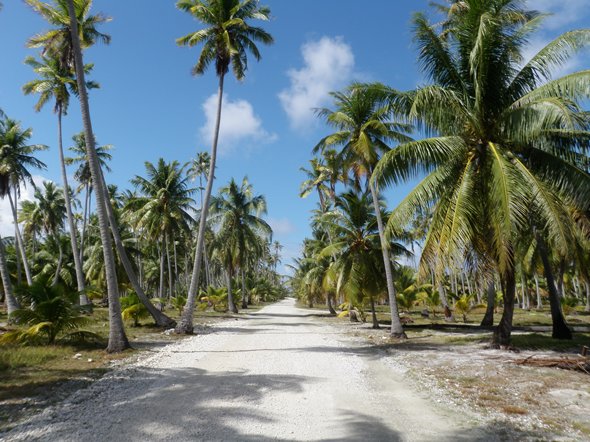
A lot of trouble had been taken to make the stalls look attractive with coconut fronds woven into patterrns to disguise the structures.The notable omission from an English scene was a beer tent. Alcohol is very expensive and the government and the church are keen to discourage strong drink as apparently when they do drink the locals quickly become legless. Whilst at Kauehi we visited the windward side of the island walking through the coconut groves that still provide an income for this traditional island.
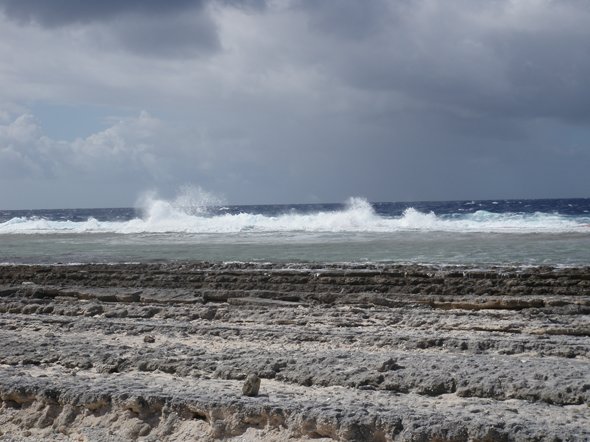
The waves on the windward reef were a sharp reminder that you do not want to be anywhere near this lee shore.
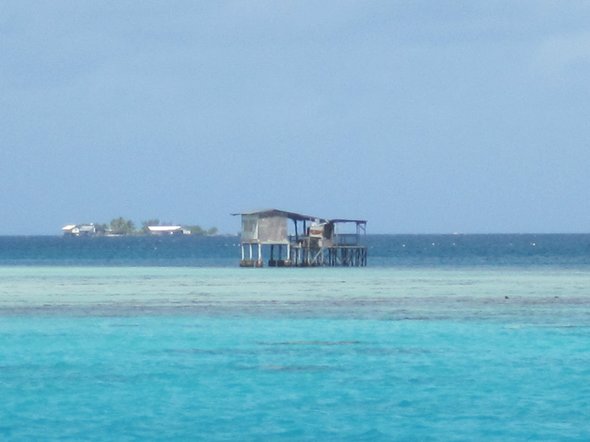
We also spent some time snorkeling and spotted our first black tipped reef shark beside this hut.
The hut is where pearl culture is carried out...which we found out more about in Fakarava.
|