Wednesday 25th July - Fascinating Fakarava

|
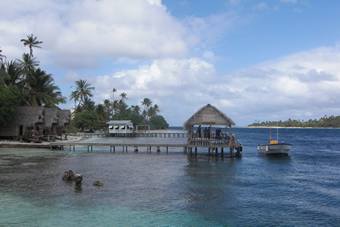
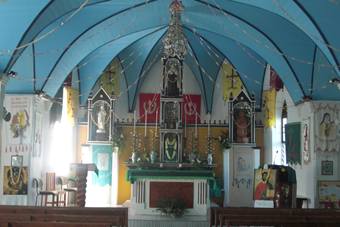
16:03.57S 145:37.32W Wednesday 25th July – Fascinating Fakarava Monday morning saw us dinghy ashore through the reefs to the tiny
settlement of Tetamanu. As
previously noted it used to be the capital of the Fakarava atoll but no longer
is. All that now remains is a small
and, for
Dive Shop and Shark Alley
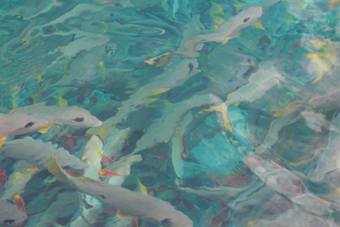
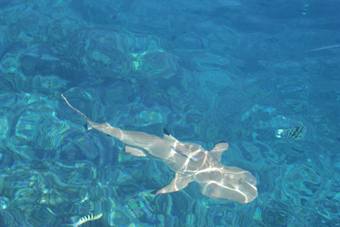
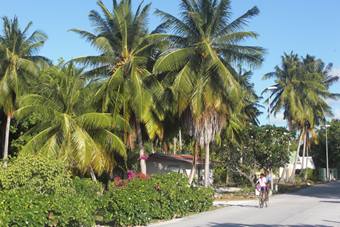
Impressionist Fish Impressionist Black Tipped Shark We returned to Arnamentia at midday and set off up the east coast using the marked channel that leads to the current capital, Rotoava, at the NE corner of the atoll, some 30NM away. The wind wasn’t being helpful since it had picked up to 25 knots from the SE. Since the east coast of the atoll is aligned NW-SE it was clear that the anchorage in the NE corner, off Rotoava, was going to be pretty bumpy. We’d intended to find an anchorage about halfway up the east coast for the night and one of our pilot books indicated several places to try. Any of these would have been fine in the usual E wind but all were untenable in the strong SE winds we had. Eventually we found a small cove protected from the east by a motu (Tanae) and partially sheltered from the SE by a reef. We pulled in there for the night. Meanwhile we watched a steady stream of boats heading south for the more sheltered anchorage on the SE shore that we’d just left. A lot of chain went down despite the fact that we were in less than 10m of water. As usual we buoyed our anchor. Unfortunately we then lost our anchor buoy and retrieving line the next morning – some uncharitable bit of coral grabbed it in the depths and refused to let it go. It was far too choppy and we were far too close to coral reefs to mess about diving for it. By then the night had passed in a somewhat rolly fashion with the occasional check to ensure we weren’t dragging our anchor. We needn’t have worried. The FBA did its business and we never moved more than a couple of yards from our original GPS fix. That movement would have been accounted for by the normal swinging of the boat at the end of over 50m of chain. On Tuesday morning we continued NW and arrived off Rotoava shortly before midday. The wind was still SE although it had abated to around 20 knots. Here we found anchorage in sand in about 15m of water and veered getting on for 70m of chain. Again it was rolly but the wind was forecast to back round to the east overnight. That would sort the problem out because we’d be sheltered by the palm trees and buildings of Rotoava and the waves caused by the wind would not have 30 miles of open lagoon in which to develop before coming to a crashing halt at the northern end. So, whilst we got pretty wet getting ashore and back again in the dinghy during the afternoon, by the early hours of this morning the wind had done the decent thing and allowed us to occupy a rather less tippy bed. Rotoava is a large village by Tuomotu standards. It has a couple of black pearl shops, a number of small restaurants/cafes, a couple of stores, a town hall and several churches (the first time we’ve seen more than one denomination represented). It has a proper quay to which supply ships can tie up and you can even get ashore from the dinghy without having to dive into the surf – luxury.
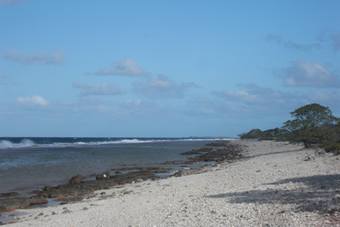
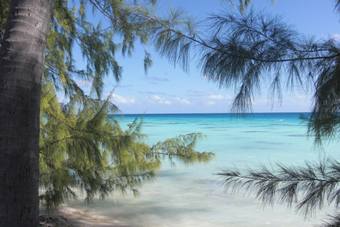
Fakarava Atoll - Pacific side - reefs Lagoon side – coral heads
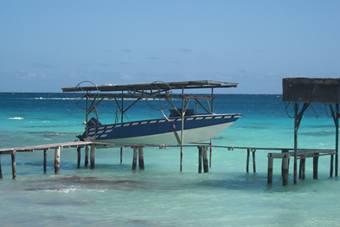
Dry sailing Fakarava style – note high tech lifting gear This evening should see us depart for the atoll of Apataki – some 60NM away. We need to be at the entrance to it at about 1030 tomorrow morning (according to some deeply complicated reckoning and guesses as to when slack water might occur). Passage time will probably be less than 7 hours but we also need to get out of here before the pass into this atoll gets too exciting – particularly as we’ll be doing that after dark (movement after dark is possible hereabouts because this part of this lagoon is actually well charted and lit). So, we need to leave here at about 2200 tonight and that will see us off Apataki at around dawn where we’ll wait awhile before entering.
|