En route to Kumai, Borneo

Jackamy
Paul & Derry Harper
Thu 11 Nov 2010 13:10
|
Thursday 11th November
We eventually cast off around 10:00, a
little later than planned due to the previous nights activities. As we were
motoring out through the channel, being careful not to run aground and dodging
the jet ski's, speedboats and other tourist toys we heard "Jackamy stop stop"
over the radio. We answered but the same reply kept coming "stop jackamy stop".
And so we stopped in the channel, to notice a boat heading in our direction from
the marina. It was Made, the marina manager, we hadn't paid the final
bill.........oops!!!!!!
Back out in the Lombok Strait there were
hundreds of the little fishing boats again dotted all over the place creating a
bit of an assault course for us. As we made our way further north of Bali,
still hugging the coast, we noticed that the beaches were lined with hundreds
and hundreds of the fishing boats. We couldn't believe it, it was quite a sight
as there were just so many. This is the real Bali, no resorts in sight, just
houses dotted up in the mountains who obviously rely on fishing.
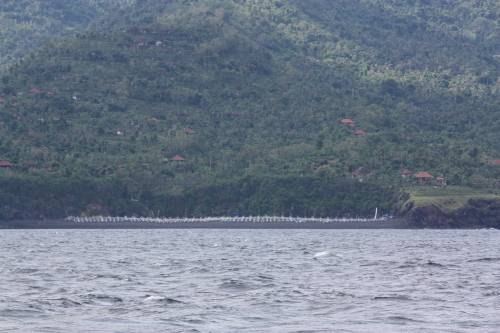
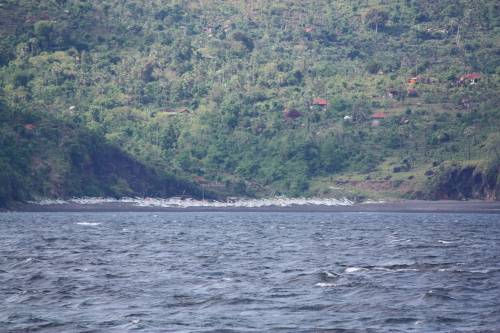 Can you see the white boats on
the beaches?
Sadly the rest of the journey
didn't follow on as well as the start, in fact I'd say it was horrendous. The
distance we had to travel was 450 miles, which would normally take 3 days and we
planned to stop off at an island called Kangean on the way to break the journey
up which would make it 4 days. Anyhow, we had wind right on the nose, at one
point up to 20 knots, and to make matters worse we had the tides against us. So
we had to motor the whole way at very slow speeds, for a short while I noticed
we were only managing 1.8 knots over the ground, so the decision to continue to
battle on without stopping was made as it was clear that it was going to be
a long journey. Just to explain what happens with the tides; we would be
motoring at say 6 knots, but the tides would be so strong that when for example
we were only managing 1.8 knots we had 4.2 knots of tide pushing us back. This
was an extreme, but at all times we had around 2 knots against us. It was
soul destroying!
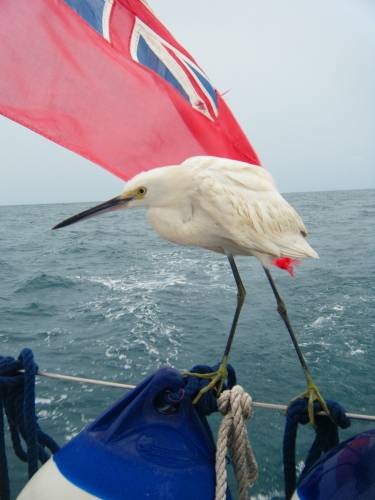 Our new crew
member
We've seen a lot of traffic on
the waters, cargo ships and tankers as well as tugs pulling huge barges carrying
cargo. The cargo ships and tankers don't really cause any problems as we can
clearly see them on the radar and if we feel they're getting to close we give
them a call and generally they are happy to move around us. The tugs however are
more difficult to spot as they are lower down with lots of lights close together
and only the barge appears on the radar. Oh yes, forgot to mention, the barge's
are unlit and can be a mile or more behind the tug! Apparently a rally boat hit
one last year! Understandably we try to give these a wide berth, not so easy
when our speeds are so low and we can feel the boat being physically pulled back
with the tide.
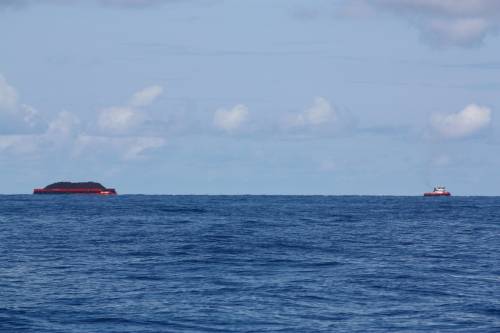
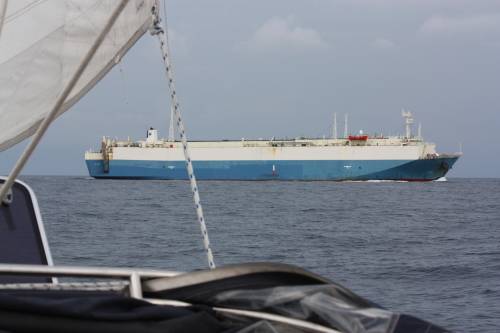 A tug and barge.............A
tanker
And of course, there have been
hundreds of fishing boats. For some reason they all seem to pop up just as it
begins to get dark. As you get closer to them they pop their lights on and we
have to make sure that we have given them enough space because no doubt they
will have their nets strewn across the sea. And when I say lights, I don't mean
navigation lights, sometimes it can be a red and green light that rotates and
flashes, sometimes it's a blue flasher and others it's a bright white light so
bright that it dazzles you. And these are just the ones who put their lights on,
there are others out there who we can't even see!
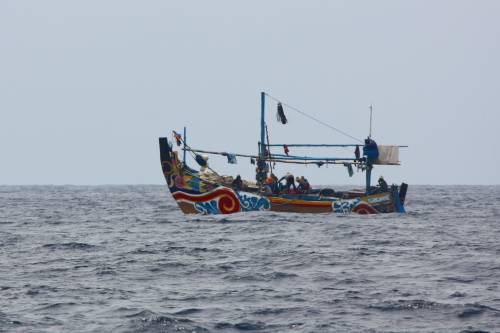 What a pretty fishing
boat!
We made it to Kumai around midday
on Thursday, so that was just over 5 days from leaving Bali, a long
and very unpleasant trip. Poor Amanda, what an introduction to sailing, the
constant drone of the engine! Even the trip up the river to Kumai was quite
interesting, it took around 2 hours. We had one set of leading lines, leading to
another set and on to another set, I think there were 5 altogether. The reason
for so many was because of the depths in the river, a channel had been made but
we did find 3 metres from the water line at one point. So Paul was helmsman
and Amy kept a watch with the binoculars for the lines astern and ahead and all
was fine.
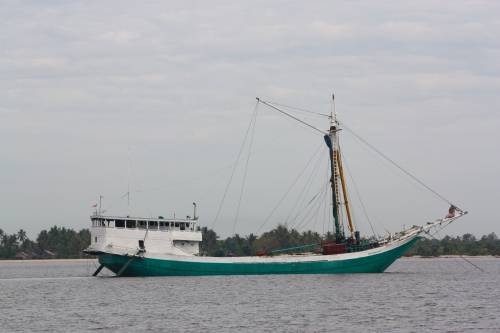
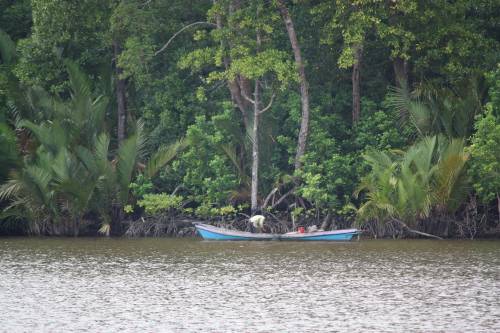 A traditional style Indonesian
fishing boat..............Gathering something from the mangroves - we didn't
find out what
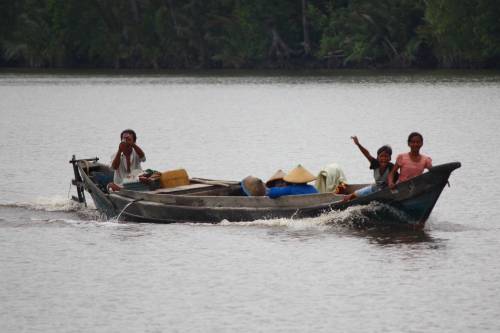
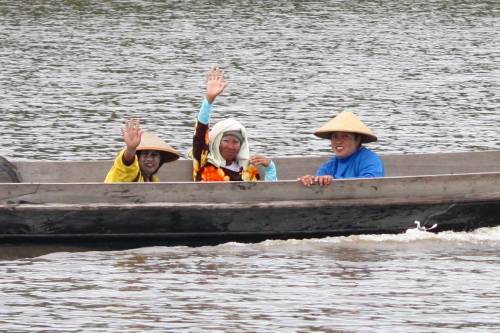 The driver filming on
his phone as he passes.............Friendly faces to greet us
When we turned the corner in the
river and finally had Kumai within our sights, it was not at all how we
expected. There were huge buildings all along the rivers edge and a very lively
harbour. Dozens of tankers were anchored in the channel and there were passenger
ships, ready to whisk people off to Java, as well as the big old schooners
moored along the docks.
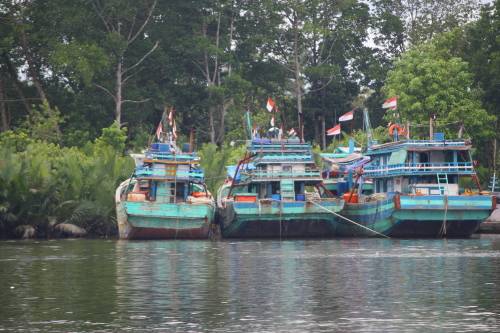
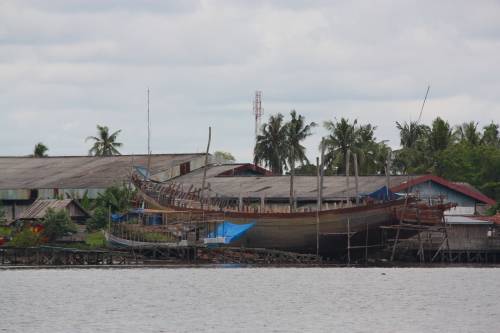 Old boats...........Building a
new boat
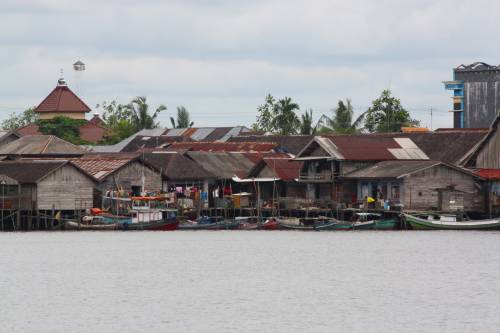
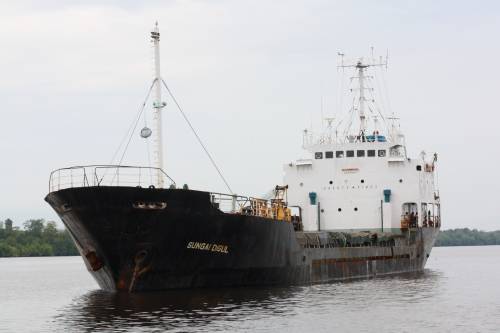 The town....................One
of the tankers
Kumai is a very religious town
with I believe the majority of it's population being Muslim. Of an evening the
sound coming from shore was incredible, it was the call to pray. We were
anchored on the other side of the river so the volume over in amongst it all
must have been deafening. I think the word to describe it is 'wailing', lots and
lots and lots of people wailing!
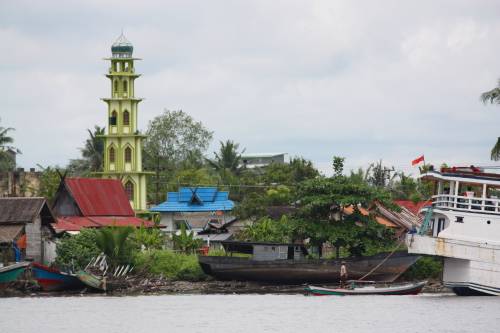
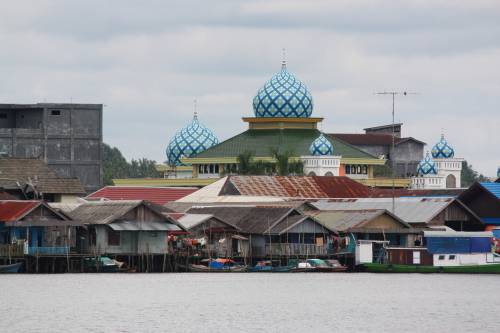 Mosques
As we took a closer look at the
shore line it became clear that these large almost tower block buildings
were in actual fact 'Rumah Walet' - tall, dark buildings housing thousands of
swiftlets whose spit produces high-priced nests to make the expensive birds-nest
soup, a delicacy in Taipei and Hong Kong. To suit the birds and maintain
security for produce worth hundreds of dollars per kilo, rumah walet have no
exterior lights or no windows. For some town elders, dark buildings filled with
hundreds of noisy birds that occasionally bombard pedestrians during flights
equal blight. Interestingly despite millions of birds, there's not a bowl of
their special soup to be found in Kalimantan. Men in full body armour climb
inside the towers every 3 months to collect the nests when they'll get around 5
kg's. For 1 kilo they'd get 35 million rupiah, that's around £2,500.
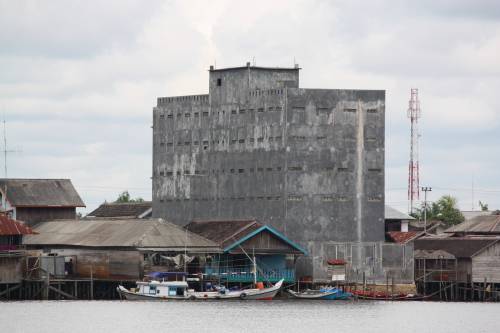
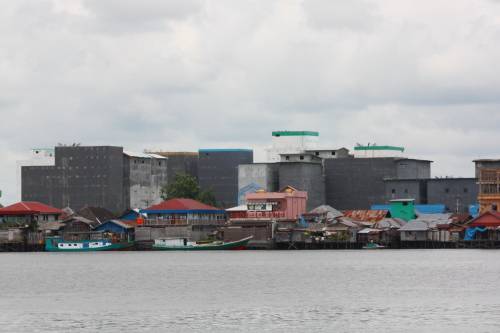 A selection of the Rumah
Walet
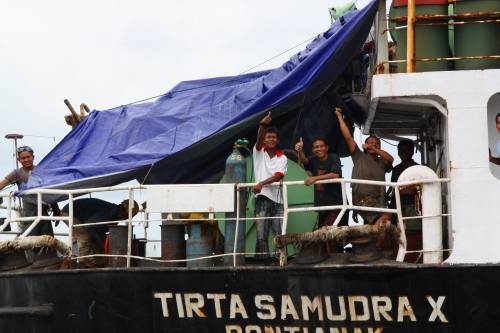
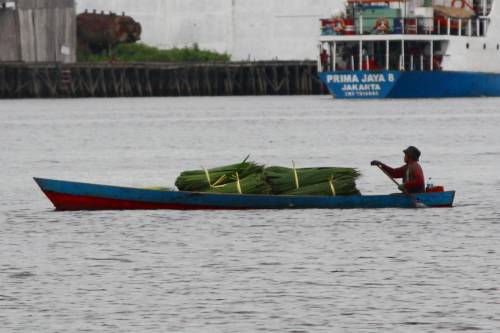 More happy faces.........A
canoe collecting palm leaves for weaving
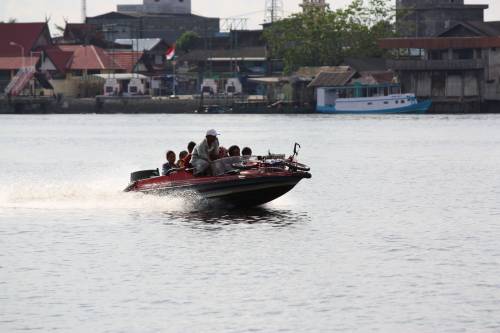 Speedboats full to the brim
with passengers
|