FRENCH POLYNESIA - THE TUAMOTUS

|
We left Nuku Hiva at noon for the 540 mile trip to Kauehi in the Tuamotus in a brisk trade wind. We had decided to have a nice gentle sail down, taking 3 days, so put two reefs in the main. However Snow Leopard had other thoughts. Throughout the first day we tramped along averaging 10 knots, so that evening we rolled a bit of jib in to slow down. Oh no, Snow Leopard was having none of it and continued averaging 10 knots. We were comfortable so let the boat continue through the moonlit night. To get into the lagoons of the Tuamotu islands you must arrive at the entry pass at approximately slack water, as most have incoming tides of 4 knots and out-going tides of up to 10 knots. As you can imagine these currents cause large rips, with breakers and standing waves and we certainly wanted an easy passage into our first lagoon. However having covered 242 in the first 24 hours we were left in a dilemma. We either had to continue averaging 10 knots all the way or slow down to an average of 4 knots and have a third night at sea as first anticipated. We thought we’d give it a go but it did mean driving the boat hard, with several sail changes, and what should have been a relaxing passage became rather tense as we ploughed on and on at speed. The wind dropped light for a few hours during the second night and our plans looked unattainable, but back came the wind, with the addition of some nasty squalls and we finally arrived off the entrance to the lagoon just before low water. There were still standing waves, but they were manageable and we butted through into the lagoon. Kauehi My image of
these South Pacific lagoons was somewhat awry. I had always thought of them as
small, gentle anchorages (once through the pass!) surrounded by palm trees, with
a short row ashore to little fishing villages. Somehow the true size of these
atolls had evaded me, even though I had the charts and the pilot books. Kauehi
is a medium sized atoll, but was still 7 miles in diameter. When we reached the
anchorage outside the The anchorage
was about half a mile from the village, and it was shallow with many coral heads
waiting to snag your anchor. Fortunately when we arrived our friends Chris and
The anchorage at
Kauehi
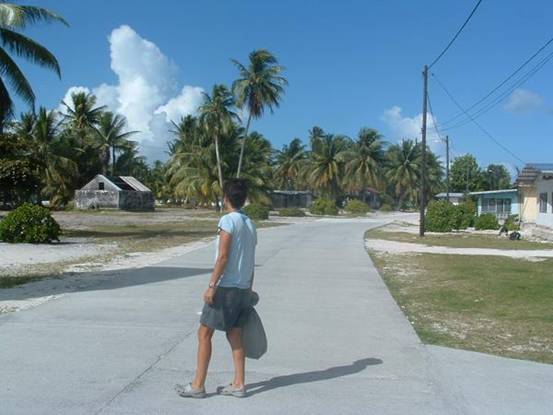
The High Street, Kauehi has a
total population of about 200, all in the The people were
very friendly in a quiet way, but after a couple of days started to chat more
and more. One day, as we were going for a walk, the town’s mayor stopped and
asked where we were going. “I’m going to paradise. Do you want to come?” he
asked in French. We both looked at him somewhat non-plussed, until he explained
that he had a pearl farm called
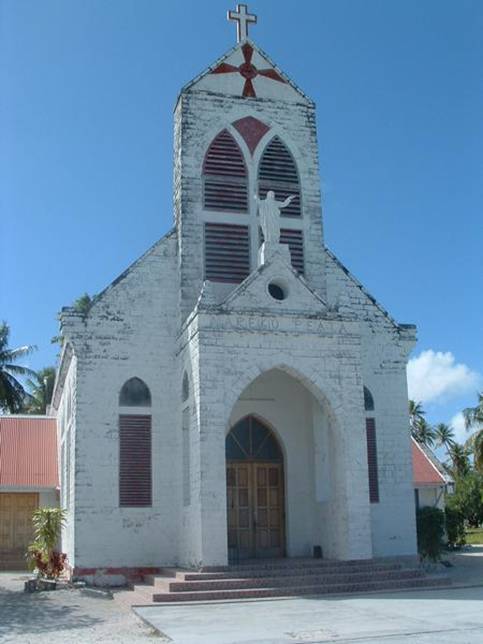
Kauehi church, built of
coral bricks
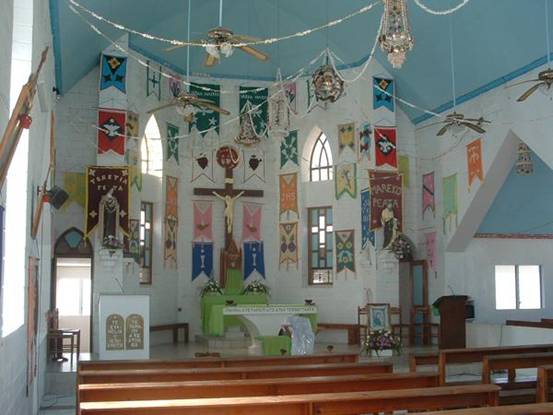
Interior
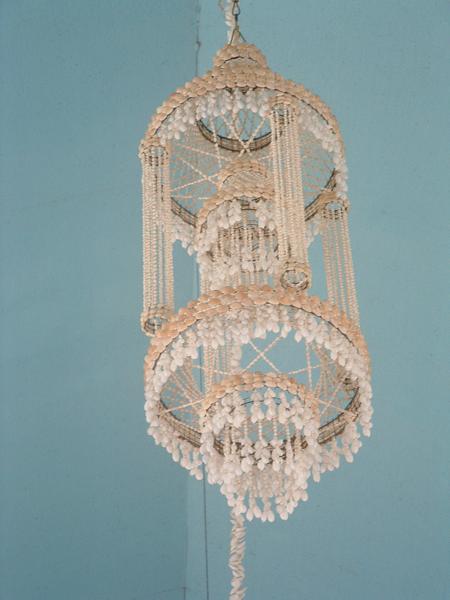
Shell
chandelier
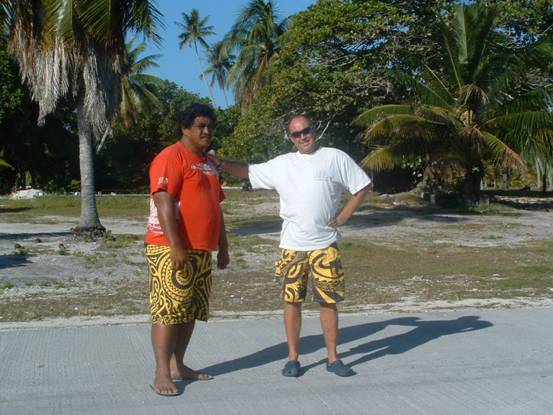
This is Andre. I so
appreciated his fine sense of fashion that I had to have a photo. You’ve seen
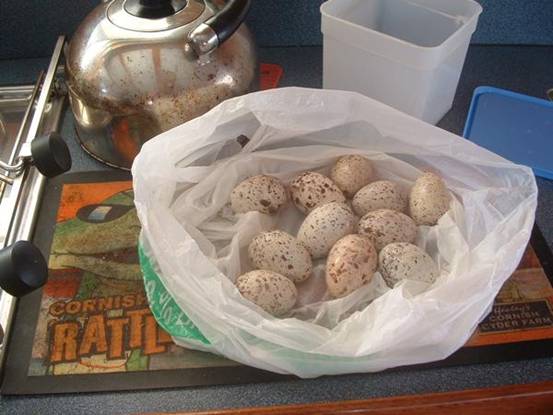
the shirts – now the shorts. I really have gone tropo! Next day, someone who cannot be named, sidled up to us and said he was going to collect some tern eggs and would give us some that evening. The extremely furtive way we were asked, and then the clandestine handover later, suggested that this is probably a highly illegal undertaking. However we withheld our moral scruples, partly because of the generosity of giving us the eggs and partly to see what they were like, and accepted 10 eggs. We invited the crew of another catamaran over to taste a tern egg omelette, which, I must say was delicious.
Hum! The less said the
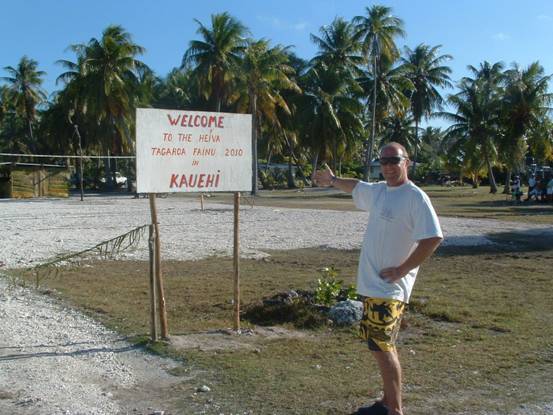
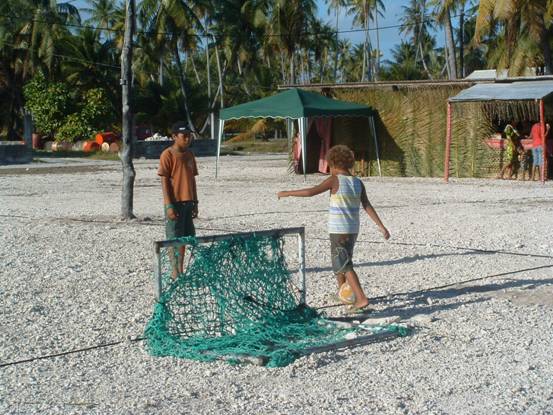
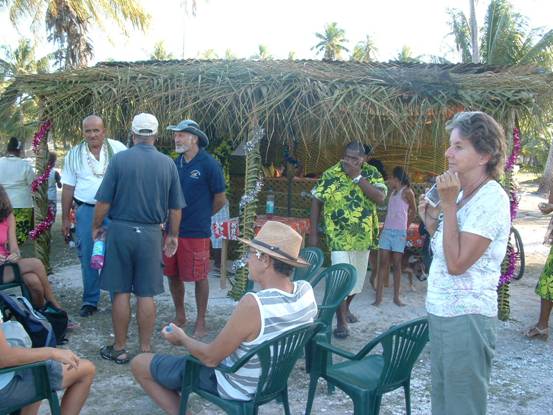
better – but delicious Onshore, the town were putting on a ‘heiva’, rather like a village fete at home, except lasting three weeks! A number of stands had been erected around the local football pitch (coral not grass, so not conducive to sliding tackles), and beautifully decorated with woven palm leaves. There were catering stands, selling ice cream and candy floss, or chow mien or steak and chips, stands selling palm leaf hats and jewellery made of shells, and other stands with games, such as a dart board, table football and a coconut shy! Every evening there were sporting competitions. The petanque (boules) was keenly contested as was the volleyball. All this on an island with only 200 people! We and the other visiting yachtsmen were welcomed openly, and given cake and an extraordinary pink drink which, I think contained grenadine. There was no alcohol!
The sign was put up
especially for us visiting yachties
The Heiva site with
committee all dressed in green
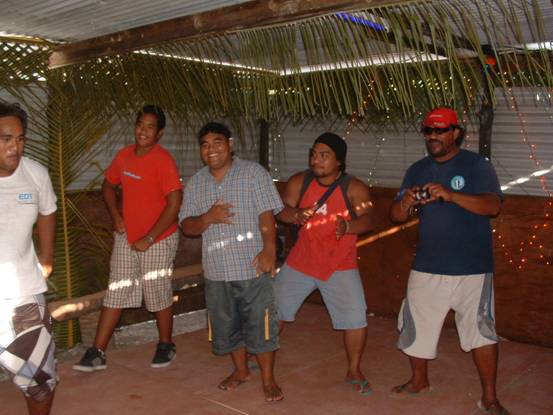
All smiles in Heiva disco
hut!
Never complain about the
quality of a grass pitch
Us yachties at the Heiva.
The devious looking man in the white shirt is the mayor. Say no
more!
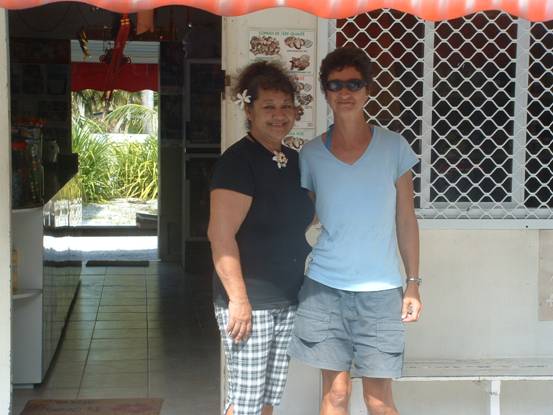
Lucy with ‘Madam Mayor’,
the shop owner, on her birthday
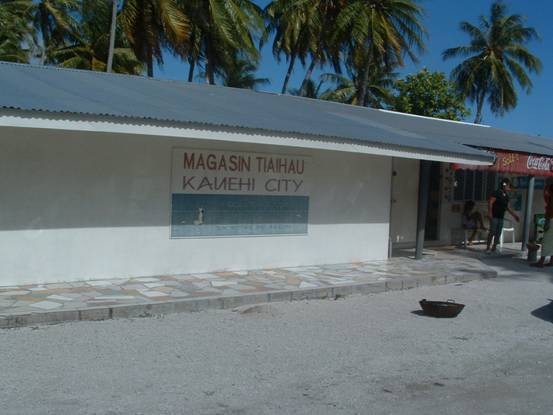
This place has aspirations
– watch out New York We stayed in
Kauehi a week and it was a lovely introduction to the Tuamotus. Things have
obviously changed big time in the last 10 years, especially since the building
of the airstrip. Mobile phones and satellite TV are the norms. The village had
far better street lighting than Fakarava That cannot be
said of the next island we visited, Fakarava. This is the second largest of the
Tuamotus, and the lagoon is 30 miles long and 10 miles wide. That’s a circumference greater than the
That pass into the lagoon is wide and easy although the strong tides still cause breakers, which give the helmsman a good soaking! This island has
always been visited by many more tourists, by air and boat (they even get small
cruise ships into the lagoon, and the people (about 1000) are very blasé about visitors to their
island.
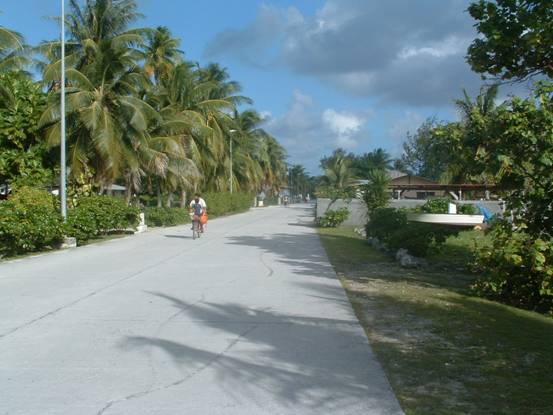
Main road, Rotavoa,
Fakarava. Note heavy traffic
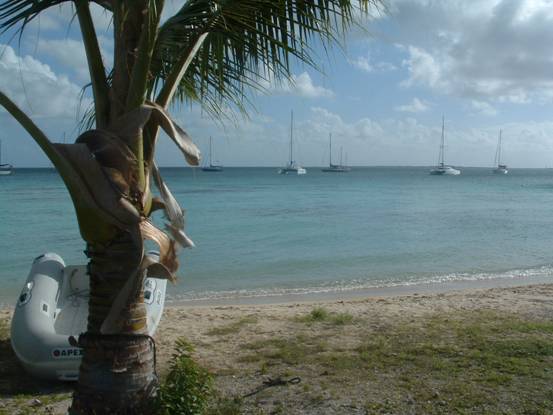
The anchorage, Rotavoa,
Fakarava. If they all look the same there’s a reason for
that! The anchorage contained
about 14 yachts, including a number of charter boats, up from One of the principle
reasons for coming to Fakarava is for the diving, especially along the two
passes into the lagoon, which teem with fish and lots and lots of sharks! Now,
I’m not a fan of sharks. Everybody around here says they are harmless (well they
would wouldn’t they?) but I’ve never been keen to meet the shark who proves to
be the exception to the rule, especially as we are now talking big sharks like
hammerheads and tiger sharks. However I reckoned that in a group it would cut
down the chances of me being the victim so I was prepared to give it a go.
Unfortunately the bad weather had stirred up the bottom and the visibility was
so poor that diving was off the menu temporarily. Instead we had the delights
of the World Cup final and a total eclipse of the sun to keep us amused.
Unfortunately they occurred at precisely the same time, which I feel was very
inconsiderate of the World Cup planners in Given that the weather
showed no sign of improving, (in fact it was forecast to get windier), and given
the rather dull atmosphere in Fakarava, we headed 40 miles north-west to the
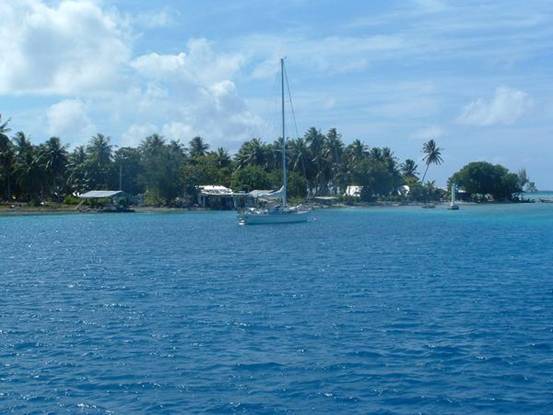
Toau We sailed up to Anse Amyot
on the north coast. It looks like a pass into the lagoon, but is in fact a
cul-de-sac, with the entrance cut off from the lagoon by a shallow reef, covered
with fish traps. These belong to the one
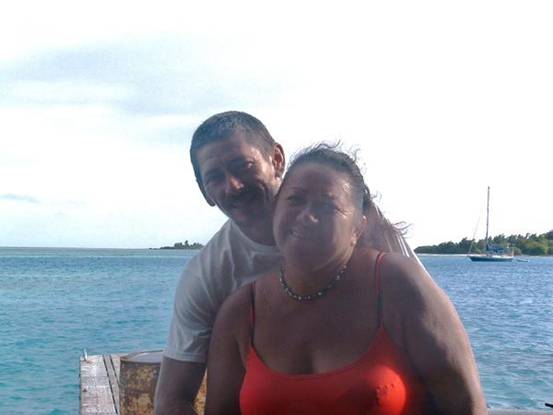
family who live here, headed by the effervescent Valentine and her hard-working,
jack-of all-trades husband Gaston. They have laid a number of moorings for
visiting yachts, which is just as well as there is not a great deal of room to
swing at anchor and the bottom is foul with big coral
heads. There was only one boat
there when we arrived, ‘Gryfon 2’ again, and it was good to see Chris and
The next day was July
14th, Bastille Day, and a day of great celebration all over
We went ashore that evening
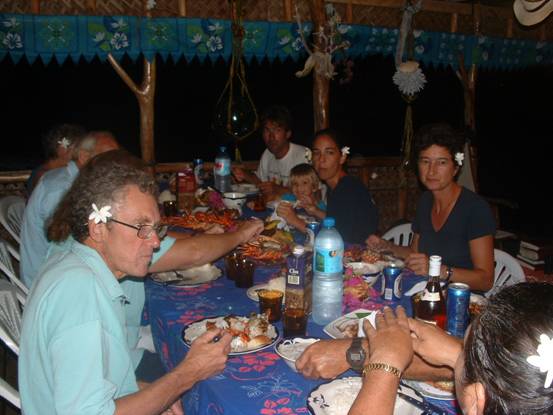
for a fabulous meal of poisson cru (raw fish in coconut milk, breaded parrot
fish, chicken pieces and barbequed lobster. Valentine is a wonderful hostess
regaling us with stories about life on a deserted island and of all the boats
that have visited over the years. She has wonderful scrapbooks with
contributions and photos of all the boats going back to
1983.
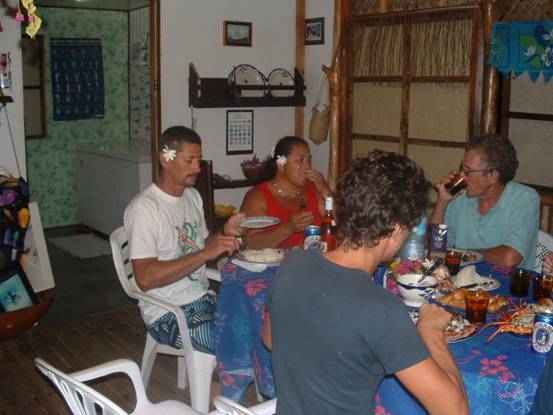
July 14th feast,
Toau. Lobster caught that morning!
Gaston and Valentine, our
delightful hosts The scariest story was
about the family’s survival of a cyclone that swept across the island in 1983.
The waves came right over the island. Everything was destroyed. The chickens and
pigs were lost as were all the family’s possessions. They survived by climbing
into a concrete water cistern and staying in they until the storm had abated.
They set to work the very next day to start
rebuilding. The wind really began to
howl, and we began to worry about the strength of the moorings we were on and
wondering if the line snapped would we have enough time before being swept onto
the reef. Everything held firm in after two days of really windy weather things
started to calm down. Lucy and I decided to walk
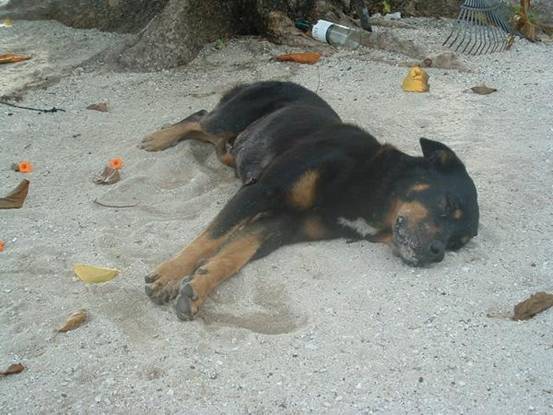
round the motu. Valentines’ three dogs accompanied us. Baloo, a rottweiler-cross
amazed us with his fishing prowess. In the shallow lagoons surrounding the
island he caught 4 parrot fish and a shark! His incisor teeth have been worn
smooth by the skin of all the sharks he has caught. That has to be a first – a
shark-hunting dog!
‘Baloo’ the shark
hunter
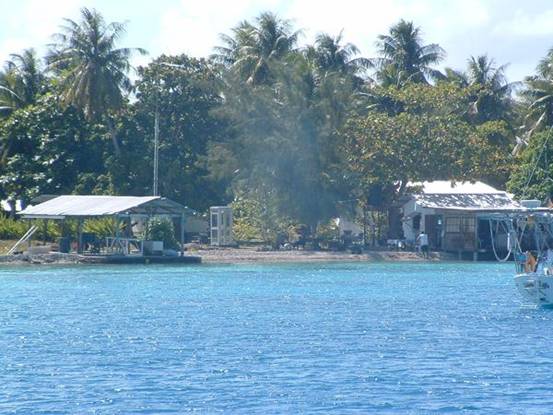
Valentine and
Gaston
Their little bit of
paradise. Note the telephone box – it didn’t
work!
After a few more days,
walking, snorkelling (the Picasso fish is extraordinary), and generally lazing,
we decided it was time to leave these strange islands (Billy Connolly on a visit
a few years ago, names the Tuamotus ‘the So having paid our
farewells to the friendliest of inhabitants, in the remotest corner of the world
we set out for Tahiti, to |