PANAMA TO GALAPAGOS - PART 1

|
0:53.74S
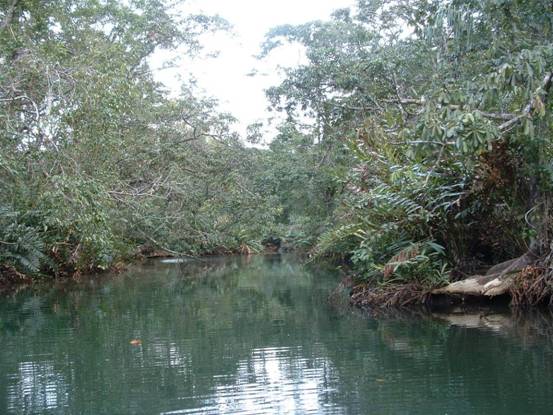
89:36.8W They attacked again last night. The main assault is always just before dawn and for the first time they got past our first line of defense. Fortunately they were repulsed by our second defensive line and they retreated to think again. They’ll be back. They’ve tried all sorts of tactics. They sent the children to try to charm us into dropping our guard, but we were wise to that. They send out regular scouting patrols to check if there are any gaps in our defenses or to check if we are aware of their presence, and then the major attack always comes at night. So far we have held firm but we know they are a cunning enemy and will keep trying until they succeed. (More on that later) We left the San Blas islands on 7th April, with a pleasant downwind sail to Isla Linton, followed by an equally pleasant sail, past the entrance of the Canal to the Rio Chagras. This river is navigable for about 6 miles (once past the rather shallow bar at the entrance) deep into virgin jungle. We anchored about half-way up, took a dinghy ride up to the Gatun Dam and explored some of the creeks off the main river. We ended up towing a big wooden pirogue with five Canal employees back down the river after their engine failed. Our little 8hp Yamaha performed splendidly. The air was alive with the sounds of the jungle – howler monkeys barking, parrot screeching and all manor of other birds joining in the chorus. We saw squirrel monkeys paying in the trees. That night the silence was split by the continued howling of the monkeys and dawn was a riot with parrots and paraqueets vying to see who could make the most noise. Then saw a pair of beautiful yellow-breasted toucans going through their head-bobbing mating ritual. Wonderful.
Yellow breasted
toucan
Towing the pirogue down the
Jungle – Next day we went
to Shelter Bay Marina near With a couple of
days spare I decided to take the
The
Train
interior
Local bus, Tony arrived and we fitted the new evaporator plate, but we still have to get a fridge engineer to vacuum the system and re-gas it with new refrigerant, and then finally we were called to go through the Canal on the afternoon of Sunday 18th April. The You are required
to have on board 4 line-handlers, plus the helmsman so a German couple, Klaus
and Marina from their yacht ‘Yellowman’ agreed to help. At about 4pm our
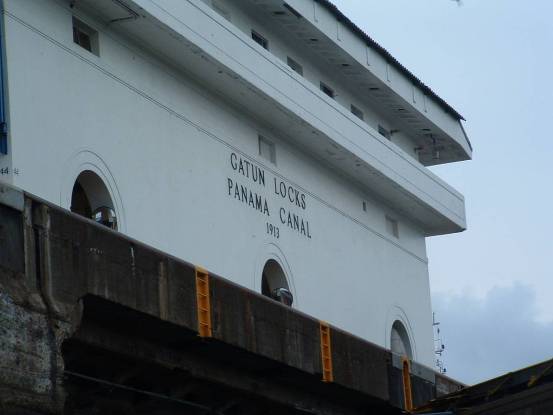
‘advisor’ Armarto came on board and we set of for the Gatun locks, a flight of
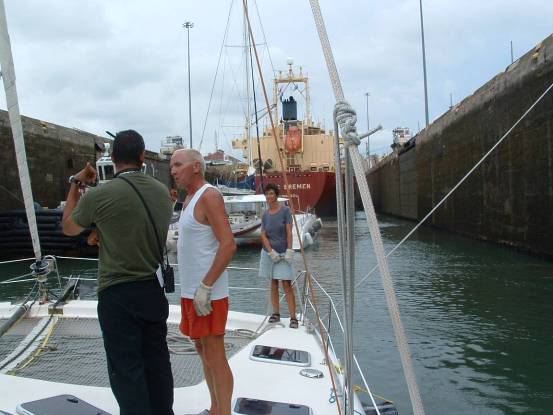
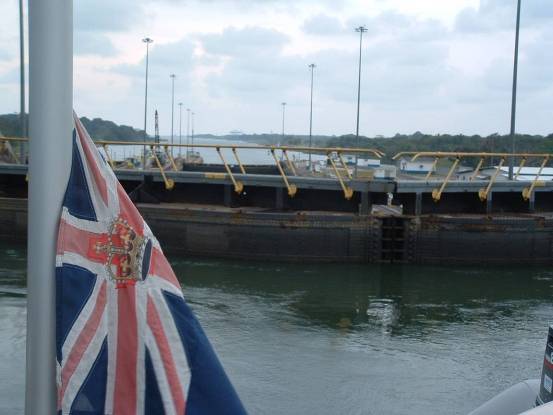
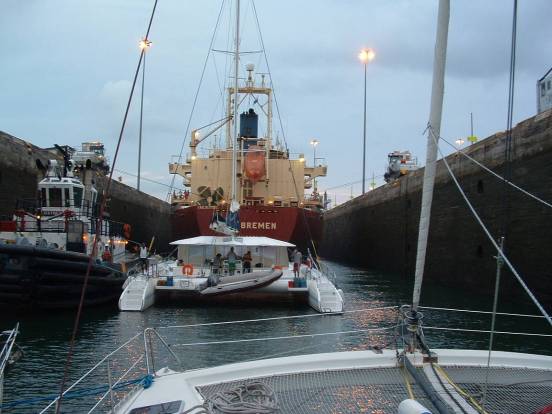
three lock that raise you 85ft to the level of At Gatun Lock we paired up with a 45ft yacht alongside and followed a big ship into the first of the locks. The shore-side line handlers hurled their lines, complete with huge monkeys-fist knots, with unerring accuracy to us in the middle of the lock and we passed our lines to them. The gates closed and then we were on the way up!
The first lock – Armato,
our advisor, Klaus and Lucy
Amarto – Lucy’s
heartthrob!
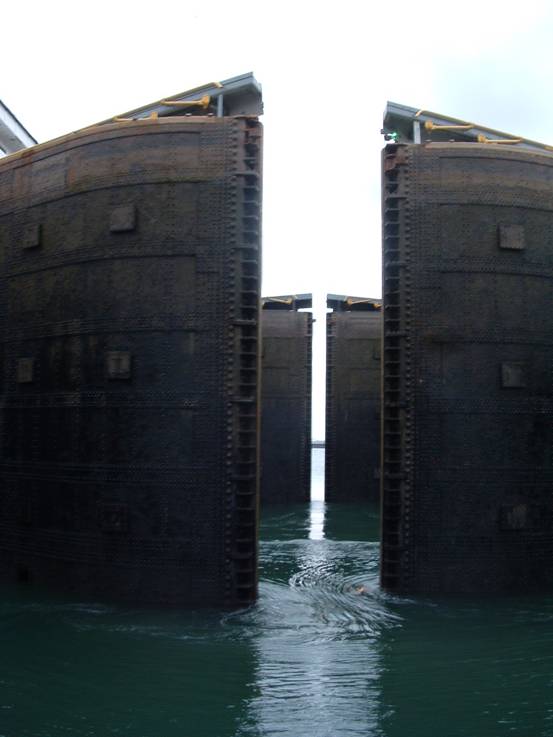
The double gates at Gatun
Lock
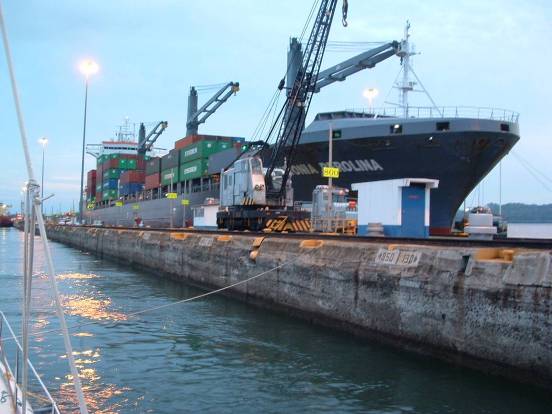
A panamax (maximum size for
the Canal) container ship going down Gatun Locks
Getting
dark After the flight
of three locks at Gatun we were directed to a mooring buoy in
Next day our new advisor, Frank, arrived at 6a.m. and we were off motoring across the vast Gatun Lake and through the great cuts made through the hills before descending the three locks and out into the Pacific!
Spot the two crocodiles
lying on the shore
Not much room to
pass
Gaillard Cut –
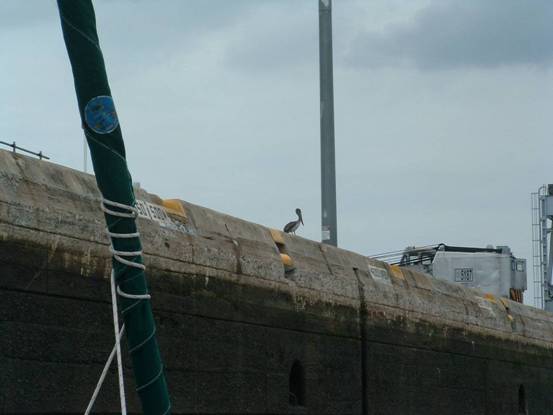
Pelican watching
proceedings at lock
Klaus and Marina, our
lovely line handlers
From our mooring at Balboa
Y.C. – ship leaving Canal, passing under the Bridge of the
Americas We took a
mooring at the Balboa Yacht Club in The next few
days were spent getting the fridge working (very good man in On Friday 23rd April, we said goodbye to the noise and pollution of Panama City and headed for the Perlas islands about 50 miles south, stopping that night at Contradora, before moving on next day to a deserted anchorage between Isla de Canas and Isla del Rey. Our intention was to spend a couple of days here before heading of the Galapagos some 840 miles away, but that night we had a huge thunderstorm and torrential rain which bought out every mosquito and bug out and all aimed at us! So next day,
rather than spend another night being eaten alive we set out for the
Departing
Crossing the Equator –
17.35GMT, 30/4/10
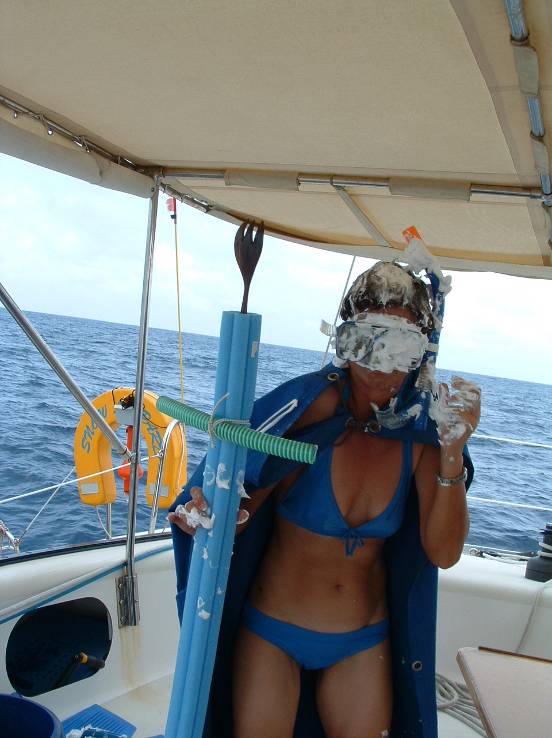
Lucy, having been inducted into Lord Neptune’s
court – Equator
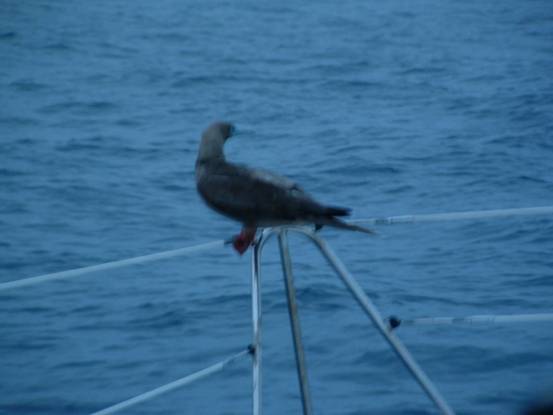
Red-footed booby hitching a
ride to Galapagos
Isla Leon Dormido (Kicker
Rock) Galapagos Drama on the high
seas We had one very
disturbing incident on route. About 180 miles off the coast of South America
(near the Columbian/ About 5 miles
further on we came across a very large fishing boat which turned very
deliberately towards us. I tried calling them on the VHF with no reply. We were
now quite worried about the situation and turned away from them and gunned the
engines. Again I called them asking what were their intentions. Eventually a man
who spoke some English came on the radio, and they slowed down. We informed them
of the open boat 5 miles behind, gave their position and they said they would go
and pick them up. The fishing boat did call back half an hour later to say that
they had picked up the men in the open boat. That was a great relief to us and
we passed the information on to So all was resolved, but we spent some time talking over why an open boat would be so far from land with insufficient fuel. Even more strange was than one of the crew of the open boat spoke passable English and had a satellite-phone, which unfortunately had be dropped in the water and no longer worked. There was no evidence of fishing gear. We decide that they were meant to rendezvous with another vessel but as their phone had broken had missed the meet. In that part of the world it does not take much imagination to suspect that drugs were involved. We were relived to be well away from the situation, but even so I kept a good radar watch that night to make sure we were not being followed. |