BLUE WATER RALLY - NUKA HIVA - LEGEND ACCORDING TO RICHARD

|
We – Anahi, Hakuna Matata, The concrete roads are excellent, and I would suggest they would need to
be at the gradient they are levelled and with such a high annual
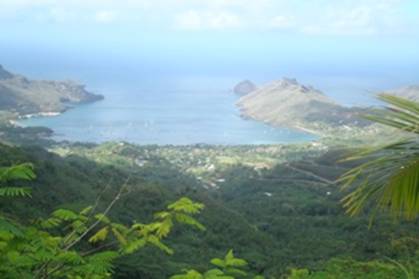
rainfall. Taiohae bay, where we are all anchored, is the actual crater of
an ancient volcano:
View from the ‘rim’ of the volcano looking down into the
bay Where you can see all the yachts anchored Richard explained that in the whole of the Marquesas archipelago up to
date statistics show that they average just five tourists per day – so to
have 30 yachts from BWR and many more from ARC all visit one island in one go
is overwhelming for them. Although the population is increasing there is
no senior school here. Education is compulsory, and subsidised by means
testing, so older children go and live in Until quite recently (c1960) cannibalism was still practiced here in
the Marquesas. Everywhere we travelled there was evidence of sacrificial
sites and there are literally hundreds of these areas hidden amongst the
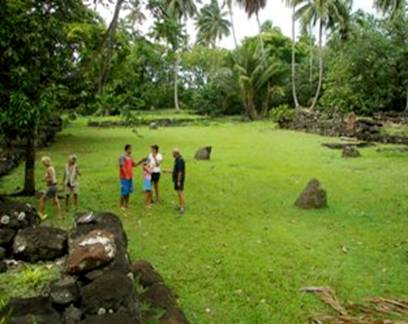
trees. The huge ‘halls’ would have been covered and this was
where the people gathered for social occasions
This whole area would have been the floor of the community building
with the alter raised at the far end where the sacrifices would have been
conducted
Flat stone where one lady (siren) would have stood to call everyone to
join in the festivities or sacrifice
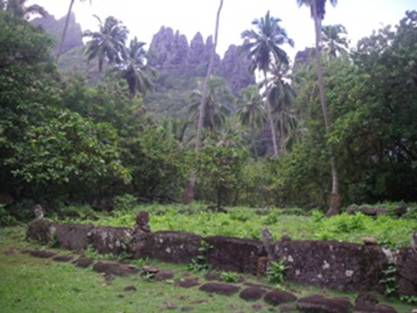
The raised area of the ‘alter’ and sacrificial site The elders, priests for instance, of the community lived in houses
around the edge of the community building but raised higher. Richard
explained that a lot of the tikis (statues) have been stolen and many now
reside in the museums of
Millennium gift from a neighbouring island
Gift from There were five or six tribes on the island of Nuka Hiva who were
constantly warring amongst themselves – and many of the captives were
eaten – however, in the days before refrigeration it was necessary to
keep the food alive so they dug deep pits where they kept their meat –
often they would carve off a limb or two to avoid cooking too much at once and
they called humans ‘long pigs’. Sometimes they would eat a
member of their own tribe, ‘clubbing him by surprise from behind’!
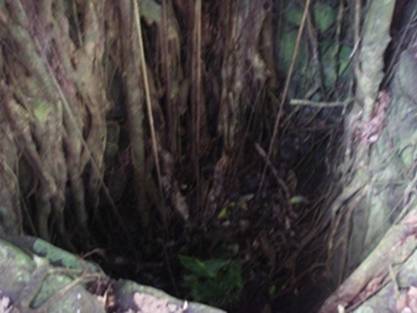
One example of the ‘larder’ at the foot of a huge and now
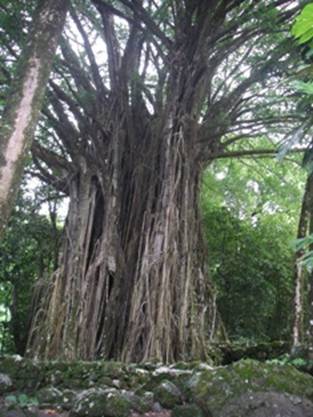
famous banyan tree which was covered in skulls when the first missionaries
arrived:
Ancient banyan tree……probably 300 years old However, younger meat was preferred and thousands of children were
sacrificed – many parents saw the sacrifice as an honour and gave their
children willingly to the Priest when he came to knock on the door to choose
the next gift to the Gods - although some hid their children. If you
sent your children on an errand, especially after dark, they would frequently
disappear and the only evidence of who had stolen them would be the smoke
coming up from the underground barbeque. When children reached puberty
– 10 for a girl and 12 for a boy – they would receive their first
tattoos at which point they were no longer seen as ‘pure’ and were
free from the threat of sacrifice. Bones and teeth from humans and
animals were kept in a ‘cupboard’ and carved into jewellery:
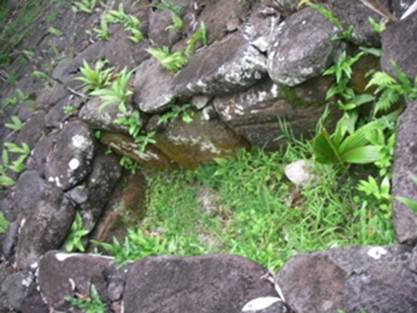
A typical ‘cupboard’ – shallower than the
larders…. A few original artefacts remain:
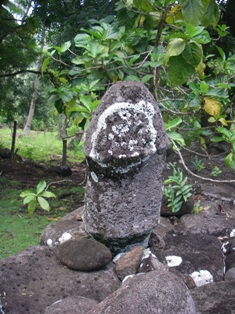
Ancient Tiki with the sacrificial alter behind
Round ‘receptacles’ carved into rocks could be for many
uses – tattoo ink, medicine ground condiments etc.
Grooves in the rock where they sharpened their ‘knives’
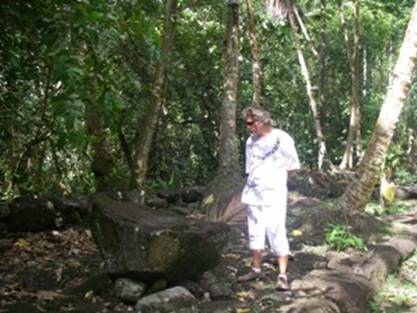
This rock has fallen on its side but the hollow on the right hand side
is where the prisoner would position his head if he were to be decapitated
A ‘chair’ or backrest still standing in original position The people married for love and chose their own partners (sometimes
from a neighbouring tribe which caused further battles) – however the
good Priest had a further role in life – to teach each young virgin the
art of lovemaking and no marriage took place without this ritual having been
performed first – everywhere phallic symbols are carved into rocks
and rocks are carved into phallic symbols:
Typical phallic carving – although this one looks as if it could
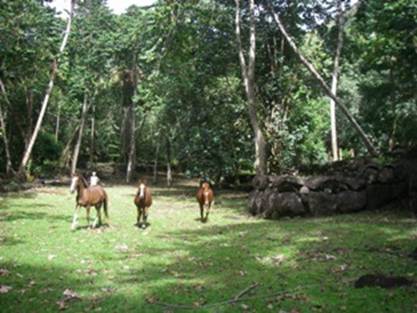
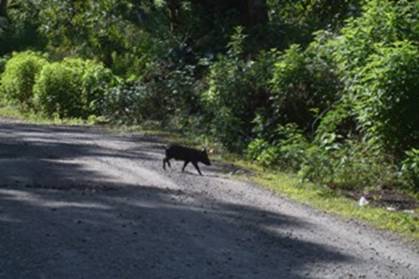
do with a dose of penicillin….. Apart from the wild boars all the animals and poultry on the island
belong to someone but roam free and during the day we saw much evidence of
this:
Horses running free around another ancient sacrificial site
Mummy pig in the bushes
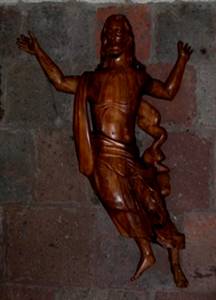
And piglet out for a stroll….. Once the missionaries arrived they tried to put down the firm stamp of
Catholicism – and although many ended up in the barbeque, certainly there
are some carvings and statues remaining:
Carving in the Catholic Church
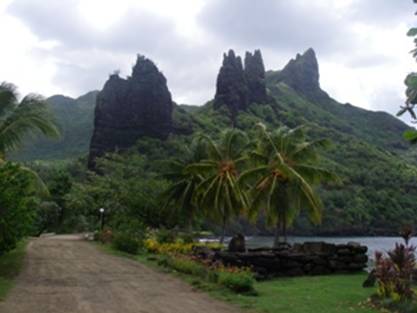
Hard to see in this photo but even a Virgin Mary statue on the very
pinnacle of one of the spires! Today these islands are peaceful and their inhabitants friendly and
welcoming – tomorrow we are sailing to Ua Pou before heading off to the |