Scratch and sniff in El Jebha

|
After experiencing the exotic sights, sounds and
scents of Tetouan, we were keen to see more of
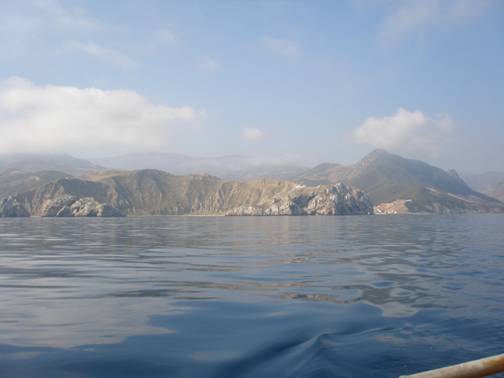
ALTIKA under spinnaker. Apart from a slight breeze when we first left Smir, the general lack of wind scuppered any attempts to sail. However, armed with our new go-faster prop, we were able to make good time at lower revs than with the old prop – and still talk to each other over the sound of the engine. The current that we were motoring against appeared to have a lot of floating rubbish. However, as we got closer to the ‘rubbish’, we realised what it was turtles – Loggerhead Turtles (Caretta caretta)! We saw about a dozen in total, some large, some small and still sporting a line of spines down the centre of their shells. We often had to alter course to avoid them. Some saw us coming and dived out of sight, while others swam alongside so that we got a good look. One (I think he must have been asleep) bounced off the hull, woke up with jump, and, with a windmilling of flippers, swam off. Eventually, we saw the caldera and the
neighbouring fishing
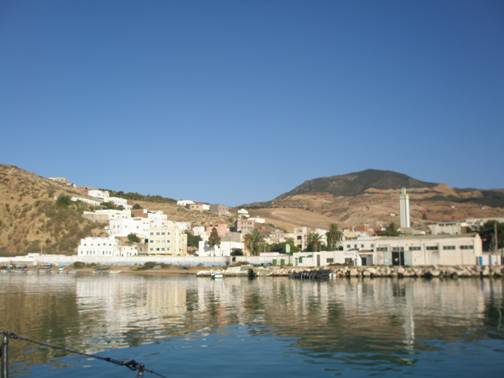
El Jebha. We tied up – as the pilot book instructed – alongside the Fisheries Inspection boat, with two heavily armed police/customs launches ahead of us. We hung around for a while for the immigration and harbour authorities to arrive. They did, in a battered, spluttering Renault, the bonnet of which served as the desk for the clearing-in formalities – using a second-hand form. When ALTIKA arrived 2 hours later, they re-used the same form.
Checking-in formalities being conducted on the bonnet of a clapped-out Renault. The bright light of El
Jebha So here we were in rural With all the formalities completed and with a
small giggle of local children (all boys) in tow we headed off to the bright
light (pun intended) of El Jebha. Bethany and Bryn were fascinated to see how
underdeveloped the town was – no tarmac on the roads, no pavements, no street
lights, no particular place for rubbish, and (judging by the smell) no proper
sanitation. We wandered around the town absorbing the sights (and smells) –
finding an internet café of all things, as well as whole range of tiny shops
crammed full of tins, packets, and sacks of stuff. We saw lots of men and boys –
and only one woman. We found a butcher and bought some fresh meat (goat at a
guess) to take back to
Moon rise over El Jebha. Budding
vulcanologists The next day we teamed with up Johan and Christine
to explore the caldera. We started by climbing the nearest mountain, which gave
us a good view of
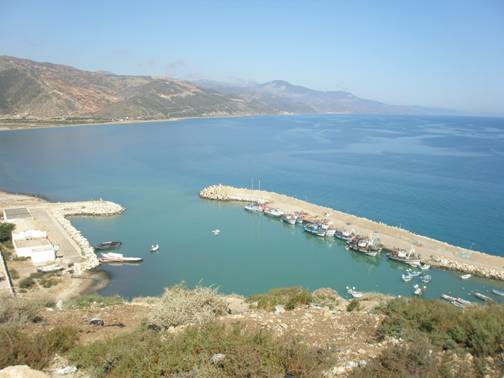
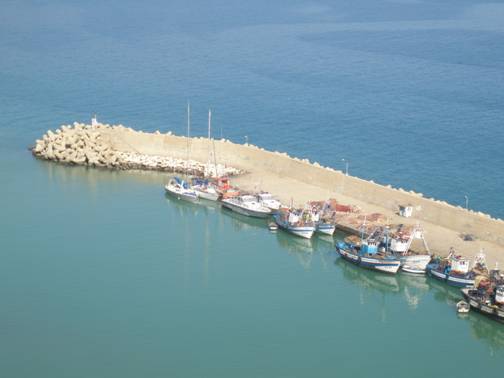
The harbour at El Jebha.
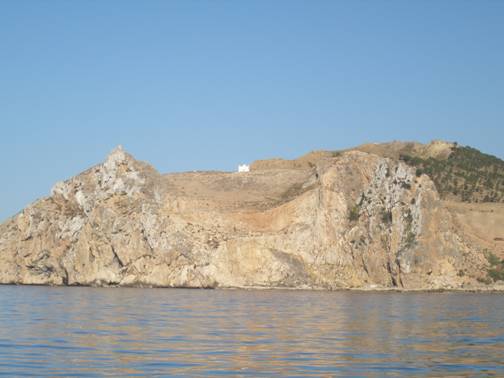
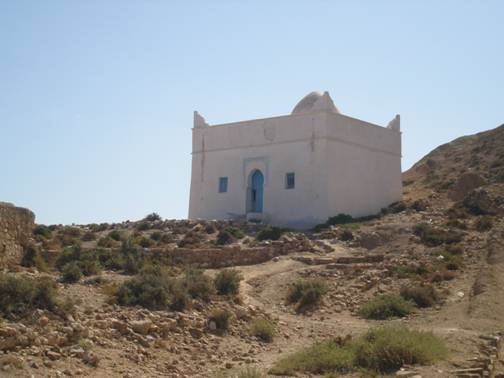
The higher we went the hotter it got and the better the view. We found a guy at the military observation post who pointed out the best path to see the caldera properly and where to swim. He explained that the white building overlooking the harbour that we had seen from the sea on our way in was a mausoleum erected in honour of a local man who had worked for the good of the local community.
Location, location, location.
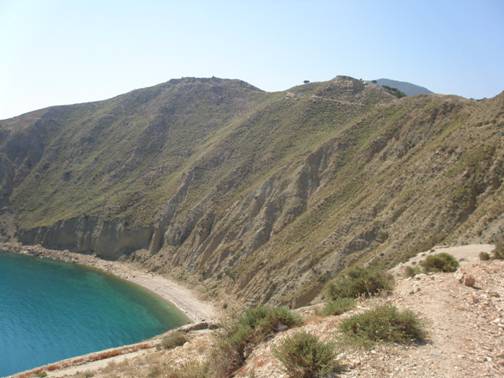
A compact mausoleum, in need of modernization… We then carried on up, and up and up in the general direction of a goat path leading around the rim of the caldera at 300 m above sea level with a sheer drop to one side.
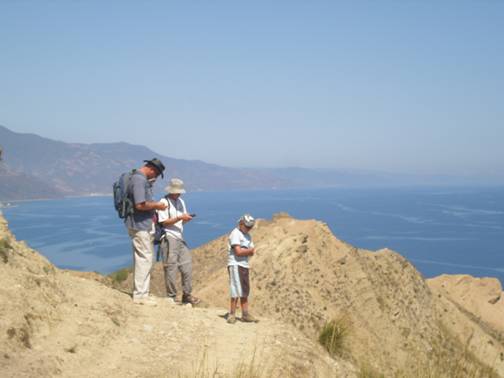
The path took us along the ridge at the top of the mountain and along the rocky line near the top.
The boys pause to check our latitude, longitude and altitude on the hand-held GPS.
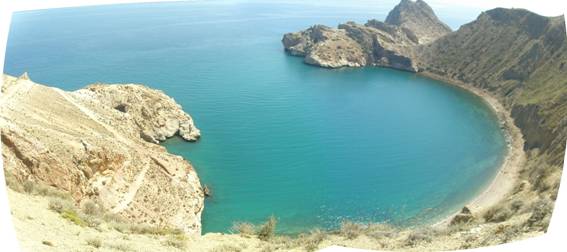
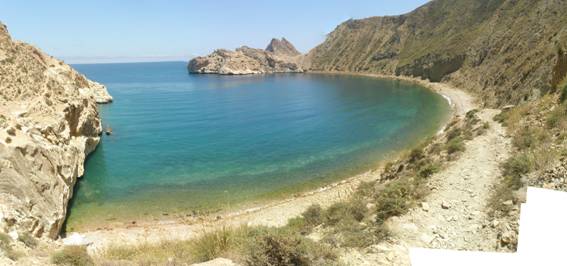
The caldera – in its full glory.
The coast stretching off to the east of the caldera.
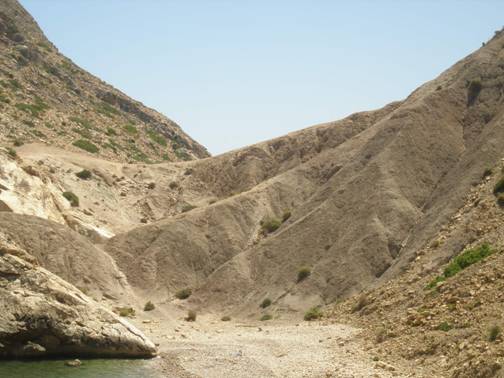
The moonscape of pumice and mudstone that we scrambled over on our way down to sea level in the caldera.
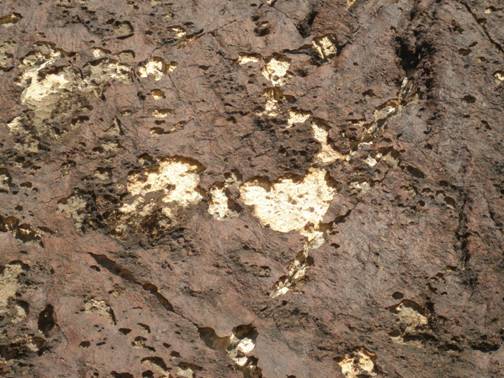
We found what appeared to be fossilized coral and shells mixed in with the pumice and mudstone. We later found out from Wendy (official geologist to the Gib’ to Morocco Rally, and she of superb-singing-voice fame), that there were tsunami deposits around the caldera, which would explain the organic life mixed in with the volcanic debris.
A solid crust of ‘rust’ overlying rocks around the edge of the caldera. Once back at sea level, we stripped to knickers to
swim and cool off (probably risking arrest as this sort of thing is just not
done in
The caldera has to be one of the most amazing things that we have seen so far on our travels. Spend, spend,
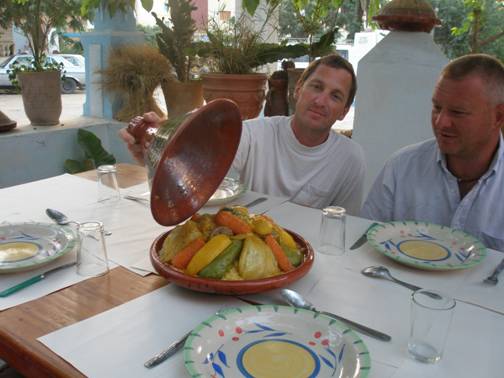
spend! The next day was spent recovering from the heat and activity. In the evening we went for a traditional meal of goat, roasted vegetables and couscous cooked in a tagine.
Abracadabra!
Johan: “And for my next trick”. With our thoughts now turning north to mainland
Out of We eventually set off from El Jebha back to
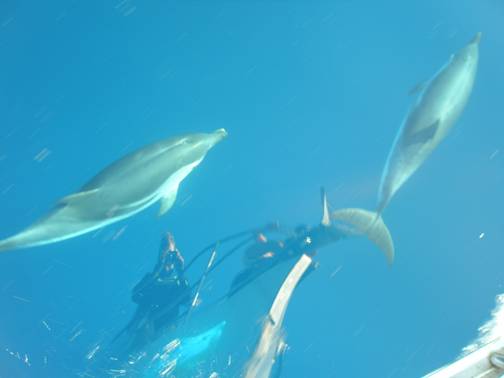
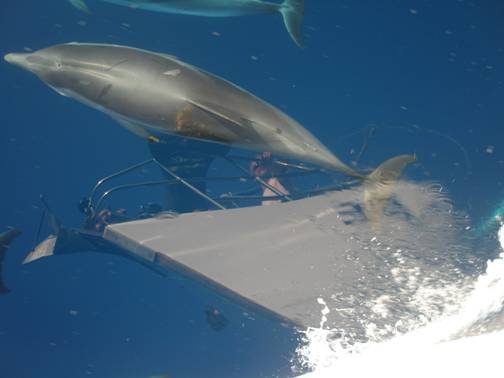
Leaving The children took it in turns to stand watches with David and myself. The sun went down and Beth and I played ‘Name me…’ which is one of their favourite games. In ‘Name me 10 breeds of dog’, we cleared up a bit of a pronunciation crisis she was having over ‘beagle’ (‘bagel’ is an understandable error). We worked on our 6 and 7-times tables (we both need to try harder on the 7s…). The shipping lanes were busy, very busy. A fast-moving ferry approached from the south. So fast that I was convinced that anything glowing that orange and moving that fast had to be a UFO – luckily for us, the UFO turned out to be the moon. We motored on through the night over glass. While glass isn’t good for sailing, it is good for wildlife watching. Daylight brought out the odd loggerhead turtle here and there, and a few Common Dolphin playing in the mirror under our bow.
Arty shot of me taking photos of the Common Dolphins in the blue glass beneath the boat.
Dolphin the water – Then suddenly we had Risso’s Dolphins (Grampus griseus) in with the Common Dolphins and as they left, a group of Long-finned Pilot Whales (Globicephala melas) came over for a look at us too – a family group with squeaky calves just a metre in length. Sorry, I didn’t get any decent photos of the whales for you to see – only video footage! I will try harder next time...
Risso’s Dolphin. |