Under the bridge and up the river

|
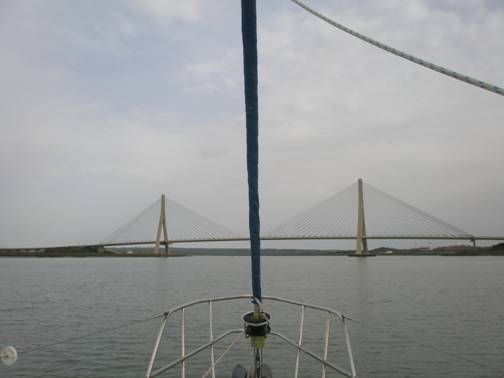
There’s no way we are going to fit under that! We had no charts or pilot books to guide us up the river, just some third-hand photocopies of someone’s sketches and the advice to “stay to the outside of the bends and in the middle on the straight bits”. In reality, the river was wide and deep, and sometimes we had 20 metres of water below the keel just a boat-length from the bank. The main topic of conversation was about which flag we should fly – Spanish or Portuguese – as the river is the border between the two countries. To fly one above the other might offend…
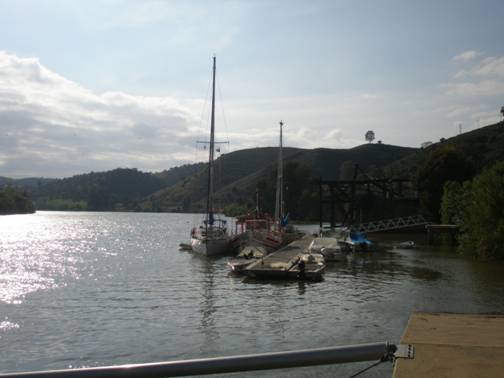
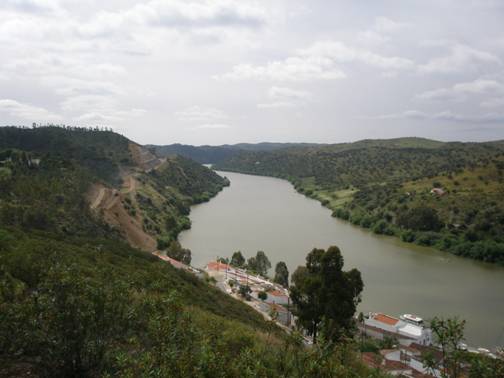
Our guide up the river. Motoring up the river was beautiful, with hills on either side, dotted with orange and olive trees, the odd tumbledown cottage and little private jetties. Sitting at the bow (i.e. not on top of our oh-so-quiet engine) I had forgotten how much birdsong there is away from the sea. This was one passage that was over too quickly!
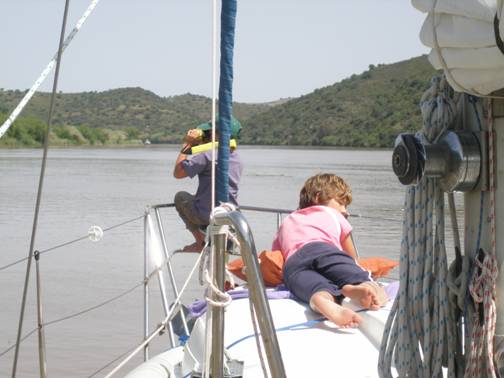
Beth and Bryn on crocodile watch. The first night we anchored between Sanlúcar
(
Sanlúcar (
Alcoutim ( The next few days we spent dodging the rain,
exploring Sanlúcar and Alcoutim and their castles, and falling foul of the time
difference between the two a number of times. How much difference can a 100
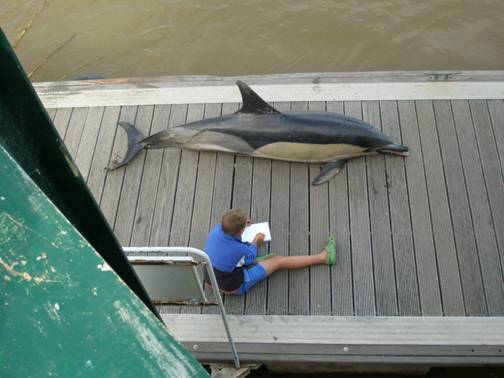
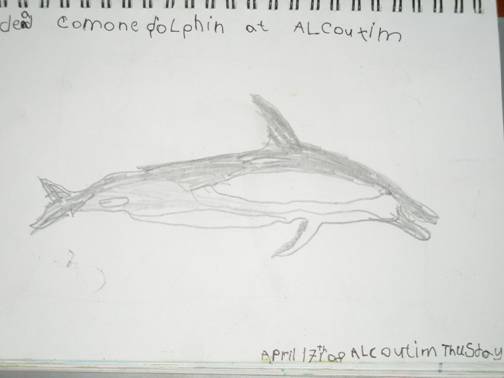
metre stretch of river make? Well, Dolphins occasionally come up the river as far as Alcoutim, and apparently there had been a pod spotted a couple of days previously. Unfortunately this dolphin had died in the river. While it was sad to see, it was fascinating to get close and Bryn spent some time sketching it.
Bryn and the dolphin on the pontoon at Alcoutim.
Dead common dolphin at Alcoutim. Geoff and Lynn (DRY WHITE) came across from
Portimão and spent some time with us. We had snails – apparently a delicacy
around here at this time of year. They also sampled a
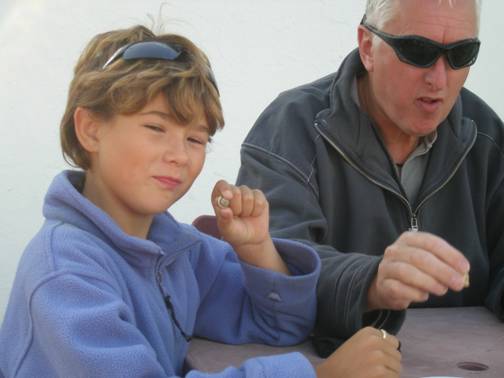
Bethany and Geoff digging into the snails. Creepy crawlies and other wee
beasties Having been terrorized by a tiny jumping spider in
the cockpit, we did a bit of internet research and found out that there are some
interesting snakes and spiders – and even scorpions – in
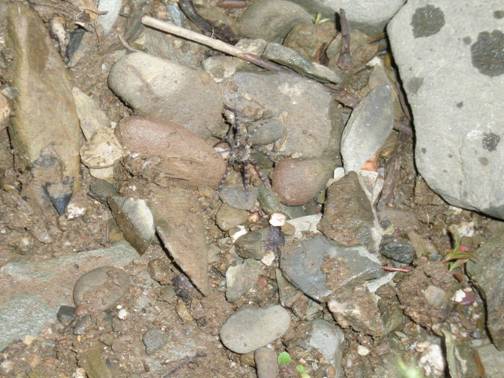
Spot the tarantula (3 cms across, stripy tights).
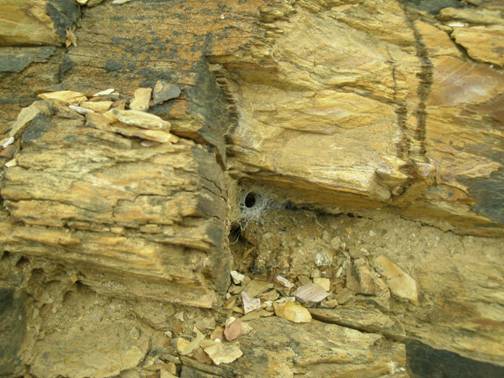
If this is the porch of an Andalucian funnel web spider (Macrothele calpeiana) I’m glad it wasn’t hanging around – apparently this ‘lil’ beauty’ can have a body up to 3.5 cm long and the legs can reach a span of 8 cm (there are some times when access to the internet is not reassuring…)
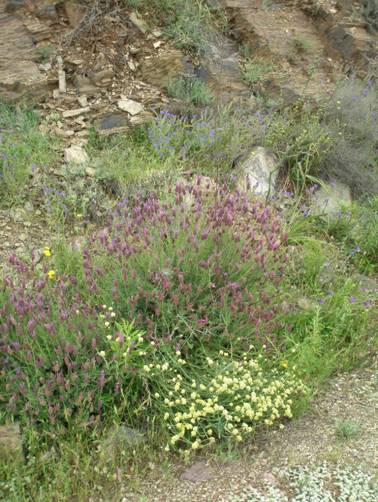
There were wild flowers everywhere! Up river to
Pomerão We explored further upriver as far as Pomerão, a busy port from 1885 to 1966, now an almost-ghost town left when mining activities ceased. Gold, silver and copper have been mined in this area since Roman times, apparently, and 25 million tons of copper ore were excavated from the area. Now 35 people live in the village, which has one (State-owned) bar, a daily bread van visit, and twice weekly veg and meat vans. No mobile ‘phone signals, no internet… We explored, hunted spiders and lizards, read, and took siestas. As getting to Pomerão is a bit tricky, not many yachts attempt it – we were the only visitors there – which added to its charm.
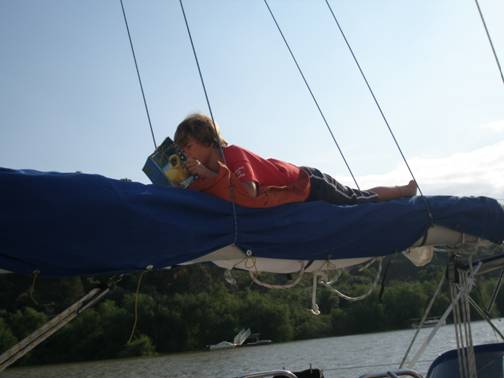
A lesser-spotted boom bookworm. Alcoutim again As work was calling, we made our way back down river to Alcoutim for me to make ‘phone calls, check e-mail and download work documents. Beth and Bryn made friends with some English kids – Lily and Mair – and went trampolining and swimming with them. Having touched base with the real world, we went back to Pomerão on a mission to find some terrapins. Terrapin
territory The Rio Vascao forms the border between the
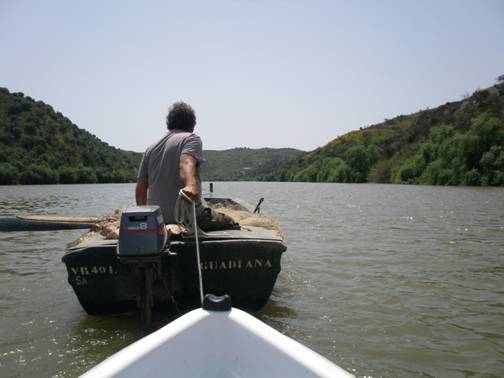
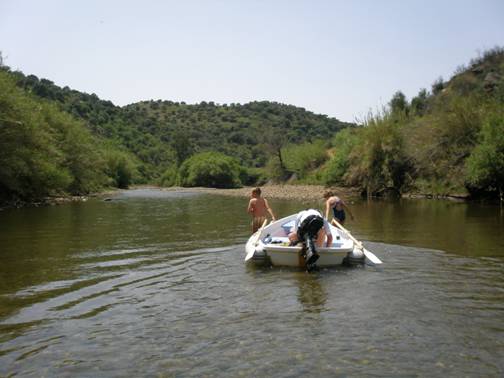
Luckily, a local fisherman offered us a tow down stream. The terrapins (stripe-necked terrapin Mauremys leprosa as far as we can tell) were much bigger than we expected (about 30 cms in length) and were much more like mud-coloured tortoises than the red/yellow and black terrapins we were expecting. They were also good climbers (sunbathing on tree branches overhanging the river), and very shy, ‘plopping’ into the water as soon as we approached in the dinghy (OK, maybe the fact that we had Beth and Bryn with us and struggle to go anywhere quietly might have had something to do with it!).
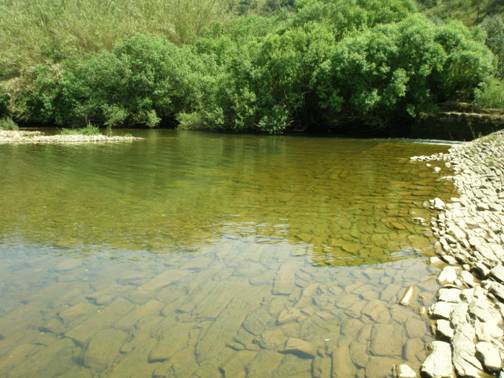
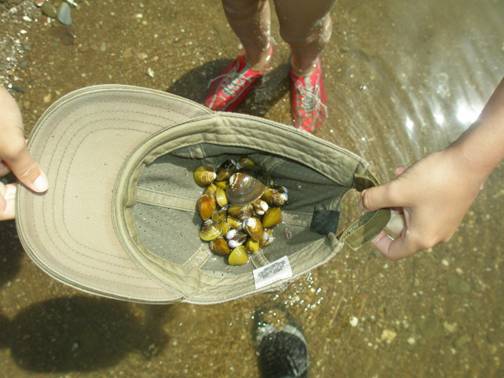
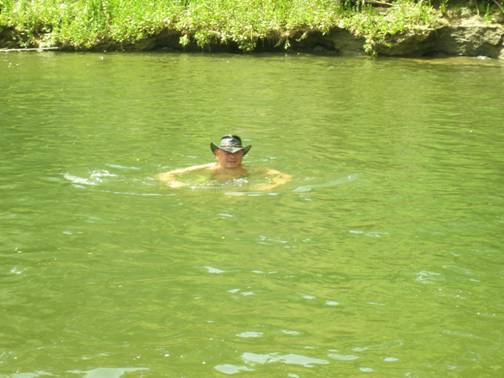
Spot the terrapin. We swam in crystal-clear water, dug up freshwater
clams (and put them back, much to
Child power up the Rio Vascao.
The Roman dam.
Freshwater clams (I knew I brought my hat along for a reason).
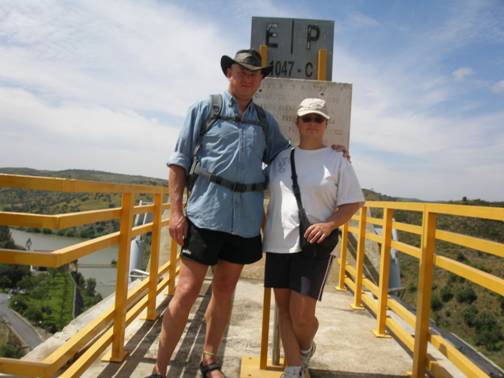
The next day we climbed up to the modern-day dam
across the Rio Chanca at Pomerão. The border between
On the dam; David is in
View down the Rio Guadiana from above Pomerão. Going aground! When leaving Pomerão, the landmark showing the start of the dodgy dogleg channel across the river (namely the derelict house just past the big eucalyptus tree on the west bank) is a bit harder to spot than when coming upstream and we ran aground. Luckily we were on a rising tide and soon managed to back off. A local fisherman sat and watched the show, then called us over to follow him and showed us where the channel was. We were then able to head for the mossy ‘green’ rock on the east bank, and head downriver back to Ayamonte. At least we know the echosounder is working – it did say 0.0 metres below the keel!!! |