Mayotte

Meikyo
Phil and Sarah Tadd
Fri 24 Jul 2026 12:37
|
Mayotte is a department of France, having opted to remain part of France when the rest of the Comoros Islands became independent, but it remains the poorest of all French departments. It sits at the northern end of the Mozambique Channel and has two main islands
and several smaller ones within a major coral reef. We hadn’t realised that it is a Muslim country, but very relaxed with only a minority of the women we saw wearing Islamic dress: traditional, more African style, dress was more in evidence. They have a big
problem with illegal immigration from the Comoros Islands, youth unemployment is high and security is an issue. We were told that, if we crossed to the main town of Mamoudzou on Grande Terre, we should be sure to be back on Petite Terre by 5pm.
We arrived intending to stay two or three weeks, exploring the lagoon and doing some walking. We enquired about a walk around a crater lake on Petite Terre but were advised that it was safest done in a group. At 0730 on Saturdays and Sundays the police provided
an armed escort around the walk! The lagoon is a marine park and you are asked to use moorings, rather than anchoring, to protect the coral, however a large number of the available moorings were destroyed or damaged when a cyclone hit the island in 2024 and
they don’t seem to have been replaced.
We anchored at Dzaoudzi, on Petite Terre, as we needed to get to the airport for the very easy check-in process, going ashore at the friendly yacht club. There were a number of ex-pat French people living on boats there so the club had washing machines that
they let us use, and a bar for a beer in the evening.
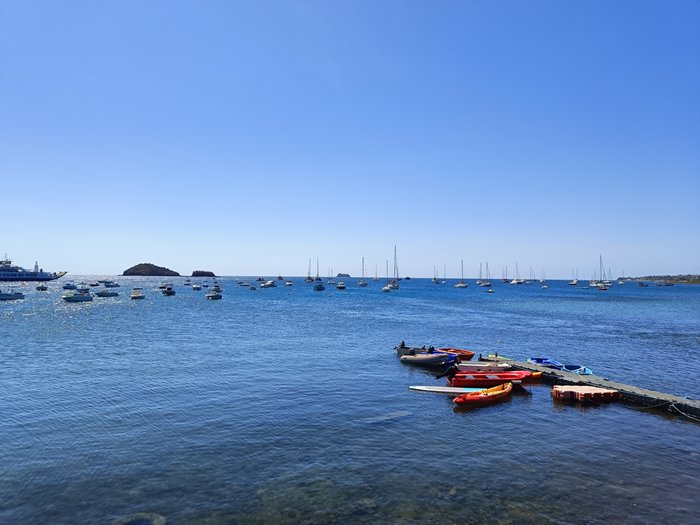
The anchorage at Dzauodzi with the yacht club pontoon in the foreground. You walk along the wobbly pontoon, pull yourself into the wall on a small floating platform then climb on old tyres to the yacht club boatyard. At low water it is quite a scramble
as the tidal range can be up to 2.5 metres
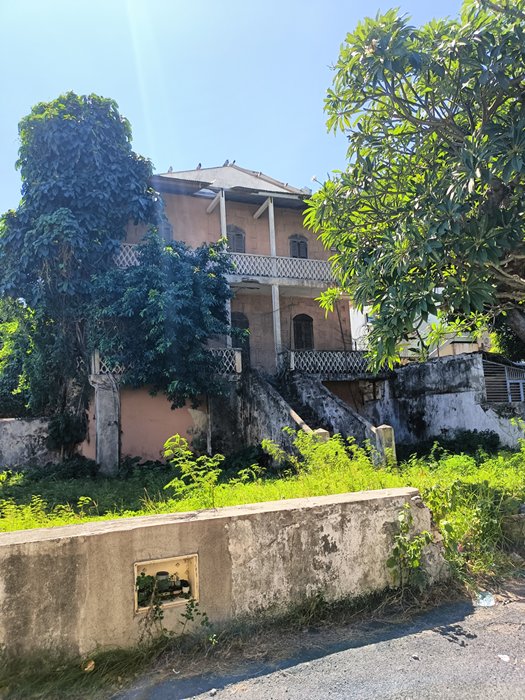
We visited the old town, close to our anchorage, where there were a few derelict old colonial buildings
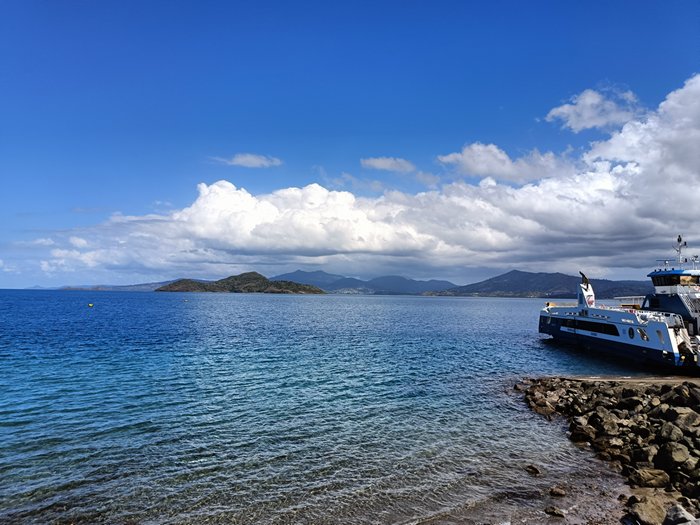
The Island of Petite Terre. The main transport between the islands is by RoRo ferry and several shuttled across the lagoon on a regular basis. They are known locally as barges and catching the ferry is going barging
We spent a few nights away from the town but didn’t go far as there was no wind and we didn’t want to motor for hours. We didn’t find any moorings suitable for a boat of our size and twice had to move anchorage when we found ourselves over coral rather than
sand. We spent two nights off Sazile beach which was very popular with day trippers: boat loads arrived in the morning and disappeared under the shade of the baobab trees with their picnics and loud music. At night it was peaceful and turtles were coming
ashore to lay their eggs - you could see their tracks up the beach in the morning. We were anchored outside a coral reef and snorkelled on it, being pleasantly surprised by how much live coral we saw.
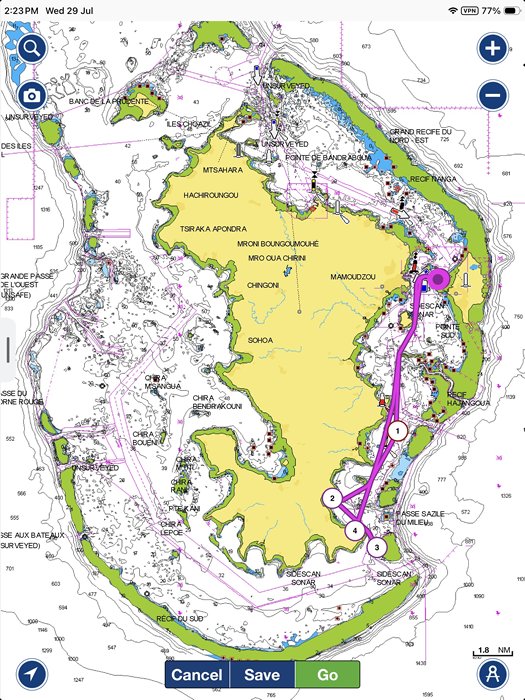
Our short cruise in the lagoon
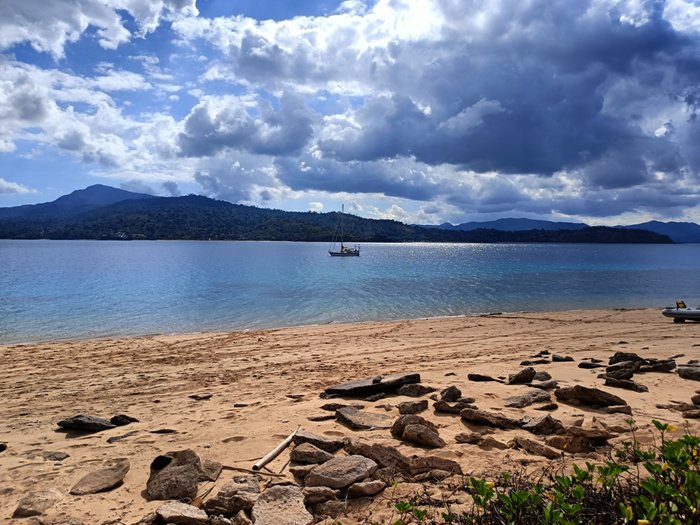
Meikyo anchored off Bandrele (1 on the chart) with Grande Terre in the background
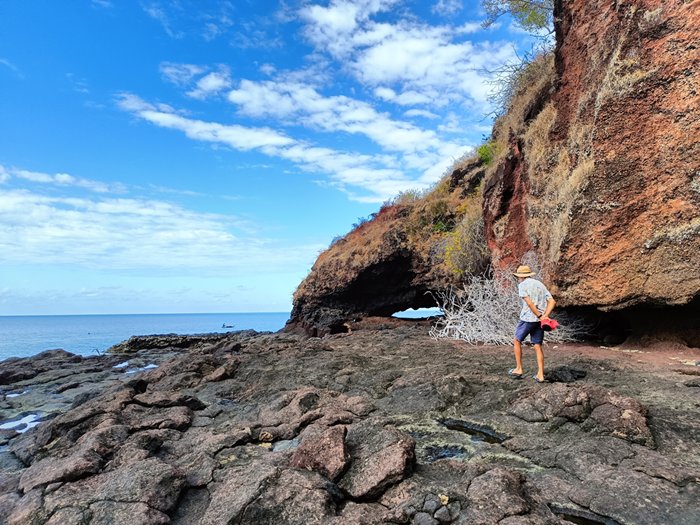
We started rock-hopping round the coast of Bandrele but Sarah's flip-flop broke and we had to retreat
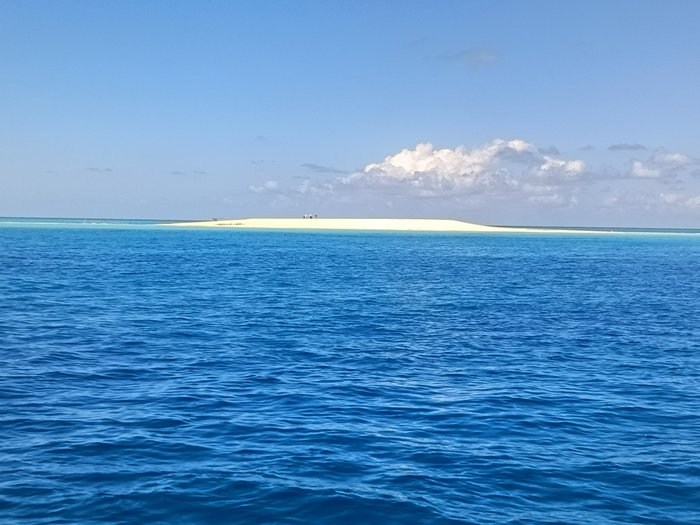
Another lunch-time anchorage was Ilot de Sable Blanc, a white sand island surrounded by coral reef (3 on the map)
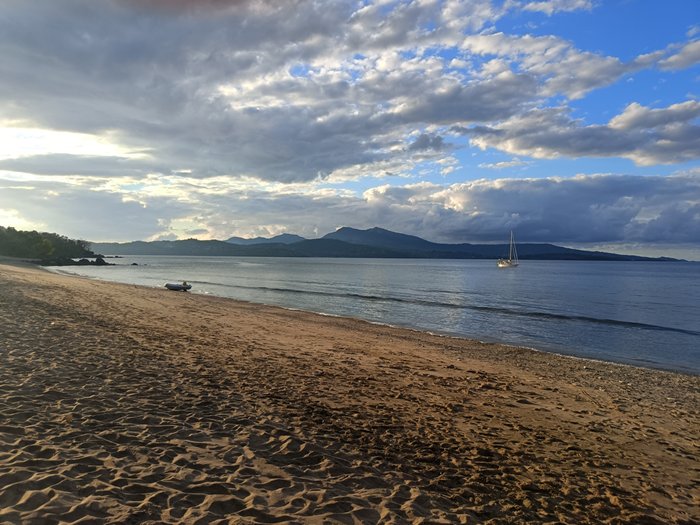
We spent two nights at Sazile (no 4 on the map) and enjoyed a peaceful walk on the beach once the other tourists had gone
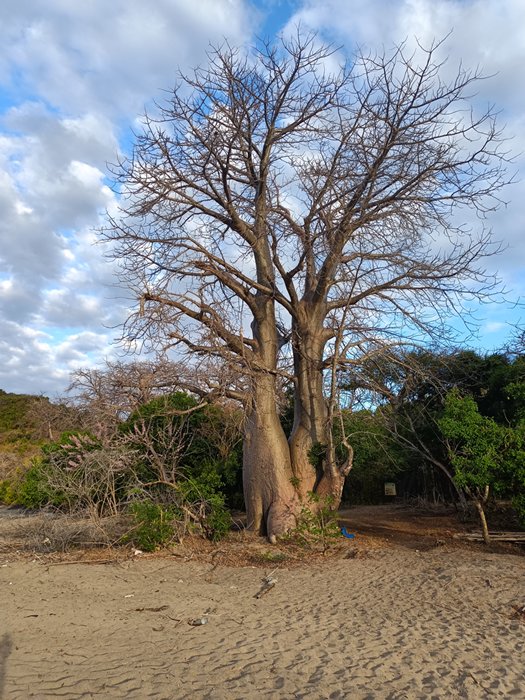
Admiring the Baobab trees that grew right on the beach
Maybe we didn’t give it enough of a chance, but we were underwhelmed by Mayotte. After about a week we felt we would rather be at our next destination of Nosy Be in Madagascar. With a passage of just 180 miles and with a good weather window coming up at the
weekend we went back to Dzaoudzi and checked out ready to leave.
|