Andaman Islands, a rarely visited Indian archipelago. 12:29.18N, 092:57.4E

Meikyo
Phil and Sarah Tadd
Mon 16 Feb 2026 00:00
Our first full day in Port Blair was taken up with finding our way around and getting on line. We had been warned not to pay more than 100Rp for the tuk-tuk into the city so were pleasantly surprised to only be asked for 60Rp. Dropped off at Aberdeen Market we had a quick look round in the hustle and bustle of a small Indian city. We quickly established that Lulu Mall or the Airtec offices were the only places to get SIM cards. Unfortunately we needed our passports, neither photocopies or photos on our phones would be good enough. Return to start and try again. Tuk-tuk back to Chatham pier retrieve our tender from Omar the boatman and get the passports. We have been so used over the last few years to using copies that we have tended not to carry original papers with us. The only available SIM was 28 days limited to 2gb a day. We would have bought 2 but the time it took just to process one was incredible. The hold up was with facial recognition between a photo taken of Phil by the girl in the shop and scanning the passport photo with her phone. Eventually it was managed and we went across the road to a restaurant for lunch, a sort of veg curry dish with rice. Could we have tea to drink? No, not until after 3.00. The dishes were served but no cutlery, okay be local eat with your right hand, there’s a first time for everything. No matter it was excellent food.  Busy street near Aberdeen Bazaar, Port Blair Day two was to be a tourist day, the Zonal Anthropological Museum and Cellular Prison. The Anthropological Museum looks at the history and culture of the Andaman and Nicobar Islands and showcases the indigenous tribes. There are islands here totally barred to tourists where the indigenous tribes follow their own ways of life. Set foot on these and you are likely to be killed by bow and arrow! The Nicobar islands are closed to visits as are the North Sentinelese islands. John Allen Chau, an American missionary was killed on North Sentinel Island in 2018 by bow and arrow while attempting to illegally contact and convert the tribe. His body was not recovered. The Cellular Prison is a historic colonial prison used by the British to exile Indian freedom fighters, now a national memorial. A sobering place where we felt rather out of place among the Indian visitors.  Cellular Prison, Port Blair. 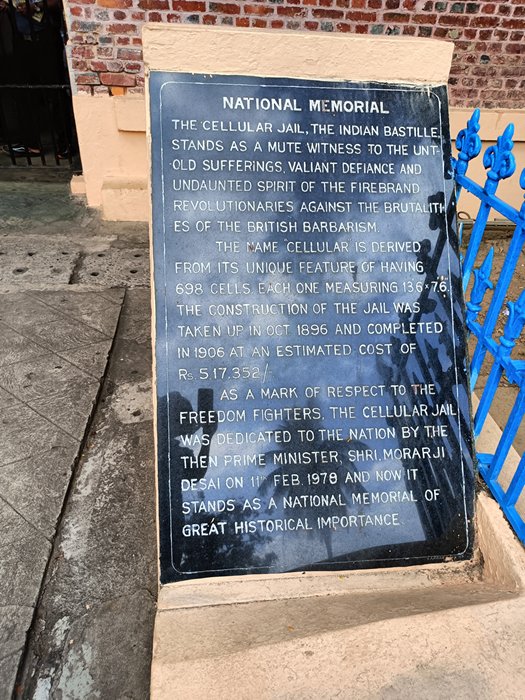 Leaving Port Blair for our cruise in the Islands we set out early morning for Neill Island or Havelock Island. Looking first at Neill Island we decided that the anchorage was too open and would be very uncomfortable so we continued north to Havelock and anchored off Radhanagar beach. Supposedly one of the best beaches in India, soft white sand, no plastic rubbish and most of the day only a small number of people, the crowds turn up late afternoon for the sunset. Just behind the beach is a small commercial area with food and souvenir outlets. We had lunch here one day, a vegetable Thali with rice. This time we copied some Indians at the next table and ate with the serving spoons. While anchored here with clear water and hopefully no crocodiles Sarah snorkelled around and under Meikyo removing more barnacles from the hull and a thin piece of rope from the propellor. 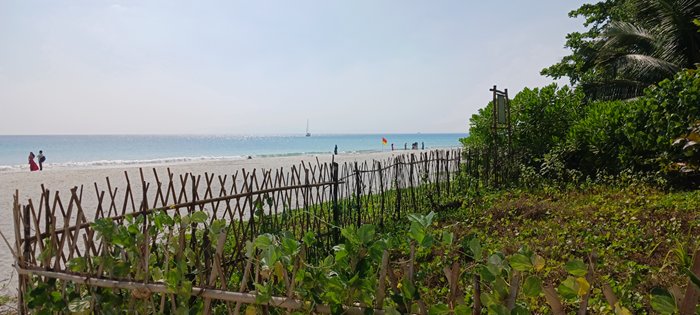 Radhanagar Beach with Meikyo ancored off On to quieter anchorages, we motored around the top of Havelock Island and into the area between Peel Island and John Lawrence Island. A quiet peaceful anchorage with nothing but the mangroves, an occasional splash from fish (or crocs?) a bit of birdsong and one dolphin. We spent two nights here as it was so peaceful, moving once when we realised how close we were to a reef. John Lawrence Island is a reserve and landing is only allowed with special permission as are a number of the Islands here.  Quiet anchorage off Peel Island with reef just inshore of us We moved on around John Lawrence island and north through the Kwangtung Strait. Although our charts show restricted depths through narrow sections of the channel we actually had 46 metres shallowing very quickly at the edges. We set sails once clear of the strait and made our way to N Button island. An uninhabited small island with supposedly good snorkelling on the reef. There were a lot of reef fish and some living coral amongst the bleached reef, perhaps its better for divers who can get down deeper, or maybe we have been spoiled elsewhere in the Pacific, Carribean and around Borneo. There was some protection from the NE wind but not much from the roll, so a rolly night it was. 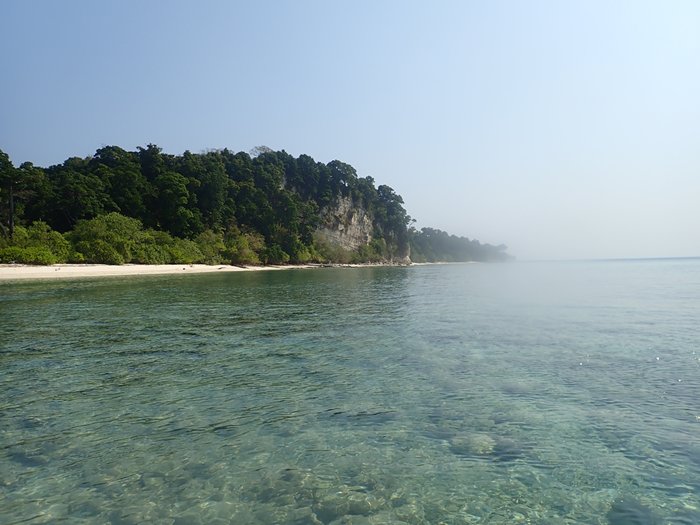 North Button Island looking across the coral. Just under 10 miles from N. Button is Long Island and the small community at Raman Point. There is a jetty here with regular ferries, a number of workboats delivering gravel in bags to the beach and a couple of motor boats running trips to somewhere for the tourists staying in the resort or the small hotel in the village. The first of these stopped alongside us and were interested in where we had come from how long it took and the other normal questions. We went ashore here for a short walk and a look at the village which in some ways looked quite prosperous but any money must come from the small number of tourists, work within the forest reserve or manual labour moving gravel and repairing roads. We were asked, at one of the small shops if we would like tea, so sat for a while with a glass of sweet black tea.  Workboat at Long Island. The gravel it brought in was unloaded manually and carried up the beach in sacks.  The centre of the village has a green area bordered by the hotel, school, police station, mosque and government buildings. This is used as a playing field and grazing land. 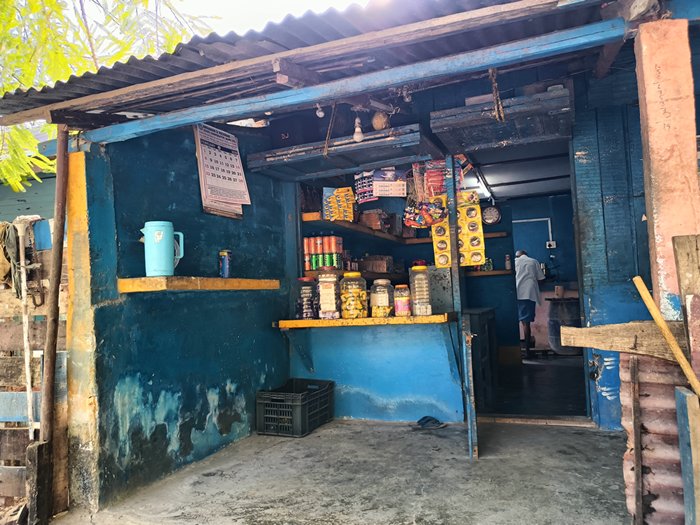 Shop/cafe in the village At our next stop we intended going to the vegetable market in town and restocking. This was at Rangat, two long tacks from Long Island and we entered the harbour, having first requested permission from Port Control. A good sheltered anchorage in about 6 metres between the breakwater and ferry pier. The shallowest anchorage we’ve been in for a while. We had to wait for a visit from the marine police who checked our papers, photographed everything and were very happy and cheerful about it. It took four of them but at least they had their own boat. We told them that we would go to the vegetable market next day and one offered to arrange a tuk-tuk if we wanted.  Harbour at Rangat and a shallow anchorage.  Dinghy dock, tied up to the police boats. We were able to combine tuk-tuk and bus and go to town next day but everything was shut. It seemed a bit strange that mid-morning no shops were open and then a man approached us and asked where we were going so we explained that we needed to buy vegetables. He told us that the market was closed all day but it took us time to understand that there was a strike and all was shut. No mention had been made when the police checked us in of the planned ‘Bandht’ (translated to closure) the next day. Any group can request this and it’s like a general strike where all services close for the day. This was requested by the students in protest about reforms to the university and all of Andaman was closed, Including buses and tuk-tuks. We had a wander through the town and then started to look for a way to return to the harbour. It made sense to ask the local police who were out in small groups. The first said we couldn’t get back by bus and should go by jeep he explained where to find one and we walked in the right direction, saw no jeeps so asked the next group of police how we could get to the harbour. They spoke to a tuk-tuk driver and then told us go across the road and someone would come to take us. We waited and nothing until another policeman came and told us to go to the temple and a tuk-tuk would come. Again we moved and waited and eventually the tuk-tuk arrived and we were able to make it back, cost to get to town 50p and three times that to get back.  Rangat town, even the bus gives way to the cows Today we visited the local village near the jetty and were able to buy a few basics, pumpkin, cabbage, tomatoes, oranges, apples and bananas. Just enough to see us back to Port Blair. One enterprising shop keeper offered tea or coffee so we accepted the offered black sweet drinks. We could have had milk but it would probably have been the condensed variety and made the drinks even sweeter.  Shops at Rangat Harbour, quite a reasonable range of fresh veg. Tonight we are sat in the cockpit watching fishing boats in the bay as the sun goes down, tomorrow we will start to head south again. |