To Goidhoo Atoll, 04:52.32N, 072:53.25E

Meikyo
Phil and Sarah Tadd
Mon 13 Apr 2026 12:05
|
We always try and sail as much as possible and with reports of fuel being unavailable further south in the Maldives we are even more keen to conserve our diesel by using the sails. After a number
of windless days at Hurasfaruhuraa and Komandoo we saw forecasts of stronger northerly wind and, with fellow tail-enders Ozone, Jamala and Allora, we made plans to make progress south.
We started with a short hop, using the engine, to Dholhiyadhoo Atoll which we hoped would be a good starting point. Dholhiyadhoo island forms an arc round the north side of a circular atoll so is well protected
from the north. We joined four other boats that were already there and anchored in 25 meters outside a series of large coral outcrops that followed the edge of the island. We are getting used to these deeper anchorages and our decision to buy extra anchor
chain before we left Thailand was the right one.
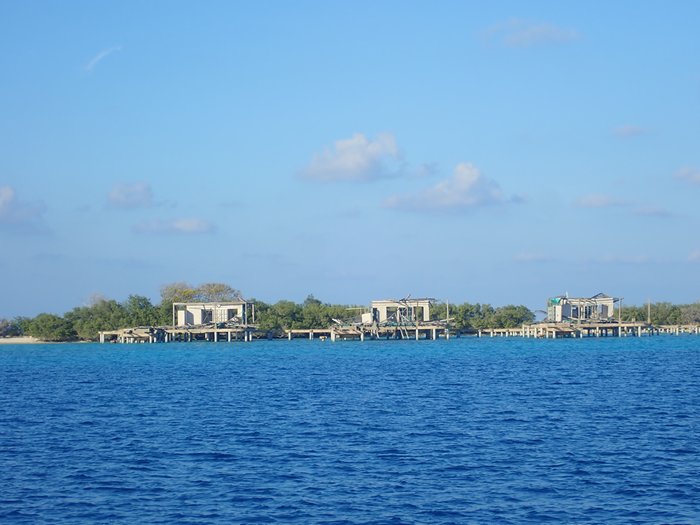 Dholhiyadhoo is the site of an abandoned resort development. The developers went bankrupt and it has been left to rot with just some Bangladeshi caretakers on site. Meanwhile other islands are still being developed as resorts
As this was just intended as an overnight stop we didn’t go ashore and were up early for the 35 mile trip through Noonu Atoll and across to Naifuru in Lhaviyani Atoll. Passages through the atolls have been relatively straightforward
but need some planning as the reefs and islands we have to go round aren’t always accurately charted and we check their position on a satellite view before departure. This was a good days sail, only using the engine to leave and enter our anchorages.
We anchored south of Naifaru in 18 meters with good northerly protection from reclamation work being carried out on the reef. This was the most developed island we had seen so far and because the anchorage had been so well sheltered
we decided to take an extra day and have a look round. There was a big and very clean harbour full of local boats where we found space at the north end to tie the dinghy near some steps to get ashore. The town was similar in layout to others, with a grid of
sandy street and houses with courtyards shaded by fruit trees, but there were more and more varied shops plus the first cars we have seen in the Maldives. We had lunch in a small cafe by the harbour: the curry must have been freshly made as it took so long
to arrive but was delicious, flavoured with cinnamon sticks, cardamon, curry leaves and coconut milk. Jamala joined us in the anchorage during the afternoon. The wind direction had changed slightly and we both rolled all night.
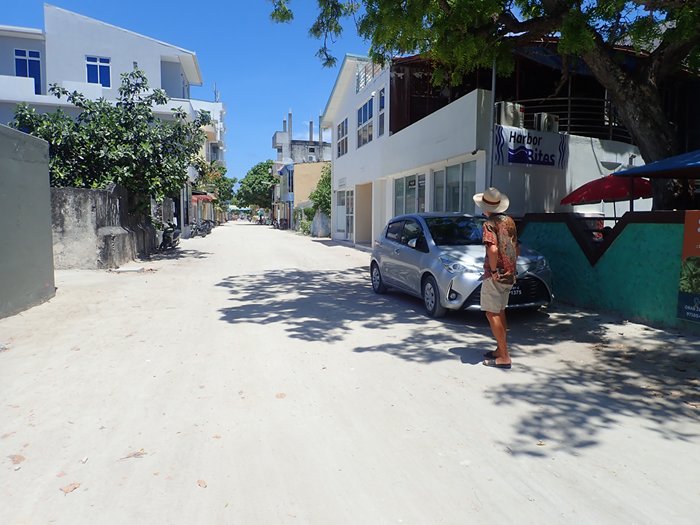 Wide sandy streets, buildings with several storeys and cars on Naifaru
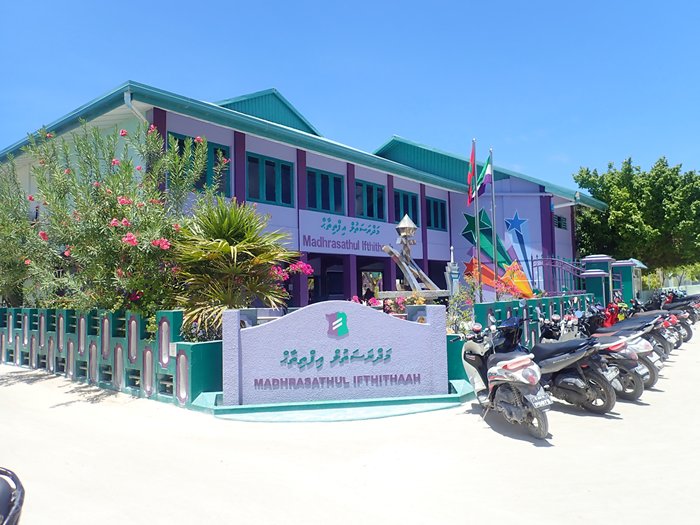
The town's school.
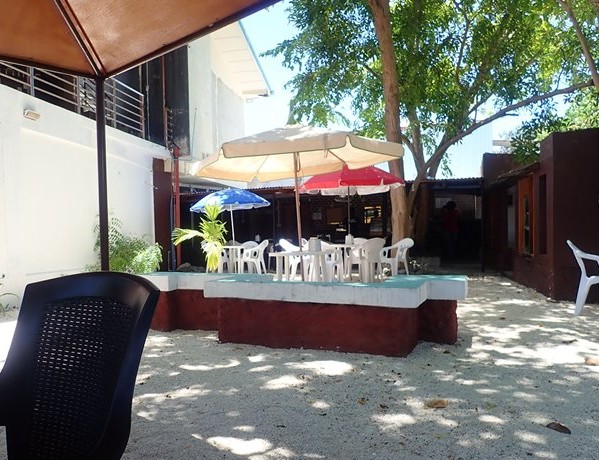
A shady courtyard for lunch
In the morning we both left aiming for an anchorage in the Baa Atoll. We planned a straight line taking us through the atoll while Jamala was going down the east side before turning in giving less distance
among the islands. We had a fantastic sail across the fifteen miles of open water, making up to 7 knots. We reached our anchorage by mid-day, giving good sunlight to see any uncharted reefs and shoals: sailing among the coral you aim to be anchored by about
3pm for that reason. This anchorage had only reef to protect it and it was not particularly good, so we bounced a bit all night. Jamala had carried on further south, so we were on our own again.
With another good day’s wind we aimed for Goidhoo Atoll the next day, a 30 mile passage. We kept a conservative sail plan until we got outside the atoll then increased sail and Meikyo was soon cruising at 6-8 knots. Jamala appeared
to our west and the race was on! The two boats are very different and Meikyo had a definite edge with the wind behind the beam but once we turned onto the wind around the eastern end of Goidhoo we were pretty well matched. The entrance to Goidhoo was stunning
with a small island to the west of the pass with rollers breaking on the reef all round it. Once inside we motored the three miles to anchor off Innafashi Island, finding a spot with sufficient space between coral outcrops (bommies) at the second attempt.
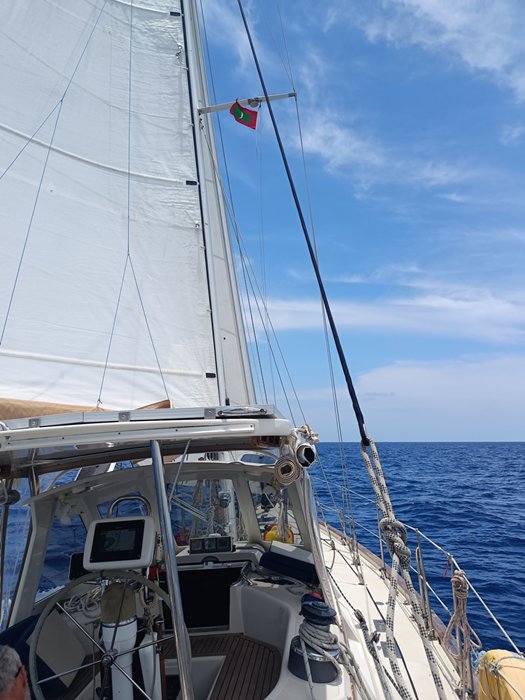
Meikyo sails herself towards Goidhoo, while Phil watches!
We spent 5 nights in Goidhoo Atoll. After the first night at Innafushi Island we moved to Goidhoo Island at the eastern end of the atoll. A local man called Alba had been reported to be helpful to visiting
sailors and we had contacted him to ask if we could get laundry done anywhere. His response was that we could put it in his machine! We met him at the small harbour and walked to his house where our bed linen and towels went on to wash. He then gave us papaya,
banana and rose apples from his own trees before giving us a tour of the island including visiting the many small farms so we could buy fresh vegetables. The island has a good ground water supply enabling them to grow a variety of crops on the sandy soil.
A lot of produce is sent to Male’ on a Friday and we were there on a Saturday reducing what we could have, but plenty for us. It was an interesting few hours as Alba spoke good English and could give us insights into how people live on the islands.
We returned to our original spot off Innafushi Island for our last two nights, going ashore for a walk on the island and snorkelling with the bat fish.
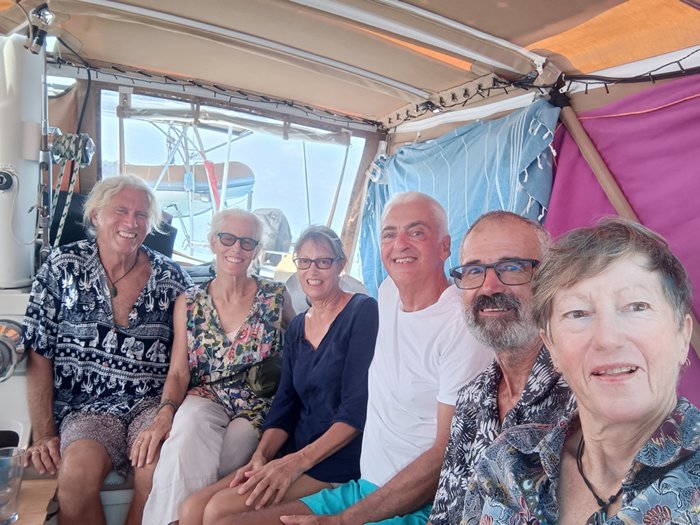
Morning coffee on Jamala with Marcus and Diana (Allora) and Maria and Allen (Jamala)
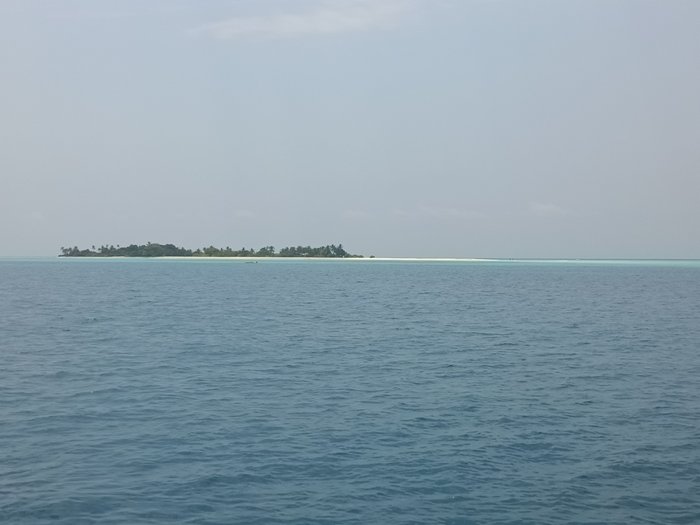
Innafushi, the epitome of a Maldivian Island
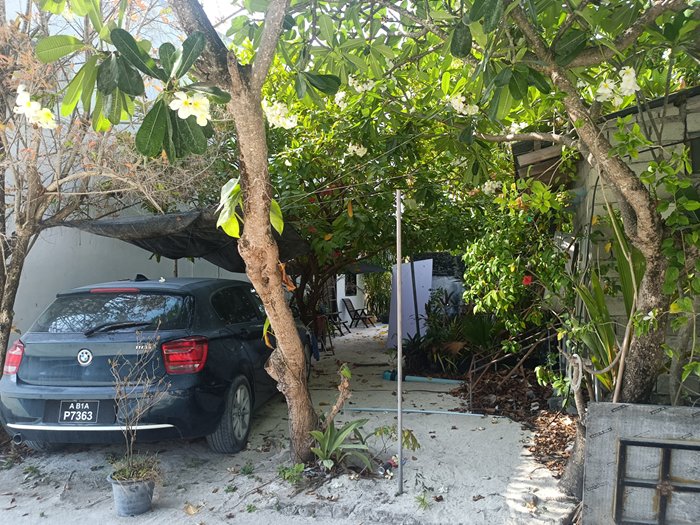
Alba's family back yard. The BMW was the last thing we expected to see here!
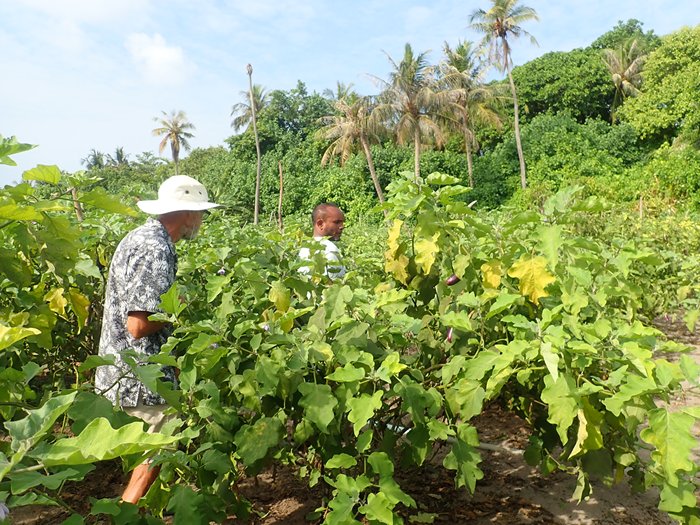
Looking for ripe aubergines
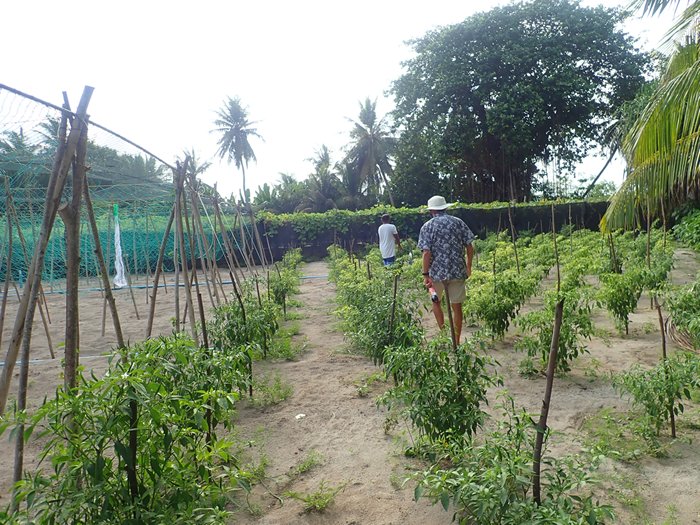
And chillis
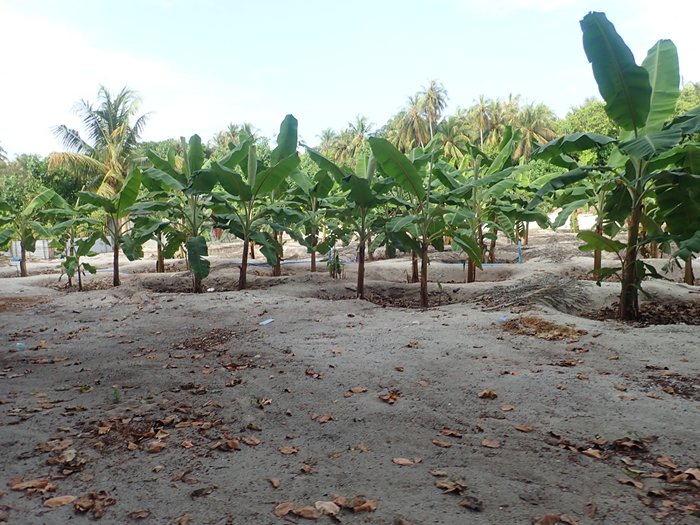 Goidhoo has reliable ground water about 3ft below the surface. Once it was their main water supply backed up by rain. Now there is a desalination plant, and the ground water is used for agriculture like
these young banana plants sunk into holes
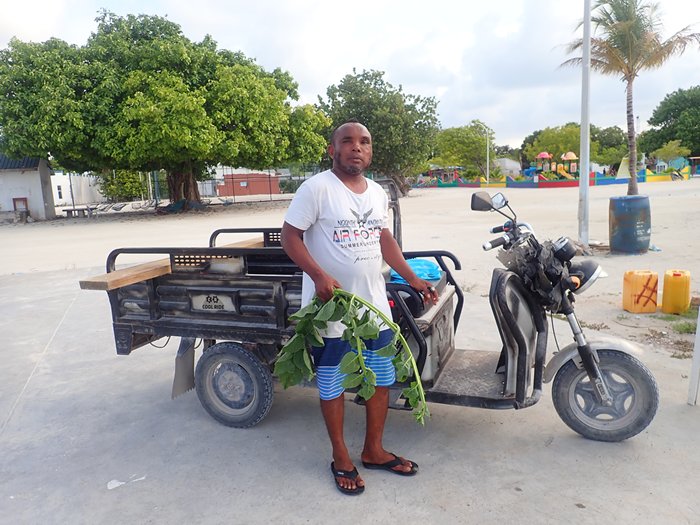
Alba with the spinach we bought from one of the farms. We bounced around the island on the plank laid across the back of his tricycle. The bike was electric powered as were some of the motorbikes on the island
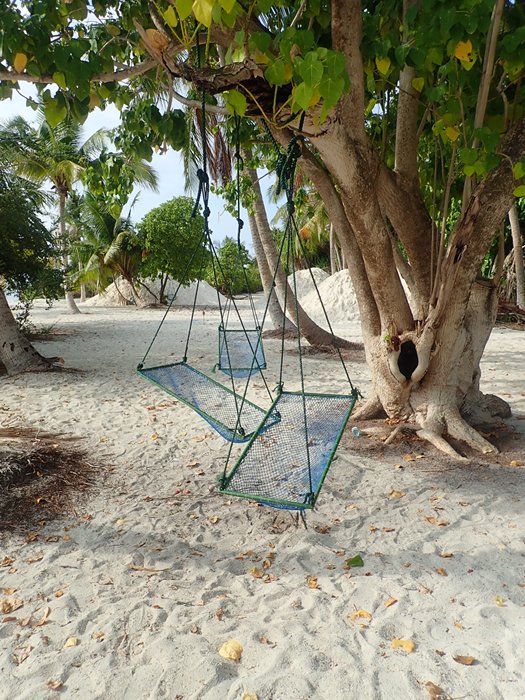
A different take on the local seats made from netting. These swings were at Bikini Beach - the local's beach
The weather has now turned unsettled, and we had a big thunderstorm on Sunday night which gave us 38 knot winds from the south-east (the
last direction we expected) and pushed us uncomfortably close to one of our bommies. Last night the thunderstorms passed to the east of us so we could see and hear them but weren’t affected.
We are now continuing south with our next destination being Male’. The forecast is for more thunderstorms, so we are looking for anchorages with plenty of swinging room in case of wind shifts.
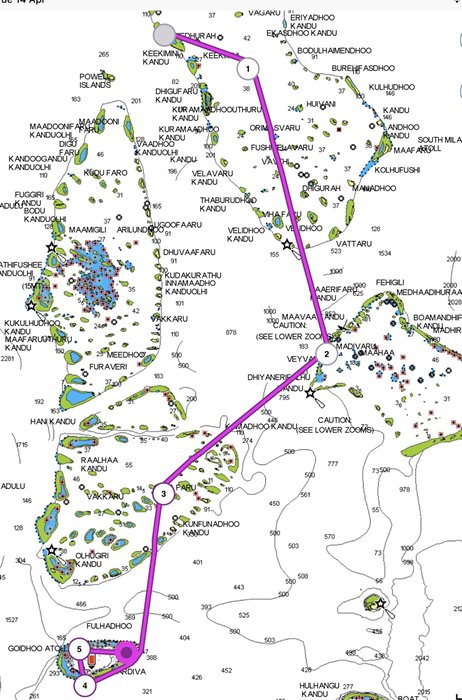
Our route from Komandoo to Goidhoo
|