Brazil

How to sum up our impressions of Brazil? ‘Carnaval’ was loud, brash, colourful, exotic - one huge crush of people determined to party hard for days on end. It was exciting to be there and a unique experience. The crowds were mostly good natured, but we were warned to take care of our belongings. Leave bags, jewellery, phones at home and take only the bare minimum onto the streets. We met some friendly and welcoming people, but at times Brazil didn’t feel a safe place to be. It was worse in Recife than elsewhere but we always felt a bit on edge no matter where we went.
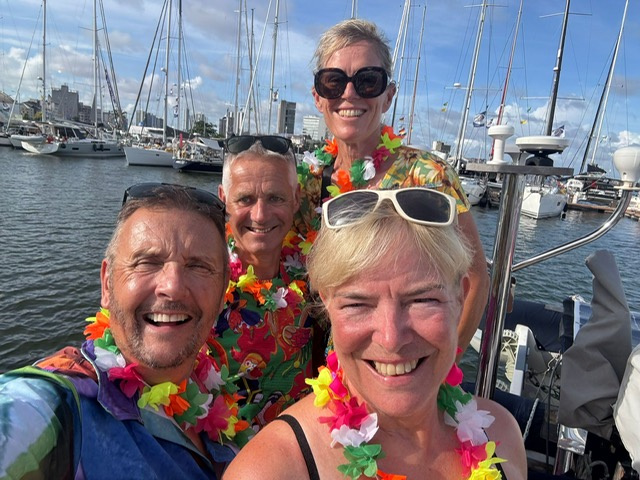
Casamara crew ready for the Carnaval themed World ARC party in Recife Three hundred years of Portuguese colonisation have heavily influenced Brazilian culture, particularly in the north east of Brazil where we were. Portuguese is the only language spoken by the vast majority of the population. I always try to learn some of the local language and don’t expect other people to learn English but it was notable that Brazil is one of the few places we’ve come across where you can’t get by with a mix of English and a few words in the local language. Most people we met recognised no English words at all. We were very thankful for Google Translate and I was glad I’d made an effort to have at least some phrases in Duolingo Portuguese!
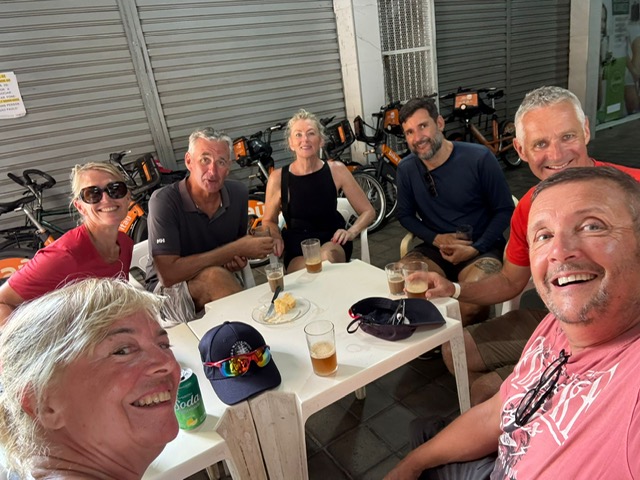
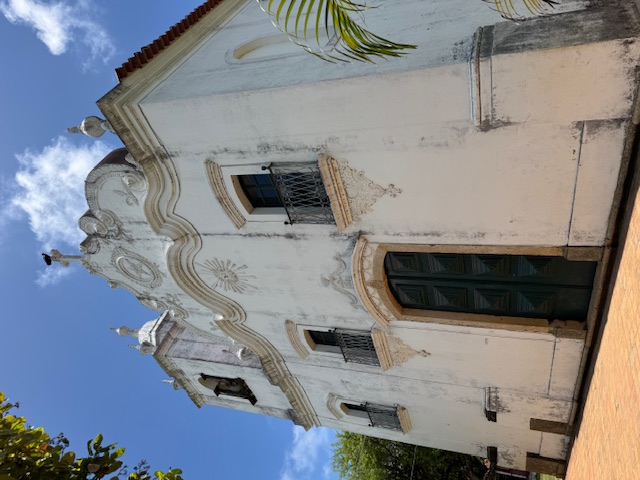
The crews of Casamara and Amelia enjoying a refreshment stop with our guide Roderick - one of the few English speakers we met. The Roman Catholic Churches are another Portuguese feature. As Roderick said to us: ‘if something good happened, the Portuguese built a church to remember it; if something bad happened, the Portuguese built a church to remember it’. The churches and colourful old colonial style buildings are very picturesque and much as you might find on the streets of Lisbon.
Church in Vila Velha, Ilha de Itamaraca We sampled a bit of city life in Recife and Joao Pessoa, some colonial history in Olinda and Ilha de Itamaraca, and a few days in a small town frequented by Brazilian holidaymakers. We found a mixture of emerging wealth and poverty. Investment in buildings and infrastructure was evident everywhere we went, but so were the run down areas, piles of rubbish, potholed roads and pavements, walled compounds and razor wire. So many vehicles looked as though they might not make it to the next corner, and yet the roads were lined with vehicle repair shops and tyre sellers. It’s a country of contrasts.
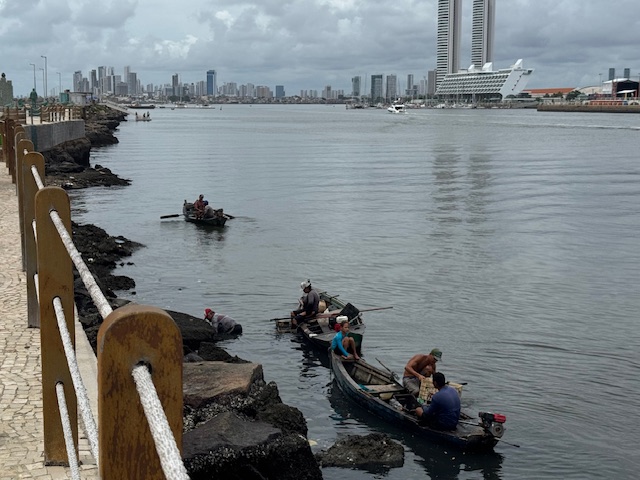
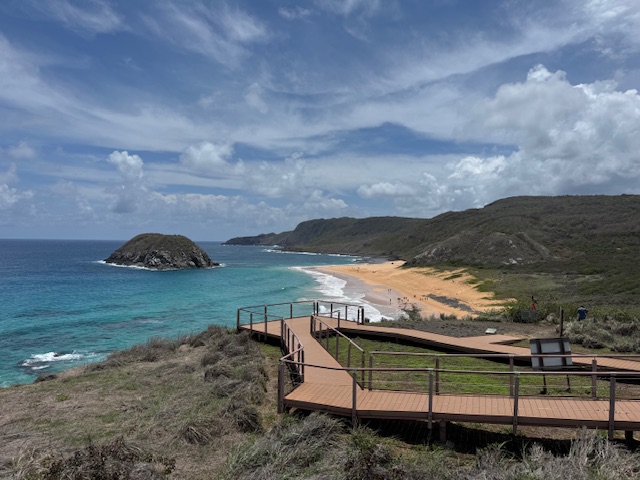
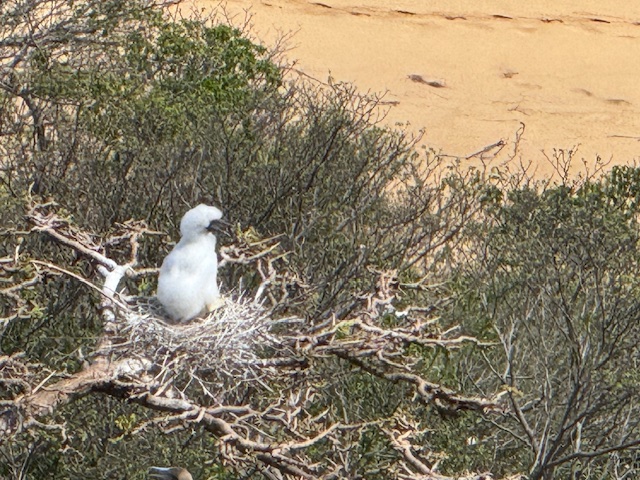
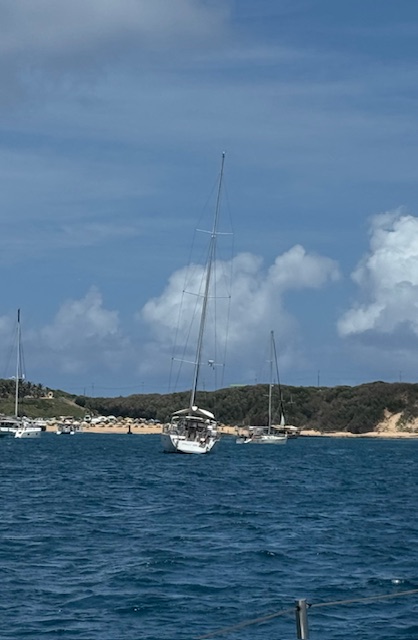
Modern skyscrapers in the background whilst in the foreground fisherman hunt for shellfish in the dirty water of Recife port After a couple of weeks travelling on the mainland, and both of us feeling off colour with a nasty gastric bug, we left Recife feeling glad we’d had the time to see some of Brazil but not in a hurry to come back. Forty eight hours later we anchored off the island of Fernando de Noronha 200 miles off Brazil’s north-eastern corner. What a contrast! A beautiful, pristine, tropical island with crystal clear water. Not a speck of plastic or rubbish of any kind anywhere to be seen. Noronha is a national marine park and UNESCO world heritage site, and it was great to see how well the environment was being managed. The Galápagos Islands could learn a thing or two here. Noronha has a relaxed, chilled vibe and it would be easy to while away a couple of weeks exploring the sandy beaches and hiking trails. Dolphins and turtles entertained us in the anchorage and we loved the cliff top walks looking down onto chicks nesting in the trees. We had a brief stop there and would love to come back for longer some day. Next we sail 2,000 miles to Grenada in the Caribbean. We are almost back to familiar territory.
Cliff top path, Fernando de Noronha
Chick in a nest
Anchorage, Fernando de Noronha. Spot the angle of the boat ahead of us. The anchorage was a bit rolly! |