Arrival in China

|
Lat:
36:51.600000
Long:
75:27.000000 Arrival in China
02nd January 2006
The pen is the tongue of the
mind 36.86/75.45
For more information on Naunihal Development Organisation (NDO) please see Recommended Organisations. With the advent of Television in the Northern Areas, local people have woken up to the fact that there is a life beyond the village. Before they were content to live unaware or ignorant of the outside world. Now the outside world has come to them. People can see other ways to live a life. Before they were unemployed but saw no need to worry about it. Now they realise how much time they’ve wasted. The importance of education has increased virtually overnight. Government schools are not trusted here. They have no ‘check and balance’ system, i.e. they are unable to fire and hire teachers. This is in stark contrast to the Aga Khan Diamond Jubilee (DJ) community schools that have opened up throughout the valley. A good proportion of the education of NA has been provided by these schools. They have proved immensely popular. Female students have thus far passed Grade 10 and 1700 more are presently studying in Nagar. Eighty percent of female schools are run during the evening on the premises of Government Schools maximizing land use. Most DJ schools teach their subjects in English and Urdu. The Hunza valleyThe snow stuck to Sparks mane and seemed to find its way into every nook and cranny of my hood. I pitied the mares. Riding at night was usually no different than riding during the day; it feels a little colder and everything in close proximity dominates your world. However the snow changed all that. We were now riding almost blind. Each time a car passed, Sparks became entranced by the headlights and then abruptly stopped, temporarily blinded, almost flinging me from the saddle. After 20kms I’d had enough of this charade and I easily accepted the invitation of a local man to stay for the night. It was 11.30pm . I was in Nasirabad only 15kms from Aliabad. The staff at the AKES office there were expecting me, but these were no conditions to be riding in. After Gilgit, the KKH passes through three valleys on the way to the Chinese border. First is Nagar valley, second is Hunza and last is Gojal. I was presently in Hunza. The next morning I set off from Nasirabad and headed off for the next major town of Aliabad at the heart of Hunza. 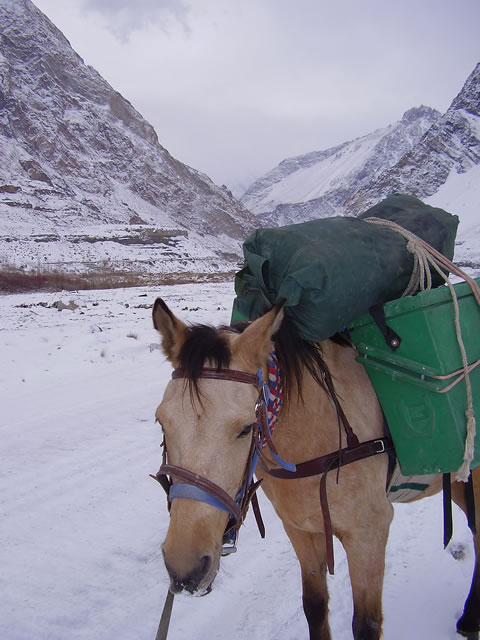 The waking world was pure white. Children were either playing or busily employed throwing dirt from the roadside across the centre to give grip to passing vehicles. All around the mountains were wrapped in a brooding menace of black clouds and I was disappointed to miss out on the famous scenery of Mt. Rakaposhi . People everywhere waved or cheered as I passed, but there was none of the ‘over-attention’ as in other parts of Pakistan . The people of Hunza look much more like we do, with broader faces and lighter skins. The valley has always been self-sustaining and the people reflect this; honest and hard working with every field bordered by ultra neat cobbled wall terraces. I reached Aliabad around lunchtime and proceeded straight to the DJ school where a visit had been arranged. After the school we took a jaunt up to the tourist Mecca of Karimabad, where the famous Baltit fort presides over the valley. This used to be the home of the former Mir of Hunza, (Mir Ghazanfar Ali Khan) who only recently gave up his seat the 1970s. He now runs a swanky hotel nearby called the Darbar. Expect to pay $70 a night (normal rate) for the privilege. Read full report on the visit to Diamond Jublilee School, Garelth The fort looked great but proved to be a picture postcard experience. Inside was nothing special. Although we got free entrance (due to PTV’s presence), foreigners are charged more than locals. The tour was short and despite an air of mystery there wasn’t much to learn about Hunza generally. The view from the top may have made it all worthwhile but the mountains were still shrouded in mist. We spent the whole afternoon filming and it was late when we finished. I was concerned about the border and after an hour on the phone the prognosis didn’t look good. Although the pass hadn’t been closed by snow, the road was covered with the stuff from Aliabad to near Sust. I received confirmation that local Toyota vans were traveling between Hunza and Sust but PTV were now worried about if there van could make it. I promised to make other arrangements for them. 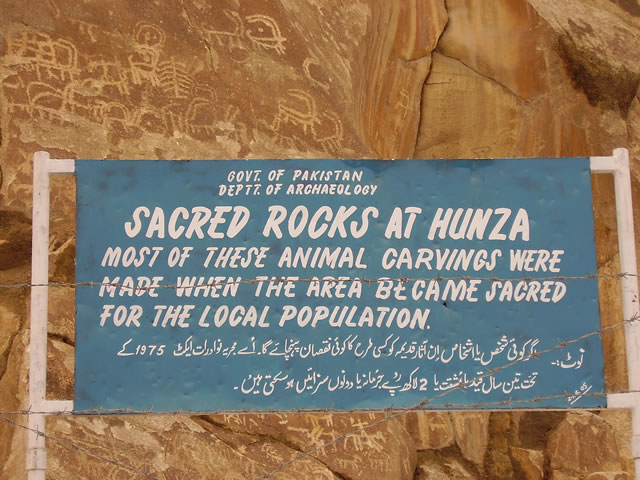 It was now the 28th of December and time was slipping fast. My whole effort was no concentrated on reaching Sust, selling the mares and entering China . We still had a lot of filming to do and one last school to visit, 22 kms before Sust in the village of Khyber. From Garelth the road split into two. One side climbing to Sust and the other descending. The Sust road quickly became embedded with ice, rippled by the chains of heavy lorries that chugged by. My diary says “sense of impending gloom.” PTV were going to have a hard time. They did. We ascended up above a deep valley bordered by high mountains and carpeted with snow and rock. Sparse human settlements populated the far river bank but mostly I was the only human being on the road. Again I churned over in my mind the decision about whether I should turn back. Yet the effort made so far drove me on. I couldn’t give up now and PTV had to make it. They didn’t. Horses sold!Gulmit arrived gradually. I’d covered 40kms in 7 hours by riding in stages of 2kms walking and three riding. Black clouds still clung to the upper peaks but no snow came. I took this for a good sign. Gulmit was an oasis of life in nothingness. My perception of life beyond Gilgit had been one of desert and sparse habitation. A high altitude border area begs that impression. Yet so far it had been one rich human settlement after another, only separated by twenty kilometer gaps of nothing. In Gulmit I coincidently met an old contact who offered me a contingency plan for the mares. If I couldn’t sell them at the border he would keep them in his stables in Charpurson for three to four months until I could return to sell them. A noble gesture. His name was Alam Jan Dario. Further phone calls didn’t offer such good tidings. PTV had disappeared back to Gilgit . I did my best to arrange another vehicle for them but it didn’t look likely. There was still little hope of escaping the 8500 Rs ’special booking’ of the NATCO jeep into China and the Deputy Commissioner (DC) hadn’t managed to find a cheap truck to take my mares back to Gilgit. Something good had to happen at some point. It did. After traveling only three kilometers on the road that night, another jeep came screeching over and Shahbaz stepped out. Warm smiles and bear hugs later, I learnt he was interested in buying the mares… Shahbaz was chairman of the Chinese ‘dry’ port at Sust and a regional governor of the area. I’d met him previously in July after the Shandur Polo tournament. He was an important man. 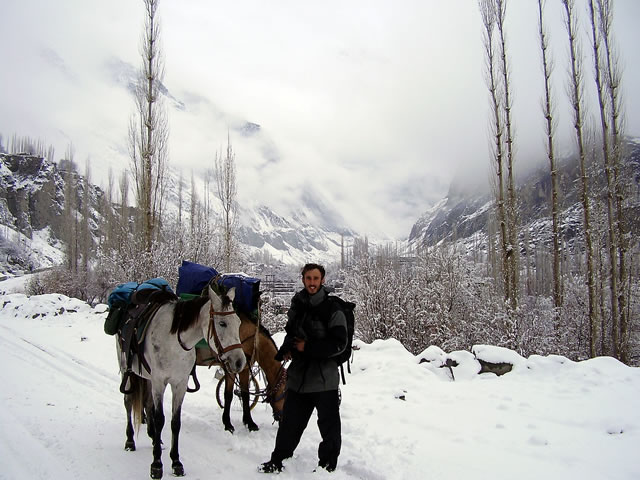 Thoughts spun quickly. Was this fate? Was he serious? I was truthful and honest. Told him the plus points of each and their suitability to various professions. I actually didn’t care anymore, but I knew him to have a good reputation and he said he wanted to keep the mares at his stables in Charpurson. It was a giddy fifteen minutes. We were stood out on the ice at the roadside negotiating the end of an entire year’s experience. Shahbaz then increased the excitement by offering to pay for the mares then and there. What? After all the hassles and the headaches in Gilgit, this is what it came down to? He didn’t have the agreed amount with him so he agreed to pay some now and the rest at 8am on the morning of Dec. 31 in Sust. He left me with a $100 bill deposit and sped off into the night. I plodded on slowly loosing myself in my thoughts and the long march to Sust. Ten minutes later Shahbaz came speeding back. He was distracted and in a hurry. He wanted to pay upfront now and collect the mares later. We stepped into his landrover to negotiate the final conditions of sale. I required PTV to be present when the sale was made. He had a busy schedule and couldn’t accompany me back to Gilgit to film the sale so I persuaded him to provide a 4×4 jeep for PTV to come to Sust instead. It was a beautiful arrangement as it solved many current issues. Shahbaz left and I slipped and slid the remaining 12 kilometres into Passu. I was still 37kms from Sust but we were all tired and the temptation to rest proved too strong. At 2am we finally pitched camp and fell asleep. Return to GilgitThere was a sense of finality now to events. It was Dec. 29 th and only two days before I was due to enter China . After a brief meeting on the road with the AKES staff from Sust I carried on towards Khyber where I hoped there was a telephone. I had to confirm arrangements with PTV, Shahbaz, NATCO as well as clear up a suspected Visa problem that had emerged. I arrived in Khyber village shortly after noon. The community met me and we had a quick lunch of random roast potatoes and delicious pieces of dried yak meat. Like many villages in the Northern Areas this one has been economically stagnating for some time. To counter its advance Khyber had setup SKIDO, a community driven development organisation aimed at promoting the area and generating economic growth. The organisation has recently built a guesthouse for foreign hunters and begun a herbal garden (currently in the infancy stages). 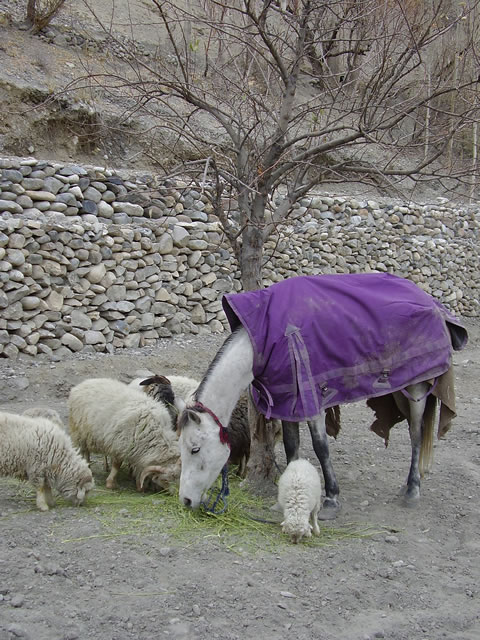 However, there wasn’t a telephone in Khyber and as events transpired I wasn’t able to stay and visit the school there the next day. Leaving the mares temporarily stabled in Khyber I travelled with AKES to Sust where bad news awaited. PTV were still in Gilgit. I couldn’t believe it. We still had filming to do and they’d refused a perfectly acceptable vehicle. Second bad news; NATCO still stated I would have to make that ’special booking’ to China and my visa problem still needed attention. With the horses and the truck off my mind, the filming now took priority. I had to film an ending therefore I would have to return to Gilgit. I travelled back quickly to Khyber, paid my regrets to the community and saddled the mares for a night journey to Sust. Travelling by night wasn’t as bad as it might seem. The snow at the road side always afforded grip to the mares and the problem of ice never really materialised. It was midnight when I finally rolled into Sust and my journey officially finished. Alam Jan Dario was waiting for me at the Khunjerab Hotel which was the agreed rendezvous point. He’d already scouted a ‘room’ out for my steeds and it wasn’t long before they were unloaded and Sparks was comfortably munching hay in a claustrophobic barn further up the hillside. But Kabul wouldn’t go inside. Admittedly this was meant for sheep and goats and had no place accommodating two brutish mares. Still it was better than the freezing outside. Pushing or forcing won’t work with Kabul as she’ll fight back with every ounce of her strength. Using every trick we could both Alam and I finally managed to get her head inside the sheep’s ‘pen.’ The warm musty air washed over her and eventually the temptation of the food, conveniently placed just out of reach, was too much and she lumbered her way in. It was a fitting final resting place for both animals after such an arduous journey. It was warm. It was cozy and the howling wind outside wouldn’t touch them. I wasn’t looking forward to saying goodbye. Arrival in ChinaI will always remember the day of Dec. 30th 2005. It was only a day until the jeep left for China. The first Toyota van had already departed when I woke up the following morning and I immediately rang for a taxi for the journey down. The taxi never arrived. Eventually I hired a vehicle from the bazaar and we sped off to Gilgit. I had misgivings about the driver’s blas?? attitude to using chains on his wheels but with a lot on my mind I just let him drive. After 80kms the taxi inevitably crashed into a juggarnaught parked around a tight bend. We limped into Aliabad. I took public transport this time and arrived at Gilgit at 3.30pm to hear more bad news. PTV had gone back to Lahore. I expected more from them on this and prior occasions. There was no reason that they couldn’t have waited until the following morning. 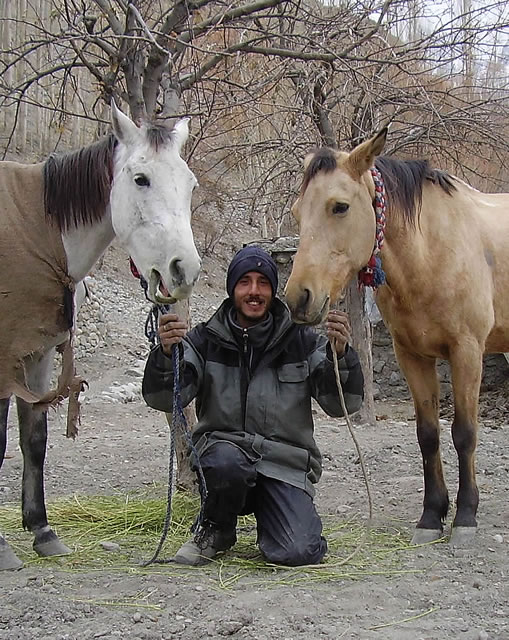 The rest of the evening was spent extending my visa at the DC office and making further phone calls to Sust. If I was the only person on the NATCO jeep to China there must be an alternative arrangement that could be made. Moreover, what about the hordes of Chinese tourist/business men who would also have to return to China before the end of the year? It didn’t take long to find out there was a solution. With PTDC’s help, the head of Immigration at Sust confirmed that he would help and arranged for me to travel in one of the many Chinese ‘container’ vehicles that depart from Sust to China daily. The DC soon extended my visa and I soon managed to find a truck that was travelling through the night back up to Sust. Well half way, anyhow. Shortly before Aliabad the truck drivers refused to go any further. The time was 3am . I walked the remaining kilometers, found a jeep garage and persuaded a driver to take me to Sust where I arrived at 6am . At 8am, Shahbaz never arrived and Alam had mysteriously disappeared back to Charpurson. The hotel owner was in a tizzy over the mares but several phone calls later confirmed that Shahbaz would be soon along to pick them up. It was a sad goodbye. These two had been faithful to the last. They never grumbled or complained and were stoic in their task for over 1300kms from Lahore to here. The AKES jeep rocked up at 8.30am and we left for customs. There again I was virtually forced to meet the head of NATCO, who finally allowed me to board the Chinese bus to china. This means that all the Chinese boarded one Chinese bus, and I singularly boarded the other. I had the whole bus to myself. At the time I had this to write: ” And so a chapter ends and a new one begins. Again I am sat on the Chinese bus littered with the decayed remains of people’s spat out seeds, biscuit packets and orange peel (my contribution). I am at now at the peak of the 4733m Khunjerab pass (’ River of Blood ‘ in Turkic language). We are just a speck in simply amazing terrain. Convoys of trucks pile in from China and the odd vehicle winds the other way. It is a bleak and barren plateau only populated by our little bus and the accompanying border house. The wind howls and the snow swirls on the hill tops nearby .” At the border Chinese Customs checked literally all my bags making me lug each one of the bus and then back again. They have little respect for belongings, rooting through each box like a badger at work. As soon as I’d repacked one bag, another one was being strewn across the tiny cabin. Our bus then became the People’s army vehicle and half the Customs staff piled in carrying everything from washbasins to sleeping bags. The road to the first Chinese outpost of Tashkorgan carried us for another three hours. I drifted slowly in and out of sleep as the bus lumbered through a wide rocky landscape of low rolling snow dunes and piercing white mountains. It was one of the most picturesque journeys of the trip so far. The Chinese platoon hawked and spat and were generally knocked around the bus by the driver who enjoyed accelerating over the bumps and breaking on the bends. The road from the pass all the way to Kashgar was being resurfaced and we were currently enjoying the ‘construction phase’. Tashkorgan was a small Chinese city with typically overly wide streets, and lots of hotels, restaurants and bars. There was another customs to go through, but this one was more advanced. After asking me if I was carrying any chickens or if I’d met one recently, they X-rayed each bag and barked commands to move this bag here or that one there. As soon as I had four bags on my person, a Chinese guard would yell at me to pick the other four up! Then just in case I wasn’t an arch drug smuggling overlord they prodded needles into my saddle and saddle pads to check. And then. it was all over. I felt tired and jaded. Commitment is a much sort after word in Pakistan . The bus disappeared and I was on my own. It was New Years Eve. I had to find a hotel! Happy New Year!ThankyousI would like to thank everyone who made the ride through Pakistan possible and with no serious mishap. I would particularly like to mention my sponsors/partners PKP, PTDC, PTV, Abbas Bilgrami and the British High Commission, Islamabad. Also special thanks to SPO, ActionAid, NRSP, SRSP, Sungi, READ Foundation, AKES, LRG, Dewan Salman and all those families and individuals whose kindness did their country and this ride proud. |
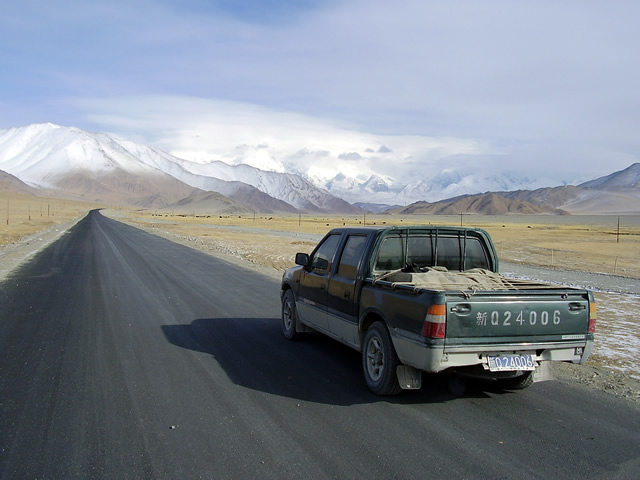 As soon as I’d left the