Teaching at Godh and Eid

|
Lat:
31:34.260000
Long:
74:18.780000
Teaching at Godh and Eid
23rd January 2005
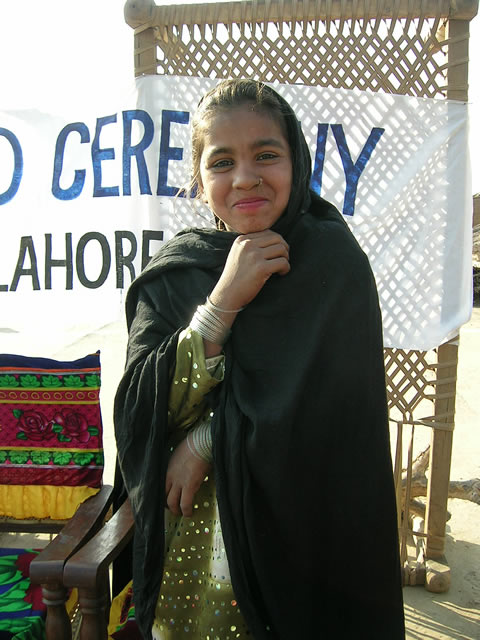 January’s been a cold month so far in Lahore. The temperature doesn’t
exceed 15 degrees in the day and its rained off and on since the month
started. January’s been a cold month so far in Lahore. The temperature doesn’t
exceed 15 degrees in the day and its rained off and on since the month
started.About two and a half weeks ago I started teaching at a little school run by
the NGO Godh in a gypsy camp 25kms away on Lahore’s outskirts. I felt this would
be the best way to get a real perspective on education in Pakistan, as well as a
chance to talk to the people who mattered. Eid Mubarak! There are two Eid (holidays) every year in the Muslim calender. Eid-ul-Fairt is celebrated after the fasting month of Ramszan when x million muslims are free to eat properly again after a month of only eating at night. Eid-ul-adha is held around the time of the annual Haj to Mecca. It’s a time for families and rejoicing as cows, goats, sheep and even camels are sacrificed to please God. Now before anyone jumps the gun, here’s why. The story goes that Prophet Abraham was willing to sacrifice his son for Allah to show his devotion. With tears in his eyes he closed them and on opening them, he found a lamb in the place where his son had first knelt. Such an act is regarded as barbaric in the West, but just for a moment think outside yourself and appreciate the thoughts of a peace loving people to whom this is tradition and belief. It signifies more than slaughtering. In fact to put this in perspective the only blood
thirstiness was from the two other foreigners who accompanied me that day
demanding from every Muslim they met, “where can we see the camel slaughter.”
This grissly scene is not regarded as such by the locals as it is the highest
form of offering one can make to Allah. Yet these two demanded until they saw it
and then took delight in propagating the bloodiness and grissliness of the scene
and didn’t seem to get the point at all. This can not help the perception of the
Islam faith.
We arrived at the Badshahi mosque at 7am on the first day of Eid. there was nobody around and it was really cold. After warming our hands around a cup of chai, we followed the thousands of people streaming into Pakistan’s largest Mosque.
We travelled the narrow streets of the old city afterwards and it wasn’t long before we were invited into the open courtyard of a rich merchant’s house where they were sacrificing sheep. The wealthy owners had a camel tethered nearby which could clearly sense it’s impending fate. The price of sheep and goats has sky rocketed this year due to a high demand for too few goats. On average a goat costs 7-15,000 rupees whereas a horse may be around 25,000. Apparently, several charities have taken to sacrificing animals on behalf of the poor people. In our house special butchers were dealing with the goats/sheep in traditional halal manner. Such butchers are in high demand over Eid and it’ll take three dyas for them to reach every house. After each animal was skinned and cut, the meat was separated into three separate portions (usually in plastic bags). One portion of the animal is kept for yourself, the second for your family and the last for the poor who drifted by form time to time to collect their portion. The sacrificing is a bit of a messy business as bladders, stomachs and intestines were dumped on the street for a later charity collection service. The gutters literally ran red with the blood of so much livestock and I was simply glad it had decided to rain today! |

