Not Enough Time 15 31S 167 09E

|
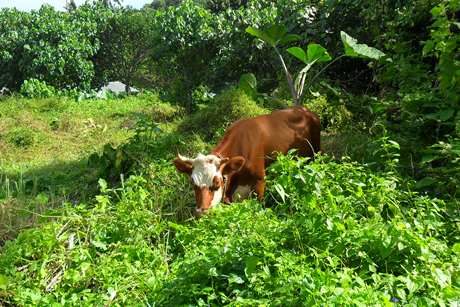
There has just been too little time for us to spend in Vanuatu and it is our great regret because this has become one of our favourite places. The weather has not been on our side but we are also rushing through in order to make our deadline in Darwin. One of the special things for us here has been to see the virtually untouched rainforest, everywhere else we have been great acres of it have been stripped out for various purposes. Here, apart from in the major towns and a few areas that produce beef, the people live with the rainforest and work their plantations along side it.
Low impact agriculture. When sailing past these islands there are no bare hillsides, the villages are hidden and some inland are impossible to find without a good local guide. A number of these more isolated villages do not welcome visitors as they have suffered in the past from foreign diseases and gained no benefit from outsiders as they pursue their traditional way of life. Malakula in particular has lots of extremely isolated villages where the people still practice magic and related ceremonial with masks and herbage. In some villages the men still wear penis gourds and little else. There are several anthropological studies going on here and in some of the other islands. On this island alone there are 28 different languages....in an island about twice the size of the Isle Of Wight. It all feels fascinating but for us to push into this privacy and isolation would feel uncomfortable and voyeuristic much as we would like to see a way of life which seems doomed to end with modern pressures for development.
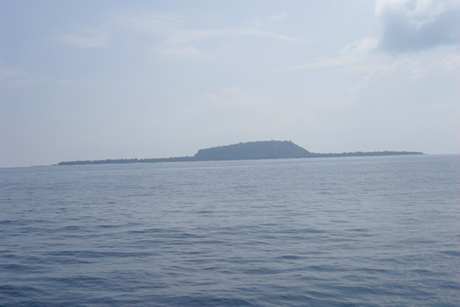
We have no idea if anyone lives here on Hat Island:
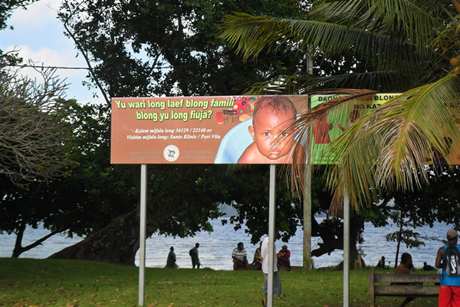
It seems that one way Vanuatu aims to improve its economy as malaria is brought under control is to develop its tourism. There is very little compared with other south Pacific countries we have visited but already one can pay to visit accessible villages which put on shows of custom dancing and traditional displays. They need the revenue for health and education but what a complex conundrum to manage for a country that has only lightly been touched by consumerism and where the accepted way of life is one of communal support and care rather than improving the lot of the individual. One great asset the people have is their innate language ability. Even the most humble people in the towns speak 3 or 4 languages, their tribal tongue, Bislama, the pidgin English seen on this roadside hoarding, official English and/or French.
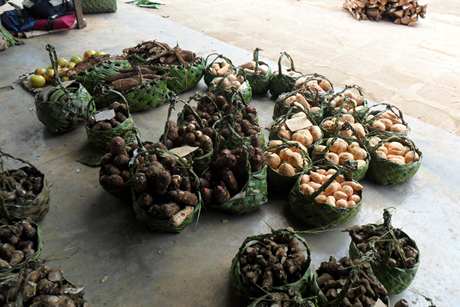
We visited the market in Luganville before leaving for our voyage to Australia and stocked up on the fabulous avocados and grapefruit which both put the ones sold in the UK to shame. The presentation of even the most simple foods as these sweet potatoes in their hand woven baskets is always good.....
|